Việt Nam has no systemic overcapacity in production, business: VCCI
VCCI has urged USTR to base its investigations on objective, up-to-date information reflecting Việt Nam’s production realities.
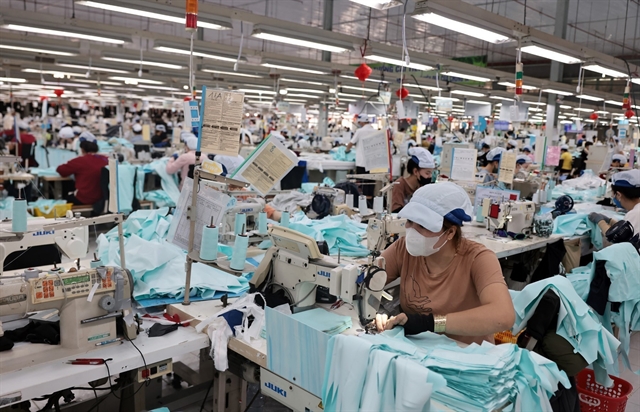
HÀ NỘI — The Vietnam Chamber of Commerce and Industry (VCCI) on April 15 stated that in practice, Việt Nam’s production and business activities do not exhibit systemic overcapacity, and that there is no evidence of forced labour being used in the production of export goods.
The statement was submitted to the Office of the United States Trade Representative (USTR) after the office launched two large-scale investigations on March 11 and 12, 2026.
One investigation focuses on the acts, policies and practices related to structural overcapacity in manufacturing across 16 economies, including Việt Nam, under Section 301(b) of the Trade Act of 1974.
The other investigates imports of goods produced with forced labour from 60 of the United States’ largest trading partners, including Việt Nam.
VCCI has called on USTR to conduct its investigations with due care, based on comprehensive, up-to-date and objective information that accurately reflects the realities of Việt Nam’s production landscape.
An objective, evidence-based conclusion would help maintain supply chain stability, deliver tangible benefits to US businesses and consumers, and safeguard the livelihoods of millions of workers employed in Việt Nam’s export-oriented manufacturing sectors.
According to VCCI, under the Law on Enterprises and the Law on Investment – foundational legal frameworks governing business activities in Việt Nam – companies operating in the country, regardless of ownership origin, are treated equally under a unified legal system.
They are free to operate and make decisions on production volumes based on market demand and their own capabilities.
Recent expansions in production reflect global market trends, including rising consumer demand, ongoing supply chain restructuring and shifts in international investment flows.
Notably, in key export sectors to the United States, such as electronics, machinery and equipment, furniture, textiles and garments and footwear, most Vietnamese enterprises operate under contract manufacturing arrangements for foreign partners.
Production is thus carried out strictly in line with agreed quantities, technical specifications and intellectual property requirements. This means that output levels are closely aligned with actual market demand, thereby preventing systemic overcapacity.
Việt Nam aligns with international standards
According to VCCI, Việt Nam has strengthened its legal framework in recent years in line with international standards, including commitments under new-generation free trade agreements and International Labour Organisation conventions, notably Nos 29 and 105.
Việt Nam’s 2019 Labour Code explicitly prohibits forced labour in all forms, while ensuring workers’ rights to freely choose employment, negotiate working conditions and wages, among others. In practice, these rights are widely upheld, particularly within the manufacturing sector.
At the same time, amid the growing adoption of environmental, social and governance (ESG) standards, companies are increasingly proactive in allocating resources to policies and practices that enhance worker welfare and development.
Furthermore, many of Việt Nam’s clients are multinational companies, which impose strict supply chain standards and monitoring, particularly on labour practices. These requirements help reduce compliance risks and ensure labour standards are met. — BIZHUB/VNS