Exporters urged to enhance traceability in response to proposed US tariffs
The warning came after the Office of the United States Trade Representative (USTR) on June 2 released findings from investigations into 60 economies over their enforcement of bans on imports made with forced labour.
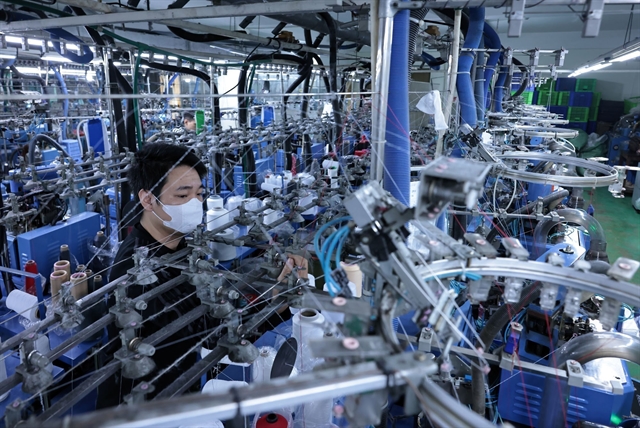
HÀ NỘI — Vietnamese exporters should closely review their supply chains and ensure robust traceability systems are in place as the US considers new tariffs linked to forced labour concerns, according to the Vietnam Chamber of Commerce and Industry (VCCI).
The warning came after the Office of the United States Trade Representative (USTR) on June 2 released findings from investigations into 60 economies over their adoption and enforcement of bans on imports made with forced labour.
Việt Nam was among 54 economies that USTR found had failed to impose and effectively enforce a prohibition on the importation of goods produced with forced labour, potentially exposing its exports to an additional tariff of 12.5 per cent under proposed measures announced under Section 301 of the US Trade Act of 1974.
The proposed tariffs have not yet taken effect, and remain subject to public consultation and hearings scheduled for July.
According to the VCCI, the US remains Việt Nam's largest export market, making the proposed measures a significant risk for export-oriented industries.
A broad 12.5 per cent tariff could undermine the competitiveness and profitability of key sectors, including textiles and garments, footwear, furniture, electronics and seafood, the VCCI said.
The chamber noted that the USTR report specifically highlighted cotton and polysilicon supply chains used in solar panel manufacturing as areas vulnerable to scrutiny over potential circumvention of forced labour controls.
The VCCI urged exporters to conduct comprehensive reviews of their supply chains and establish robust traceability systems to ensure that imported inputs cannot be linked to allegations of forced labour.
Under the USTR, economies that have adopted import bans on goods produced with forced labour but have failed to effectively enforce a prohibition on the importation would face an additional tariff of 10 per cent. Those included Canada, Ecuador, the European Union, Indonesia, Mexico and Pakistan.
Fifty-four others, including Việt Nam, would be subject to the 12.5 per cent levy.
The USTR acknowledged Việt Nam's submission on April 14 outlining measures to prevent, detect and eliminate forced labour. However, the agency claimed that Việt Nam had not established a direct legal prohibition on imports of goods produced through forced labour.
June 22 was set as the deadline for requests to testify, and July 6 was set as the deadline for written submissions ahead of public hearings scheduled for July 7.
he USTR proposal includes broad exemptions for essential goods such as energy products, rare earths, pharmaceuticals and selected agricultural products, as well as items already subject to Section 232 tariffs. Additional country-specific exemptions would apply to goods covered by existing US trade agreements such as the US-Mexico-Canada Agreement (USMCA), while a separate preferential scheme for textiles and apparel remains under consultation.
Analysts at KBSV said the proposed measures are unlikely to significantly affect Việt Nam's export and foreign investment outlook, because many of Việt Nam's largest exports to the US are included in the exemption list.
Việt Nam's position as the largest importer of US cotton could also support preferential treatment for its textile sector if the mechanism is adopted.
According to the VCCI, the consultation period provides an important opportunity for Government agencies, industry associations and exporters to seek broader product exclusions and demonstrate Việt Nam's efforts to combat forced labour before any final decision is made.
In the long run, Việt Nam could consider strengthening its legal framework on imports involving forced labour or addressing the issue in future bilateral trade discussions with the US for more favourable treatment, the VCCI said.
The chamber said it would continue collecting and assessing feedback from enterprises on the potential impact of the proposed measures, and would use the findings to prepare comments for submission to USTR before the July 6 deadline.
The US remained Việt Nam's largest export market in the first five months of 2026, with exports reaching US$69.6 billion, according to the National Statistics Office.— VNS