Việt Nam emerges as key hub in Asia's AI supply chain: HSBC
Việt Nam has become one of the fastest-growing players in Asia's artificial intelligence (AI) supply chain, driven by booming regional trade in AI-related goods, according to Tim Evans, CEO of HSBC Vietnam.

HCM CITY — Việt Nam is becoming a pivotal player in Asia's rapidly expanding artificial intelligence (AI) supply chain, as regional trade in AI-related goods reaches unprecedented levels, according to Tim Evans, CEO of HSBC Vietnam.
In an opinion article citing HSBC Global Research, Evans said intra-Asian trade in AI-enabling products, including semiconductors, electronic components and manufacturing equipment, had doubled to nearly US$2 trillion in 2025 compared with pre-pandemic levels.
AI-linked products now account for 35 per cent of Asia's total exports, up from 19 per cent a decade ago.
He noted that Việt Nam has recorded the world's largest increase in its share of global AI-related equipment trade, rising from 1.2 per cent in 2015 to 12.4 per cent in 2025.
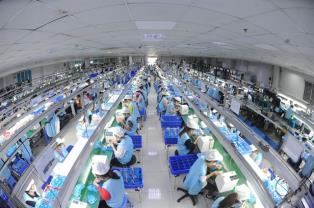
The country is increasingly integrated into regional supply chains, importing high-value semiconductor components from economies such as Taiwan (China) and South Korea before exporting finished products to global markets.
The growing role has been supported by the Government's semiconductor development strategy, which aims to train tens of thousands of chip engineers by 2030 while promoting science, technology and digital transformation as key drivers of economic growth.
International technology companies have also expanded investments in semiconductor packaging, testing and electronics manufacturing in Việt Nam.
Beyond manufacturing, Evans said Việt Nam is well positioned to become an important market for AI applications, supported by a young digital-savvy population, rising enterprise adoption of digital technologies and increasing investment in data centre infrastructure across Southeast Asia.
While warning that greater integration into global semiconductor supply chains could expose the country to risks such as weaker AI investment cycles, export restrictions and price volatility, Evans said the long-term outlook remains favourable.
He added that regional trade agreements, including the Regional Comprehensive Economic Partnership (RCEP) and the Comprehensive and Progressive Agreement for Trans-Pacific Partnership (CPTPP), together with continued supply chain diversification across Asia, would further strengthen Việt Nam's position.
According to Evans, if Việt Nam can complement its manufacturing strengths with investment in skills, digital infrastructure and wider AI adoption, the country stands to gain not only from higher exports but also from stronger productivity across industries and the broader economy. — VNS