Offshore wind hurdles must be removed
Many global investors said Việt Nam has enjoyed a golden window of opportunity to establish itself as a leading wind power market in Asia, supported by strong natural resources, rising electricity demand and growing policy support.
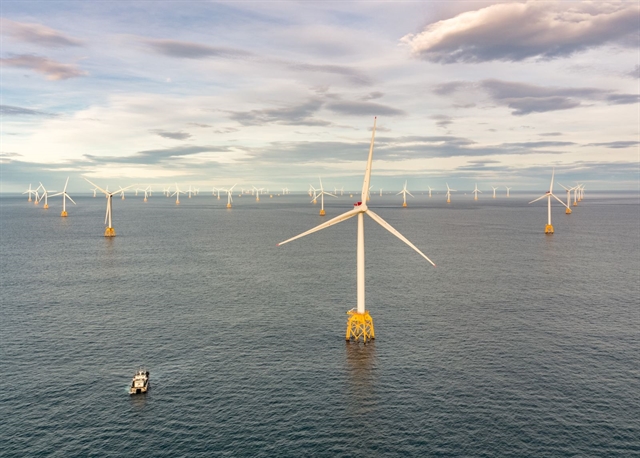
HÀ NỘI — Offshore wind is emerging as one of Việt Nam's biggest energy opportunities, but unlocking its vast potential will require more than favourable winds. As the country races to expand renewable energy capacity and meet rising electricity demand, authorities are working to remove institutional bottlenecks and develop the infrastructure needed to turn ambitious plans into reality.
The Southeast Asian nation aims to bring between 6 gigawatts (GW) and 17GW of offshore wind power capacity online by 2030, with offshore wind expected to account for about 14.7-16.6 per cent of the country's power generation mix by 2050, according to the revised Power Development Plan VIII.
Việt Nam has significant offshore wind potential due to its long coastline of more than 3,260 kilometres, favourable wind conditions and rising energy demand. Authorities hope to attract investors with strong financial resources, advanced technology and international experience to help achieve the country's renewable energy ambitions.
According to Trần Hoài Trang, deputy director general of the Ministry of Industry and Trade's Electricity Regulatory Authority of Vietnam, sea areas have recently been allocated with a combined potential capacity of around 7GW to investors for project preparation, marking an initial step toward achieving the country's offshore wind targets.
The National Assembly issued Resolution 253 in 2025, which establishes mechanisms and policies for national energy development during 2026-30, including measures designed to support offshore wind projects.
Authorities are continuing to refine the legal framework governing offshore wind development while implementing projects that have already received sea area allocations.
"Việt Nam is proceeding cautiously because this is a new sector," Trang told congthuong.vn, saying that projects must be successful in practice, generating benefits for investors while contributing to national development.
Việt Nam is targeting double-digit economic growth in the coming years, and offshore wind power is expected to play an important role in supporting that objective.
Policy reforms
The revised Power Development Plan VIII includes provisions for both offshore wind generation and related infrastructure, including transmission networks, energy hubs, ports and logistics facilities.
Việt Nam is also preparing amendments to the Electricity Law aimed at improving transparency and creating more favourable conditions for investors, covering procedures from project approval to construction quality management, according to Trang.
Specific provisions for offshore wind development are expected to be included in a draft amendment scheduled for submission in October 2026. The proposed revisions are expected to build on Resolution 253 and introduce additional incentives for the sector.
Industry officials say the synchronised development of generation capacity and transmission infrastructure will be critical to the success of offshore wind projects.
Trang said the construction of coastal transmission lines was being considered to connect offshore wind farms with energy centres and major demand hubs, particularly in the north.
To support the sector's development, greater participation from domestic and foreign investors was being sought, particularly from companies capable of providing consulting services, equipment and technical solutions for offshore wind projects.
Việt Nam would be ready to cooperate with and welcome investors with the capability and resources to participate in this field, Trang said.
Investor confidence
At the Asia-Pacific Wind Energy Conference held early this month in Hà Nội, international investors welcomed Việt Nam's efforts but said additional policy clarity would be needed to unlock large-scale investment.
Mark Wainwright, CEO of the Copenhagen Offshore Partners' (COP) Fengmiao II offshore wind project in Chinese Taipei, said there was a clear long-term vision for energy development and a measured approach to strengthening energy security.
He added that offshore wind would require a partnership between the public and private sectors. Therefore, developing the right policies required close engagement between investors and government authorities.
Dhiraj Shangari, head of capital markets and investment at Pacifico Energy, said Việt Nam's abundant wind resources and supportive policy environment would offer strong growth prospects. He highlighted Resolution 253 as an important mechanism for advancing renewable energy investment.
Shangari said major renewable energy investments would attract additional sources of capital and stimulate employment growth. He added that the country's companies had demonstrated Việt Nam's capabilities in engineering, manufacturing and construction.
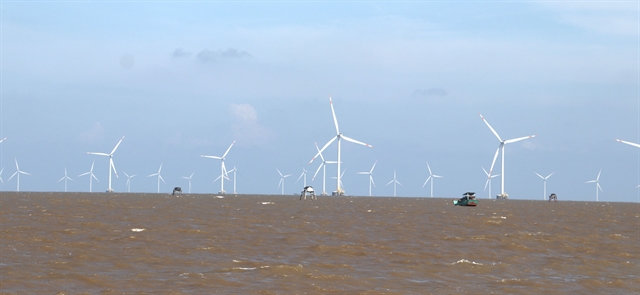
In the onshore and nearshore wind segments, David Wotherspoon, director of offshore renewables growth at OWC, said projects in those areas could help meet energy demand more quickly while larger offshore developments were being prepared.
Wotherspoon said OWC had been operating in Việt Nam for more than a decade and had supported the development of approximately 1.6GW of onshore and nearshore wind power capacity.
Remaining challenges
He said those projects could play an important role over the next five to seven years because they could be connected to the grid more rapidly than offshore wind projects, helping support economic growth and rising electricity consumption.
Việt Nam currently has around 6GW of installed wind power capacity and aims to increase that figure to approximately 28GW in the coming years.
According to an OWC representative, project licensing and access to international financing were identified as the sector's two biggest challenges. He called for faster approval procedures, saying substantial domestic and foreign investment is needed to achieve the country's renewable energy goals.
Many global investors said Việt Nam was enjoying a golden window of opportunity to establish itself as a leading wind power market in Asia, supported by strong natural resources, rising electricity demand and growing policy support.
However, delays in finalising the legal framework, electricity pricing mechanisms, marine spatial planning and transmission infrastructure could reduce the country's competitiveness in attracting capital and securing a leading position in the regional wind power industry. — VNS