Việt Nam, China’s Hebei Province seek new momentum for agricultural trade
Leveraging the existing commercial foundation, complementary product strengths and improved logistics connectivity, agricultural cooperation between Hebei and Việt Nam is expected to shift from simple trade to supply chain integration, processing and value addition, thus fostering substantive, stable and sustainable growth in bilateral agricultural trade.
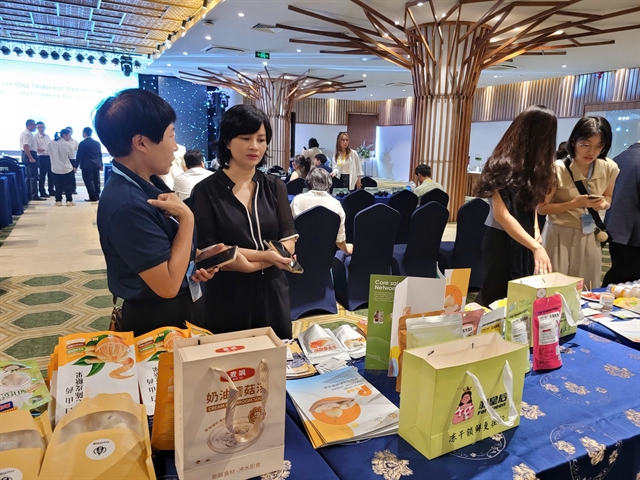
HÀ NỘI — The Ministry of Agriculture and Environment’s Agricultural Trade Promotion Centre on Wednesday hosted an event in Hà Nội to promote agricultural cooperation between Việt Nam and China’s Hebei Province.
Speaking at the event, Li Dan, head of the International Cooperation Division under the Department of Agriculture and Rural Affairs of Hebei Province, said that Hebei has leveraged its diverse natural conditions to develop its agricultural sector through scaling up, standardisation, value chain integration and branding.
The Chinese province is focused on six key industries: grains and vegetable oils, vegetables, fruits, medicinal herbs, dairy, and livestock farming.
The value-added revenue of Hebei’s agriculture, forestry and fishery sectors last year reached RMB451.45 billion (US$67 billion), ranking sixth nationwide in China.
Hebei boasts a competitive edge in pear production, which ranks first in China in terms of cultivation area, output and export value. The province is also a major production hub for chestnuts, sea buckthorn, grapes, dairy products and livestock.
In 2025, the province's agricultural products were exported to 174 countries and territories, earning a total value of $2.57 billion.
Dan said that Việt Nam and Hebei are highly compatible in terms of products and markets. Việt Nam holds an advantage in tropical agricultural products, while Hebei has strength in vegetables, pears, mushrooms, grains and temperate-climate products. This complementarity provides a foundation for expanding two-way trade and facilitates deeper access for Vietnamese agricultural products to reach markets in northern China.
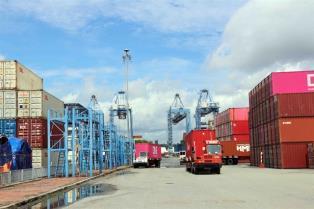
Logistics connectivity is also providing fresh momentum for cooperation between the two sides. An ASEAN freight train route connecting the Beijing-Tianjin-Hebei region directly to Hà Nội, which was launched in March 2025, helps reduce transit times and offers new options for agricultural trade.
Director of the Agricultural Trade Promotion Centre Nguyễn Minh Tiến said that alongside quality and price, transit time, preservation capabilities and the stability of the logistics chain are crucial.
"By effectively linking products to markets, B2B and trade-to-logistics, geographical distance will no longer be a major obstacle to agricultural cooperation between Hebei and Việt Nam," Tiến said, adding that the synergy between Vietnamese agriculture and Hebei’s strengths in signature products creates a solid basis for developing trade and connecting supply chains.
He urged businesses to focus discussions on specific market demands, ranging from quality standards, food safety, traceability, packaging specifications, output volumes and pricing to import-export conditions, quarantine, payment terms, storage and transportation.
Cooperation could also extend to deep processing, technology transfer, the use of agricultural by-products and the development of high value-added products, Tiến said.
However, trade promotion activities should follow a progression from initial meetings to connections, then to negotiations to sign contracts, and finally to sustainable cooperation, he noted.
Deputy Director of the Agricultural Trade Promotion Centre Hoàng Văn Dự said that alongside these opportunities, businesses from both sides must meet increasingly stringent requirements regarding quality, quarantine, traceability, growing area codes, packing facility codes and market standards.
Compliance with these requirements not only facilitates market access, but also helps build brand reputation and sustain long-term trade relationships.
To boost two-way trade, businesses are encouraged to effectively use the Hebei-Hà Nội railway route, enhance cold storage and specialised logistics, standardise production, packaging and traceability processes, and stay updated on market regulations.
Regulatory bodies and trade promotion agencies from both sides should also maintain regular dialogue regarding demand, pricing, standards and import-export regulations, thus helping businesses reduce partner-search costs and mitigate risks.
During the event, Hebei enterprises showcased products such as pears, grapes, freeze-dried vegetables, dried fruits, canned fruits and vegetables, processed chicken, sesame oil, sweet potato products and spices.
Leveraging the existing commercial foundation, complementary product strengths and improved logistics connectivity, agricultural cooperation between Hebei and Việt Nam is expected to shift from simple trade to supply chain integration, processing and value addition, thus fostering substantive, stable and sustainable growth in bilateral agricultural trade. — BIZHUB/VNS