Ministry tackles issues in decentralising certificate of origin issuance
Decentralising the issuance of certificates of origin has exposed problems in electronic systems, trader records, professional expertise and differences in how applications are handled by issuing agencies.
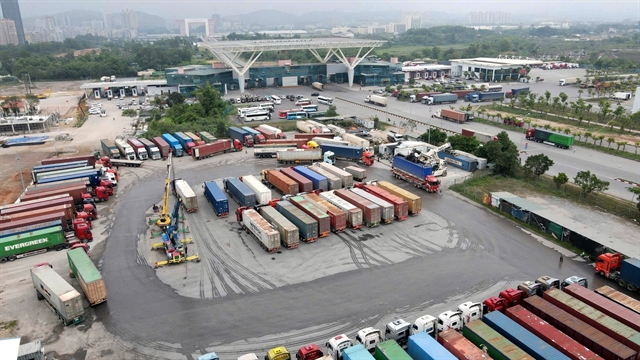
HÀ NỘI — The Ministry of Industry and Trade is working to ease bottlenecks in the issuance of certificates of origin (COs), as a growing share of applications shifts to provincial authorities amid decentralisation efforts.
Under Circular 26/2026/TT-BCT which took effect as of May 29, 2026, the ministry reduced the number of CO forms for which it is responsible to only 12, with other forms handled by provincial and municipal departments of industry and trade as of August 1.
The share of locally processed COs doubled during the first 15 days of August compared with the first seven months of the year after the new rules took effect.
“This has created considerable pressure on local CO issuing agencies,” said Lê Văn Danh, deputy director of the HCM City Department of Industry and Trade.
Danh said common problems include incomplete application dossiers, missing supporting documents and incorrectly selected issuing agencies, which results in applications being returned to exporters for correction.
The HCM City department also called for the full digitisation of the CO process, saying the current requirement for businesses to obtain paper forms from the department before submitting applications adds unnecessary processing time.
According to the Import-Export Department under the Ministry of Industry and Trade, decentralising CO issuance has exposed problems in electronic systems, trader records, professional expertise and differences in how applications are handled by issuing agencies.
Exporters said they have been asked to provide additional paperwork related to their production, even when relevant information was already available on customs or company systems. The process, application requirements and declaration criteria should be standardised, particularly for amended or supplementary dossiers, to prevent repeated requests for additional documents.
Phan Thị Thanh Xuân, deputy president of the Việt Nam Leather, Footwear and Handbag Association, said the transfer of CO issuance from regional import-export offices to provincial trade departments has created differences in how applications were assessed.
Xuân called for additional training and information sharing among issuing agencies, as well as risk-based processing for experienced exporters.
She also proposed allowing trader records already registered on the electronic system to be automatically transferred to local departments, instead of requiring businesses to register again.
Hoàng Ninh, deputy director of the Vietnam E-commerce and Digital Economy Agency, said more than 1.6 million CO applications had been received between January 1 and August 17 this year.
The authority is working with the Import-Export Department to review and standardise procedures. The mechanism of green, yellow and red channels for document processing can also help reduce procedures for businesses with long export histories, Ninh said.
The Ministry of Industry and Trade is also seeking closer integration between the CO system and the National Single Window and ASEAN Single Window.
Trần Thanh Hải, deputy director of the Import-Export Department, said the new CO system has been operational for eight months and the department has repeatedly asked for efforts to connect it with the national and ASEAN single-window systems to make procedures easier for exporters.
Hải also urged provincial departments to recognise the equal legal validity of paper and electronic documents under the Law on Electronic Transactions and related regulations to process applications more quickly.
Trịnh Thị Thu Hiền, another deputy director of the Import-Export Department, urged all CO issuing agencies nationwide to apply consistently the requirements under Decree 31/2018/NĐ-CP.
Different agencies should not impose different document requirements or procedures, she said.
The department said that it will focus on clearing the immediate backlog as well as improving system connectivity, standardising procedures and reducing administrative burdens for exporters. — VNS