



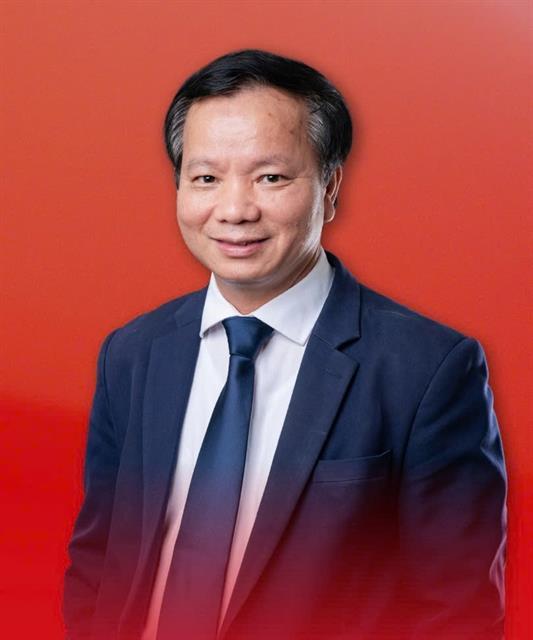







Professor Vũ Văn Yêm, Vice President of Hà Nội University of Science and Technology (HUST), spoke to Việt Nam News reporter Lê Hương about the university''s development strategy and its programme to attract Vietnamese academics working overseas back to the...
The target was set out in Resolution 168/NQ-CP issued on June 27, which s the country''s growth scenario and outlines key policy measures for the remaining months of 2026.
It is critical for SMEs to improve financial transparency and accelerate digital transformation to strengthen competitiveness and adapt to a rapidly changing business environment, an SME dialogue heard on June 24.
The northern province of Quảng Ninh posted broad-based socio-economic expansion in the first half and is pushing to deliver full-year gross regional domestic product (GRDP) growth above 13 per cent, an all-time high.
The Ministry of Finance is seeking feedback on a draft circular to abolish 23 circulars and three decisions in the tax sector in order to harmonise with the current legal system.
Mariam J. Sherman, World Bank’s Division Director for Việt Nam, Cambodia and Lao PDR and Nguyễn Xuân Thành, a lecturer at the Fulbright School of Public Policy and Management discuss how Việt Nam can seize opportunities amid the global crisis...
Fitch Ratings has praised Việt Nam’s macroeconomic resilience and policy management, saying continued reforms and stable growth will support the country’s sovereign credit outlook.
The Ministry of Construction has proposed sweeping reforms to streamline administrative procedures in the construction sector with the principle that each construction project should undergo only one administrative procedure before breaking ground.
Some argue that removing conditions entirely could lead to an influx of low-cost imports and weaken domestic production capacity, while others say the current system imposes unnecessary costs and slows innovation.
Administrative reform is being repositioned as a key growth driver, with sweeping cuts to procedures and business conditions aimed at unlocking resources and boosting efficiency across the economy.
The customs sector is accelerating reforms by removing outdated procedures, digitalising tax and clearance processes, and cutting business conditions to reduce delays and support import-export firms.
Việt Nam’s revised national master plan aims to new growth hubs, strengthen regional connectivity and accelerate technology-driven development as the country targets annual economic growth of at least 10 per cent in the coming years.
MoIT has introduced sweeping reforms to certificates of origin and related procedures to cut red tape, reduce costs and help businesses better tap tariff incentives amid global uncertainty.
As savings rate of Vietnamese people is very high at up to 37 per cent of GDP, experts said it is a potential available capital resource that should be exploited to promote economic growth.