New tax rules shift business strategy
As tax policies change and tax administration becomes increasingly modern with greater application of digital technologies, businesses need to proactively update new policies while standardising accounting books and supporting documents from within the enterprise.
By Ly Ly Cao
HÀ NỘI — Latest changes to personal and corporate income tax are reshaping the tax landscape for businesses, bringing new incentives and exemptions while placing greater emphasis on accurate accounting, documentation and compliance.
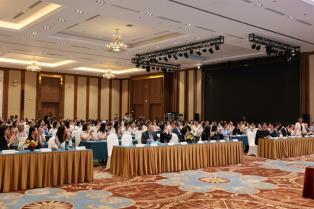
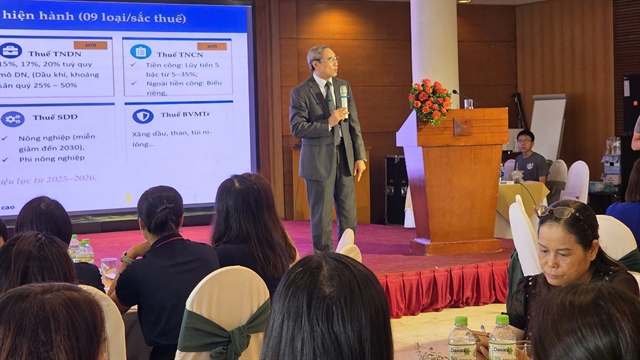
The changes were discussed at a dialogue on personal income tax, corporate income tax and solutions to standardise accounting books, organised by the Hanoi Support Centre for Enterprise and Investment Promotion (SCE) under the Hanoi Department of Finance on August 19.
Nghiêm Thị Hoàng Anh, deputy director of the centre, said corporate income tax, personal income tax and accounting should no longer be regarded solely as responsibilities of accounting departments because they directly affect corporate governance, cash flow, costs, human resources and business performance.
"As tax policies change and tax administration becomes increasingly modern with greater application of digital technologies, businesses need to proactively update new policies while standardising accounting books and supporting documents from within the enterprise," she said.
Among the key changes is a more differentiated corporate income tax regime based on business size.
According to Nguyễn Văn Phụng, former deputy director of the Tax Policy Department under the Ministry of Finance, corporate income tax rates can be 15 per cent, 17 per cent or 20 per cent depending on the size of the enterprise, while specific petroleum and precious mineral activities are subject to higher rates of 25-50 per cent.
Businesses with annual revenue of VNĐ1 billion (US$38,000) or less are exempt from corporate income tax under the new framework. The same VNĐ1 billion threshold also applies to household and individual businesses for VAT and personal income tax exemption, with the policy applying retrospectively from January 1, 2026.
He also highlighted opportunities for companies to use tax incentives associated with science, technology and innovation.
Eligible businesses may allocate up to 20 per cent of profits before tax to a science and technology fund, with the amount reducing taxable income. The funds must be used within five years for activities such as research and development, machinery purchases for technological innovation and remuneration for science and technology personnel.
Tax incentives are also available for qualifying investment projects. Preferential regimes included a 10 per cent corporate income tax rate for 15 years for specially encouraged projects such as high-tech and economic-zone infrastructure investments, as well as tax holidays and subsequent reductions for eligible projects.
At the same time, businesses are being reminded that accounting expenses and tax-deductible expenses are not automatically the same.
Compliance costs incurred by enterprises may be recognised as accounting expenses, but only those meeting the statutory conditions under corporate income tax regulations are deductible when determining taxable income.
Tax documents and invoices must accurately reflect actual transactions, while incorrect declarations can lead to tax arrears, a 20 per cent penalty for incorrect declarations, penalties for tax evasion and late-payment interest of 0.03 per cent per day, Phụng added.
Personal income tax has also undergone substantial changes.
From 2026, the monthly personal deduction has increased from VNĐ11 million to VNĐ15.5 million, while the deduction for each dependent has risen from VNĐ4.4 million to VNĐ6.2 million. As a result, a taxpayer with one dependent has a monthly deduction threshold of VNĐ21.7 million, while a taxpayer with two dependants has a threshold of VNĐ27.9 million before other allowable deductions are considered.
The new personal income tax framework also introduces a five-bracket progressive tariff for employment income, ranging from 5 per cent to 35 per cent, according to the conference materials.
Other changes concern specific forms of employee compensation and additional income.
Certain meal allowances of up to VNĐ1.2 million per month are excluded from taxable income, while employer-provided accommodation built by the employer may also fall outside taxable income under specified conditions. The regulations also raise the withholding threshold for irregular income to VNĐ5 million per payment and introduce additional deductions of up to VNĐ47 million annually for qualifying medical and education expenses.
The revised rules also bring several emerging forms of income into the personal income tax framework, including transfers of national '.vn' domain names, emission reduction outcomes, carbon credits and crypto assets.
For businesses, these changes mean payroll systems, labour contracts, benefit policies and accounting records increasingly need to be aligned with tax regulations.
Hoàng Anh said the SCE would continue receiving business feedback through regular dialogue programmes and reporting difficulties to city authorities.
The centre aims to act as a bridge between businesses and policymakers, while helping enterprises understand regulatory changes, apply them correctly and prevent tax and accounting risks. — BIZHUB/VNS