Battery energy storage systems are opening up new opportunities for rooftop solar power in Việt Nam, improving electricity efficiency and strengthening energy security.
With a planned capacity of 495MW and an estimated investment of US$768 million, the project is expected to commence commercial operations by December 31, 2028.
Việt Nam faces rising risks of power shortages through the end of the decade as electricity demand from data centres, artificial intelligence (AI), semiconductor manufacturing and electrified transport is booming.
Access to stable green energy at reasonable costs is now becoming the decisive factor as green power is directly affecting investment decisions by multinational corporations, the ability to retain export orders and businesses'' participation in global value chains.
Việt Nam is under pressure to position battery energy storage systems (BESS) as strategic energy infrastructure, as fast-growing renewable capacity highlights grid stability challenges and opens up a multi-billion-dollar market for domestic firms.
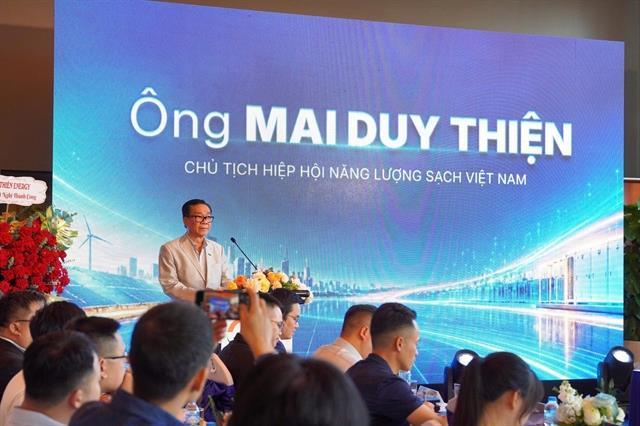
Organised by the Vietnam Chamber of Commerce and Industry (VCCI) and Diễn Đàn Doanh Nghiệp (Business Forum) magazine, the event gathered policymakers and industry representatives to discuss how to accelerate renewable energy adoption and ensure stable power supply.
POSCO Future M, a subsidiary of the Republic of Korea’s POSCO Group, has ed Sông Công II Industrial Park in the northern province of Thái Nguyên to build its first large-scale battery materials plant in Việt Nam, according to Viglacera...
Kim Long Motor Hue JSC (Kim Long Motor) on January 27 signed a strategic partnership with BYD Battery, a global leader in batteries and new energy vehicles, and kicked off construction of a BYD battery manufacturing plant in its Huế...
BESS is no longer viewed as auxiliary equipment but as a core component of the clean-energy ecosystem. The technology enables the storage of renewable electricity, stabilises grid frequency, eases transmission congestion and smooths peak and off-peak loads.
The Ministry of Industry and Trade stressed the need to review direct power purchase agreements and new energy mechanisms to ensure transparency, feasibility and support for Việt Nam’s renewable energy transition.
According to EVN, the proposed price cap is based on input parameters developed by the Institute of Energy and d in accordance with the Việt Nam–Denmark Technology Handbook.
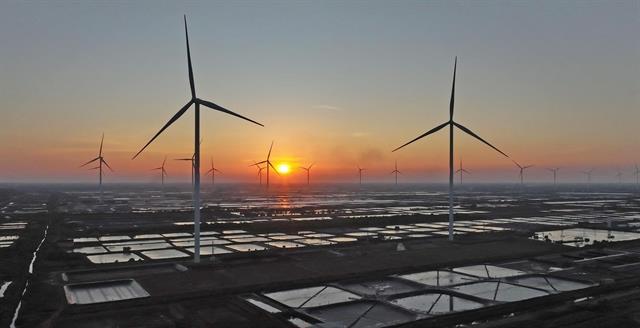
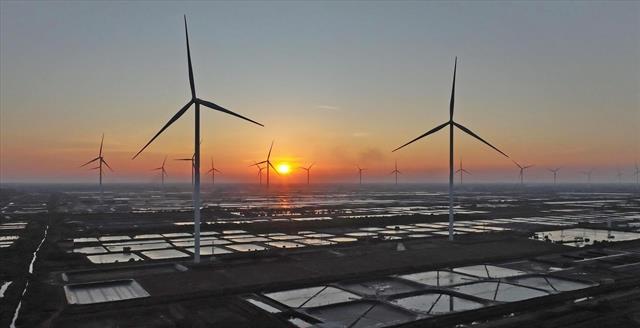
The Trà Vinh Provincial People’s Committee has given the green light to the investment policy for five wind power projects, for an investment total of over VNĐ13.8 trillion (US$540.6 million).