Renting may be the housing policy Việt Nam needs most today
With housing prices continuing to outpace incomes, rental housing is emerging as an increasingly important pillar of Việt Nam's housing policy, offering a more realistic path to stable accommodation for millions of people.

Võ Trí Thành*
For generations, owning a home has been one of the strongest aspirations of Vietnamese families.
A house is not only a place to live but also a symbol of security, stability and financial achievement. That mindset remains deeply rooted in society today.
Yet housing is more than a personal ambition.
Under Article 22 of the 2013 Constitution of the Socialist Republic of Việt Nam, citizens have the right to lawful residence, and the State has a responsibility to create conditions that enable people to exercise that right.
The question today is whether the current housing model is delivering on that promise.
For millions of Vietnamese, securing adequate housing is becoming increasingly challenging.
House prices in major cities have risen far beyond the pace of income growth. For many workers, civil servants, young professionals and newly married couples, buying a home is no longer a near-term goal but a distant aspiration.
The gap between incomes and housing costs has become too large to ignore.
This reality is forcing policymakers to confront a question that many developed economies answered long ago: should housing policy focus exclusively on ownership, or should it also prioritise access to affordable rental housing?
That is why the Government's renewed focus on rental housing deserves serious attention.
Right direction at the right time
Over the years, Việt Nam has introduced various housing policies aimed at expanding access to accommodation. These include commercial housing, social housing and different mechanisms such as purchase, rental and rent-to-own schemes.
In theory, the policy framework already provides multiple pathways for people to secure housing.
In practice, however, access remains limited for many of the groups these policies are designed to support.
The most obvious challenge is affordability.
The challenge is particularly evident among low- and middle-income households. Apartment prices in Hà Nội and HCM City have climbed to levels that many people describe as being beyond their reach. Even social housing, despite being more affordable than commercial projects, often remains difficult to access.
The reason is straightforward.
Many low-income households have little savings. They struggle to make initial payments, provide deposits or meet lending requirements. Although preferential loan packages are available, the number of people who can successfully access them remains relatively limited.
As a result, a significant portion of the population remains trapped between unaffordable commercial housing and social housing that is still difficult to access.
This is where rental housing becomes increasingly important.
Unlike ownership models, rental housing addresses the immediate need for accommodation without requiring households to commit substantial financial resources upfront.
It provides a practical solution for people who need a stable place to live today rather than an asset they may only be able to afford decades later.
A notable change in policy thinking
Recent developments suggest policymakers are beginning to recognise this reality.
This shift is becoming increasingly visible in Hà Nội.
The capital plans to begin construction of pilot rental housing projects as early as June 2026. At the same time, the city is accelerating social housing development, with 90 projects comprising approximately 80,800 apartments currently under implementation.
This year alone, Hà Nội expects to launch 41 social housing projects with more than 27,400 units.
More importantly, city leaders have openly called for a transition from a mindset centred on ownership to one focused on housing use.
This shift should not be underestimated.
For decades, home ownership has been viewed as the ultimate objective of housing policy. Today, however, policymakers are increasingly acknowledging that housing serves multiple purposes.
That distinction matters.
Housing should first be a place to live before it becomes an investment asset. By placing greater emphasis on rental housing, policymakers are seeking to return to that fundemental principle.
The potential impact extends beyond major cities.
Việt Nam currently has more than 430 industrial parks and over 4.1 million workers. Yet housing remains one of the most pressing social issues associated with industrial development.
Estimates suggest that between 70 and 80 per cent of workers rent accommodation outside industrial zones, often in privately developed boarding houses where living conditions remain modest.
Data from HCM City also points to strong demand for rental-based housing.
According to the HCM City Institute for Development Studies, rent-to-own housing accounts for 68.1 per cent of demand for social housing, compared with 26 per cent for purchases and 5.9 per cent for rentals.
Salaried workers make up 82 per cent of long-term rental demand, while students account for another 14 per cent, suggesting a large pool of potential tenants if housing remains affordable.

The shift may also reflect changing attitudes among younger generations.
While home ownership remains an aspiration for many Vietnamese, an increasing number of young people, particularly those from Generation Z, are embracing more flexible lifestyles shaped by changing careers, mobility and personal preferences.
For this group, housing is increasingly viewed through the lens of convenience, affordability and adaptability rather than ownership alone.
A more developed rental market would provide options better aligned with these evolving expectations. This is one reason why Hà Nội is considering increasing the proportion of rental units within social housing developments to between 20 and 30 per cent, depending on the project.
If implemented effectively, such measures could help create a more balanced housing market that offers people genuine choices rather than forcing them into a single pathway.
The case for rental housing also extends beyond social welfare.
Beyond addressing housing needs, a stronger rental market could contribute to broader and more inclusive economic development. Affordable rental housing would help workers live closer to their workplaces, strengthening labour stability and making cities and industrial zones more attractive to investors.
It could also help balance supply and demand in the property market by expanding options beyond home ownership, giving people greater flexibility to choose housing that matches their financial circumstances and stage of life.
However, the objective of the policy is not to discourage ownership. Rather, it is to reduce the pressure on households to pursue ownership at all costs.
This aligns with recent policy discussions at both central and local levels, which increasingly emphasise the development of rental housing as a complementary pillar of the housing market rather than a secondary option.
Importantly, this approach also has the potential to reduce speculative behaviour. When housing policy places greater emphasis on actual occupancy and use, it can help redirect attention away from asset accumulation and towards genuine housing needs.
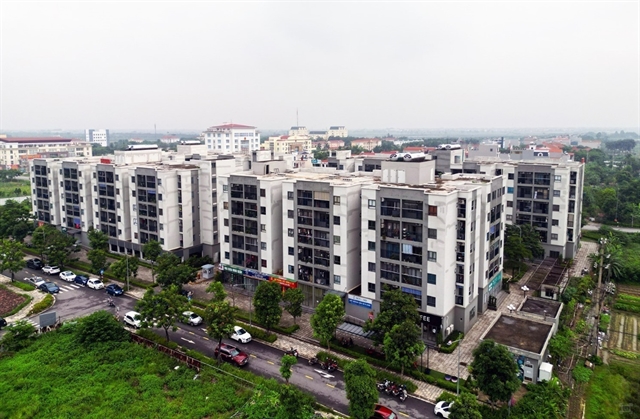
The challenges remain significant, however. Despite its promise, expanding rental housing will not be easy and the biggest obstacle is economics.
Unlike conventional residential projects, rental housing generates returns over a much longer period. Developers may need 15 to 20 years to recover their investments, making projects highly sensitive to financing costs. With commercial lending rates remaining relatively high, many investors have little incentive to enter the segment.
Without meaningful policy support, rental housing may struggle to attract private capital at the scale required.
This is where the State must play a leading role, particularly during the early stages of market development.
Public funding should serve as seed capital. Land policies should provide favourable conditions for rental housing projects. Preferential credit programmes, tax incentives and streamlined administrative procedures will also be necessary to improve investment viability.
At the same time, the legal framework requires further refinement.
Current regulations distinguish between commercial housing, social housing, public housing and resettlement housing. However, rental housing still lacks a sufficiently developed regulatory framework, creating uncertainty for investors and limiting market expansion.
A clearer legal structure would help establish long-term confidence and encourage broader participation from both public and private sectors.
Financial and regulatory challenges can be addressed through policy reforms. Changing public attitudes may prove more difficult.
The desire to own a home remains deeply embedded in Vietnamese society. For many families, ownership continues to represent security and success.
No housing policy can succeed without public acceptance. Alongside financial support and legal reforms, policymakers will need to strengthen communication efforts to help people understand the role of rental housing within a modern housing system.
Ownership and renting should not be viewed as competing concepts. They are complementary options designed to serve different needs at different stages of life.
Looking ahead, rental housing should perhaps not be limited to social housing projects. Encouraging rental models within the affordable commercial housing segment could provide more options for households that do not qualify for social housing but still cannot afford to buy a home, while also creating a broader and more diversified market for developers.
*Võ Trí Thành is former vice president of the Central Institute for Economic Management and a member of the National Financial and Monetary Policy Advisory Council.