High growth not just ambitious, but a policy choice
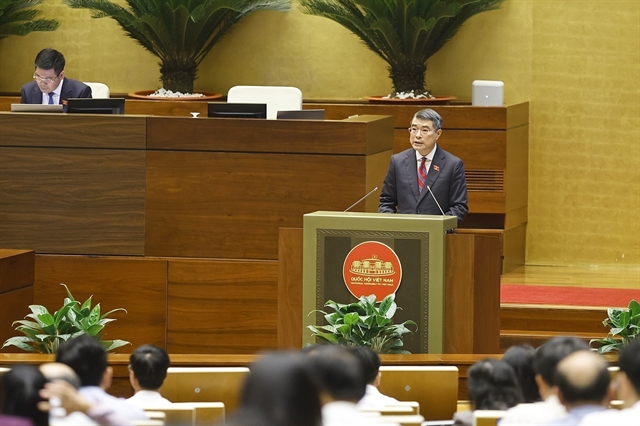
The economic governance message delivered by Prime Minister Lê Minh Hưng in the early days of his tenure is, at its core, a statement of policy direction and a commitment to achieving development goals.

Võ Trí Thành*
The Government’s supplementary report on the implementation of the 2025 socio-economic development plan, along with the rollout of the 2026 plan presented to the National Assembly, clearly affirms the resolve, effort, and determination of the new administration. It is not merely an informational report, but a message outlining policy direction and commitment to national development objectives.
The report comes at a time when socio-economic data have become more complete, particularly with the full-year results for 2025 and the first quarter of 2026. It thus provides both a comprehensive and detailed perspective on achievements to date and the goals ahead.
Looking at the 12 groups of tasks, it is evident that while the content is not new, the pressure for implementation has increased significantly. Foremost is the requirement to realise high growth targets, even aiming for double-digit expansion in the coming years. This is an extremely ambitious goal, demanding major changes in approach, strong policy coordination, and greater political determination.
Another challenge lies in balancing growth with macroeconomic stability. In reality, periods of rapid growth are often accompanied by risks in finance, real estate, and other macroeconomic variables. Maintaining stability amid rising external pressures is therefore far from straightforward.
At the same time, economic restructuring remains a core task that has yet to deliver the expected progress. Advancing restructuring across multiple areas while still ensuring short-term growth presents considerable challenges, especially given the high costs of transition. This also implies that the space for rapid growth can no longer come from simple expansion, but must be driven by deeper reforms – particularly institutional reform and improvements in governance quality.
Within this logic, four key requirements emerge as critical pillars for implementing the growth strategy: a transparent business environment, decisive resolution of stalled projects, a shift in governance mindset, and institutional improvement.
First, regarding the business and investment environment, the requirement goes beyond being merely open to becoming transparent, predictable, and low-cost. These are the three decisive factors for market confidence. When policies are stable and compliance costs are reduced, capital is more likely to flow into productive sectors rather than speculative activities.
However, the biggest challenge remains implementation, where reforms must be substantive rather than limited to procedural simplifications on paper.
According to estimates cited by Prime Minister Lê Minh Hưng, total social investment over the next five years will need to reach around 40 per cent of GDP, which is a significant increase from the previous term. This alone underscores the immense pressure to mobilise resources in the coming period.
On the public side, total public investment and budget mobilisation are also expected to be several times larger. More notably, however, roughly 80 per cent of total resources will have to come from domestic enterprises, private investment, foreign funding and international portfolio flows.
This means that achieving growth of over 10 per cent cannot rely solely on the public sector or bank credit.
To mobilise such an enormous volume of capital, the prerequisite is to remove all market obstructions, push forward strong supply-side reforms, and establish a sufficiently transparent legal framework so that citizens, businesses, and investors feel secure in committing long-term capital.
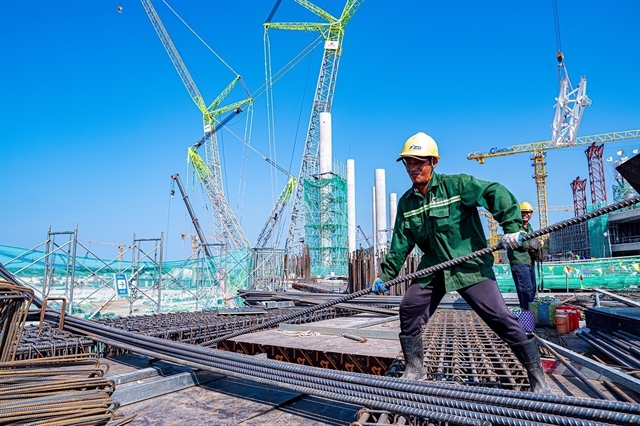
Second, resolving long-standing stalled projects has been elevated to a policy imperative. Thousands of delayed projects represent huge amounts of frozen resources. Unlocking these would not only support short-term growth recovery but also restore investor confidence.
Yet achieving this requires overcoming a major barrier: risk aversion within the administrative system, where the line between legal ambiguity and wrongdoing remains unclear.
Third, shifting from a management mindset to one of service and facilitation represents a fundamental transformation. The State is no longer a direct market actor, but rather the designer of the rules and guarantor of fair competition. If successfully implemented, this shift could unlock significant social resources, particularly from the private sector.
However, it is also the most difficult reform, as it directly affects how the system operates and where vested interests lie.
Fourth, and increasingly urgent, is the need to improve the quality of institutional design and implementation. A longstanding problem has been the situation where laws wait for decrees, and decrees wait for circulars, leaving policies unable to take effect in practice. Recently, the Prime Minister has required that draft laws be submitted together with draft implementing regulations.
This is a fundamental shift in policy-making. Drafting bodies can no longer stop at setting general principles in laws; they must go further by envisioning how those laws will function in reality, from processes and standards to the responsibilities of implementing agencies.
This shift aligns with broader reform directions that emphasise building a coherent, feasible legal system capable of effective implementation. If achieved, uncertainty could be significantly reduced.
Taken together, these pillars show that the Prime Minister’s message goes beyond the goal of high growth. It aims to reset the very foundations of how the economy operates: a more trustworthy business environment, more efficient allocation of resources, a facilitative state apparatus, and a legal system that functions seamlessly from legislation to implementation.
Overall, the Prime Minister's message represents a difficult commitment: pursuing very high growth through hard measures – deep institutional reform, improved business conditions, resource mobilisation, and a shift in governance mindset – while maintaining macroeconomic discipline.
The positive sign is that the policy direction is clear and consistent. But success will ultimately depend on a more critical factor: the ability to translate reform thinking into concrete action. If achieved, double-digit growth will become a natural outcome of a more transparent, efficient, and well-functioning economy.
*Võ Trí Thành is former vice president of the Central Institute for Economic Management and a member of the National Financial and Monetary Policy Advisory Council.