Quality of reforms key to Việt Nam’s development ambitions
Việt Nam needs to build new foundations and development capabilities to achieve its ambitions for 2030 and 2045, including stronger institutions, more effective resource allocation and closer links between economic sectors.
Vũ Hoa
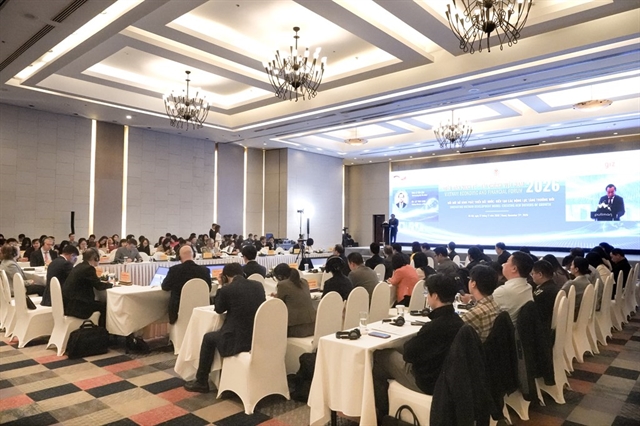
HÀ NỘI — National finance must become a tool to shape and drive new growth engines, rather than simply provide resources for development, Deputy Minister of Finance Lê Tấn Cận said at the Việt Nam Economic and Financial Forum 2026 in Hà Nội on Friday.
He said Việt Nam needs to build new foundations and development capabilities to achieve its ambitions for 2030 and 2045, including stronger institutions, more effective resource allocation and closer links between economic sectors.
The importance of accelerating reforms was underscored by three development scenarios presented at the forum. Under a slow reform scenario, Việt Nam's per capita GDP could reach a minimum of only US$10,000 by 2045. This figure could rise to $19,000 under the baseline scenario and up to $30,000 if the country pursues ambitious reforms.
Organised by the Ministry of Finance in cooperation with the German Agency for International Cooperation (GIZ), the annual forum this year focused on the theme 'Innovating Việt Nam’s Development Model: Creating New Drivers of Growth'. The forum is part of the Macroeconomic Reforms/Green Growth Programme, supported by Germany’s Federal Ministry for Economic Cooperation and Development.
GIZ Việt Nam Country Director Michaela Baur said the forum came at a pivotal moment, as Việt Nam pursues double-digit economic growth towards 2030, high-income status by 2045 and net zero emissions by 2050.
“Achieving these goals together means generating more value with less energy and fewer resources,” she said, stressing the need for clean power, modern technology, skilled workers, a favourable business environment and accessible financing.
She noted that Việt Nam's transformation offers significant opportunities, but also brings disruptions, particularly for workers and smaller businesses in carbon-intensive industries.
“Cleaner production brings opportunities, but also changes jobs and skills needs. Smaller businesses and workers dependent on carbon-intensive industries must be able to take part," she said.
"Women and disadvantaged groups need access to training and new opportunities. A transition that people can navigate will make growth stronger and more widely shared."
Nguyễn Như Quỳnh, director of the Institute of Strategy and Financial and Economic Policy, presented a paper at the forum. Quỳnh said Việt Nam needs to move beyond a growth model based primarily on expanding inputs towards one driven by productivity, knowledge, technology and innovation.
“The model that helped Việt Nam escape poverty is not necessarily the model that can take it to prosperity,” he said.
He identified several challenges, including the gap between existing growth capacity and the ambition of double-digit growth, slow improvements in investment efficiency, population ageing and intensifying competition in technology and green transformation.
Total investment demand through 2030 is estimated at around $1.45 trillion, or an average of $290 billion annually. However, the challenge is not simply mobilising more capital, but ensuring its effective allocation and use.
“Growth potential comes from both increasing investment and improving the efficiency of every investment flow,” Quỳnh said.
Dragon Capital general director Lê Anh Tuấn said Việt Nam still has considerable fiscal space to mobilise funding for long-term development.
Preliminary figures for 2025 put public debt at 33.4 per cent of GDP, Government debt at 31.7 per cent and external debt at 25.6 per cent, all significantly below the ceilings approved by the National Assembly.
However, domestic capital markets will likely struggle to meet the country's financing needs. Dragon Capital estimates that the Government's total borrowing requirements for 2026-30 will reach VNĐ6.5 quadrillion (US$251.6 billion), while the current Government bond market can cover only around one-third to half of this demand.
The funding gap for 2027-30 is estimated at VNĐ1.65 quadrillion, and could widen to VNĐ3.15 quadrillion if additional financing for strategic infrastructure projects is included.
Tuấn called for diversifying funding channels and making better use of international capital. He proposed borrowing in multiple currencies, including the US dollar, Chinese yuan, Japanese yen and Australian dollar, with an estimated combined cost of 6.5 per cent annually when converted into Vietnamese đồng.
He also recommended controlling foreign currency debt exposure, prioritising loans with maturities of 15-20 years and establishing mechanisms to manage exchange rate risks. Other proposals included piloting yuan-denominated Government bond issuance in 2027, extending bond maturities and broadening the base of long-term investors.
Green transition as a growth driver
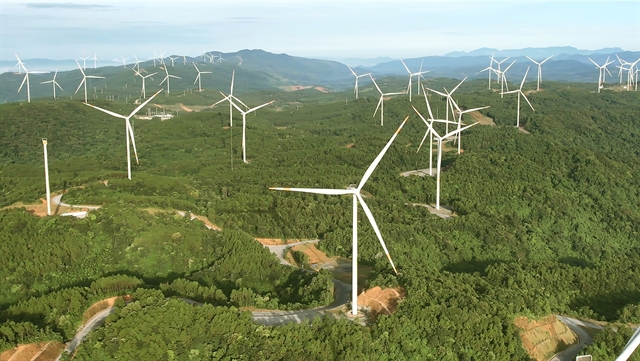
The forum also highlighted the potential for green transformation to support economic growth and improve Việt Nam's competitiveness.
Dr Matthias Grossmann, director of GIZ Việt Nam's Sustainable Economic Development Programme, said higher productivity, innovation and clean energy development could help Việt Nam achieve its high-income ambition by 2045 while also reaching net zero emissions by 2050.
Between 1990 and 2024, Việt Nam's real GDP increased nine-fold, while greenhouse gas emissions rose around 6.4 times. Energy production and industry account for approximately 70 per cent of total emissions, highlighting significant potential for reductions through technological innovation, energy transition and improved production efficiency.
According to an OECD scenario involving stronger green policies, Việt Nam's GDP could be 1.2 per cent higher by 2045 than under current policies, while exports could increase 2.6 per cent and foreign direct investment around 0.4 per cent. Stronger carbon pricing could also generate additional revenue equivalent to nearly 0.7 per cent of GDP.
However, businesses still face considerable barriers to going green. A 2023 survey of 2,734 enterprises found that 64 per cent had yet to prepare for the green transition, while only 5.5 per cent had implemented emission reductions in their key operations.
The biggest obstacles were access to finance, cited by 50 per cent of respondents, a shortage of specialised workers (46.8 per cent) and difficulties in selecting suitable technologies (44.2 per cent).
Grossmann said businesses need to invest in green transformation to maintain competitiveness, meet international customers' requirements and reduce production costs. The process should also go hand in hand with retraining, skills development and measures to protect the livelihoods of workers in affected localities.
The forum further discussed the role of science and technology, artificial intelligence, digital infrastructure, skilled labour, green finance and carbon markets in developing modern productive forces and improving national competitiveness.
Baur said GIZ is working with Vietnamese partners to strengthen economic governance and public finances, promote green investment and support businesses in adopting energy efficient technologies, digital tools and circular business models.
Clear regulations, access to finance and stronger business capabilities will be essential to turning the country's development ambitions into higher productivity and quality jobs, she added. — VNS