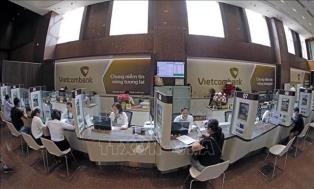
Central bank enhances monitoring indicators in payment systems
The Promoting Financial Inclusion and Climate Finance Project is aimed at supporting the central bank in developing and implementing essential platforms for digital finance, while strengthening regulatory and supervisory capacity.

HÀ NỘI — The State Bank of Vietnam (SBV) on Friday held a discussion on strengthening capacity for monitoring indicators in payment systems and payment intermediary activities in the country.
According to the SBV, the outcomes of this discussion, which is a part of the Promoting Financial Inclusion and Climate Finance Project, will serve as a vital input for the bank to refine its set of monitoring indicators and oversight processes.
Speaking at the event, Phạm Anh Tuấn, Director of the SBV’s Payment Department, said that Việt Nam’s payment system is growing rapidly in both scale and complexity, placing specific pressures on oversight efforts. Specifically, in the first nine months of 2026, the volume of transactions processed through the National Interbank Electronic Payment System increased by 12.33 per cent compared to the same period last year, while the total value surged by up to 62.07 per cent.
"This means that the average value per transaction has increased. Should this system experience a malfunction, even a brief one, it could potentially impact a very large sum of money within the economy," Tuấn noted.
In the retail payment sector, the first nine months of 2026 saw over 24 billion cashless payment transactions, an increase of 34.49 per cent compared to the same period in 2025. Mobile-based transactions alone accounted for more than 16 billion, a 35.42 per cent rise in volume, though the total value grew by only 1.69 per cent. A similar trend was observed through the NAPAS switching system with nearly 11 billion transactions, representing a 32.37 per cent increase in volume but a 2.39 per cent decline in total value.
"This means that transactions are becoming smaller yet more frequent, requiring the system to process a massive volume. Most of these transactions are routed through payment intermediaries and occur continuously. Even a few seconds of service interruption are immediately noticeable to users," he explained.
Furthermore, Việt Nam has established cross-border QR payment connectivity with Thailand, Laos, Cambodia, China, Singapore, and Republic of Korea.
As infrastructure becomes more open, the number of connection points increases, necessitating enhanced monitoring and risk management. “We need to shift towards risk-based, data-driven supervision, and move progressively closer to real-time monitoring,” he noted.
At the discussion, Chu Thị Hồng Minh, a senior financial sector specialist at ADB Vietnam Resident Mission, said that the Promoting Financial Inclusion and Climate Finance Project is aimed at supporting the SBV in developing and implementing essential platforms for digital finance, while strengthening regulatory and supervisory capacity. These efforts are intended to help build a secure, efficient, highly interconnected, and interoperable financial ecosystem. Furthermore, they aim to foster innovation, promote the development of digital banking and fintech, and enhance financial inclusion and access to financial services for both businesses and the general public.
Minh noted that internationally, regulatory authorities are continuously refining their supervisory frameworks to keep pace with the speed of digital innovation. Global standards and practices increasingly emphasise the use of risk indicators, operational metrics, performance benchmarks, and real-time data analysis to strengthen supervisory capacity. At the same time, emerging technologies, such as artificial intelligence and advanced data analytics, are creating new opportunities to enhance the effectiveness of supervision and management reporting.
At the event, Witit Synsatayakul, an expert in ADB’s Innovative Finance, shared about how central banks globally are leveraging digital technology, Big Data, and supervisory technology (SupTech) to enhance the efficiency of regulation and oversight, while ensuring the safety of payment systems.
The Promoting Financial Inclusion and Climate Finance Project is funded by the Swiss State Secretariat for Economic Affairs and the Japan Fund for Prosperous and Resilient Asia and the Pacific, and administered through the Asian Development Bank (ADB). — BIZHUB/VNS