UK technology to support Việt Nam's commodity derivatives market development
As Việt Nam continues to develop its regulatory and institutional framework, British technology providers and businesses are expected to contribute expertise and infrastructure to support the establishment of a transparent and internationally connected commodity derivatives market.
By Ly Ly Cao
HÀ NỘI — Việt Nam is moving towards establishing a modern commodity derivatives market, with British technology companies offering trading infrastructure, data management and compliance solutions to help translate the country's regulatory framework into practical operations.
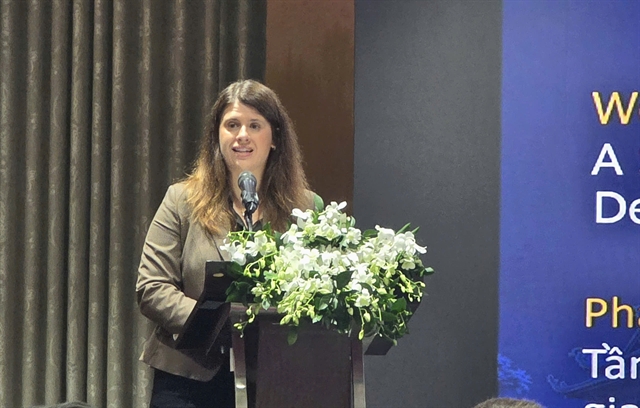
At the UK-Vietnam Commodity Derivatives Market Forum 2026 in Hà Nội on Friday, British Consul-General in HCM City Alexandra Smith said the development of the market was an important milestone, but practical implementation would be the next major challenge.
"The challenge when you go from on paper to practical is always the implementation and how it works," she said, emphasising the role of British technology providers in supporting the process.
The forum, organised by the British Embassy, the British Consulate-General and Boston Consulting Group (BCG), brought together policymakers, regulators, market operators, financial institutions, technology firms and businesses from both countries.
Smith said the UK Government had supported Việt Nam's Ministry of Industry and Trade (MoIT) in developing the legal framework for the commodity derivatives market. With legislation progressing, the focus was now shifting towards implementation.
The forum showcased technology from British companies including Elwood Technologies, SIGMA AI, GMEX Group and Traydstream, alongside other market infrastructure and technology providers. Their solutions cover different parts of the market ecosystem, including participant onboarding, compliance, trading, clearing, settlement, warehousing, surveillance and risk management.
"These companies provide services for Vietnamese companies to use in order to achieve things like increased transparency, improved KYC (know your customer) of your customers, improved movement of data and information," she told Việt Nam News.
She added that these tools were important for ensuring standardised and transparent pricing for businesses buying and selling commodities through exchanges. She encouraged Vietnamese market participants to make use of existing British technology, which has been deployed in commodity markets in other countries, to accelerate implementation.
The forum came after the National Assembly considered the draft Law on Commodity Derivatives Trading for the first time on November 11, marking a step towards a dedicated legal framework for the sector.
The UK Government also handed over a Commodity Derivatives Exchange Handbook to the MoIT on November 25, providing practical guidance and international experience for market development.
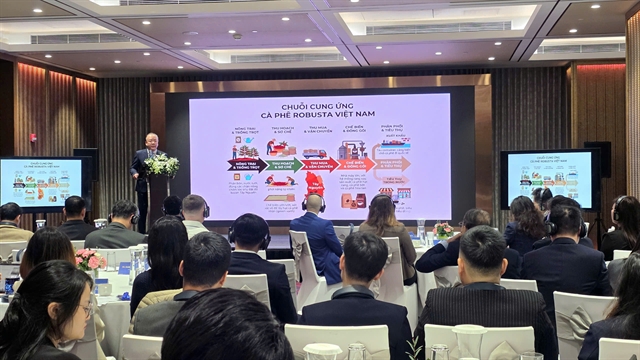
Trần Hữu Linh, director general of the MoIT's Agency for Domestic Market Surveillance and Development, said the UK had provided valuable technical assistance over nearly two years in developing the legal framework.
He said the ministry had requested further UK support in preparing a handbook to help market participants understand commodity derivatives consistently and in simulating the operation of a standard commodity derivatives market.
According to Linh, the Government has set a target of bringing at least ten domestically produced commodities onto exchanges by 2030 and establishing reference prices for three to five products. The development strategy also envisages expanding international connections after the first domestic products are listed.
Robusta coffee has been identified as the starting product. Linh noted that Việt Nam is the world's leading Robusta coffee exporter, yet domestic producers remain dependent on reference prices established by overseas commodity exchanges. A domestic derivatives market could provide farmers, cooperatives and businesses with instruments to hedge against price fluctuations.
Linh also highlighted the potential application of derivatives in the energy sector, including crude oil, as well as their contribution to developing logistics infrastructure, warehousing, transportation, delivery and payment services.
The MoIT's development priorities include expanding price risk management tools, introducing derivatives products linked to strategic Vietnamese commodities, and ensuring transparent, safe and sustainable market operations through effective governance and supervision.
Two memoranda of understanding were signed at the forum. The Vietnam Commodity Exchange (MXV) and UK-based CWT Commodity Logistics agreed to cooperate on exchange-accredited warehousing infrastructure and physical delivery arrangements for future commodity contracts.
Meanwhile, the Global On-chain Economy Alliance and Traydstream agreed to explore AI-based verification of trade documents to help Vietnamese exporters access trade finance. — BIZHUB/VNS