New decision may cause imablance in city’s real-estate market: HoREA
The real estate market in HCM City may encounter an imbalance with an overabundance of large apartments and a shortage of smaller units, contrary to the actual demands of the majority of the population, following the implementation of regulations regarding population scale in apartment buildings.
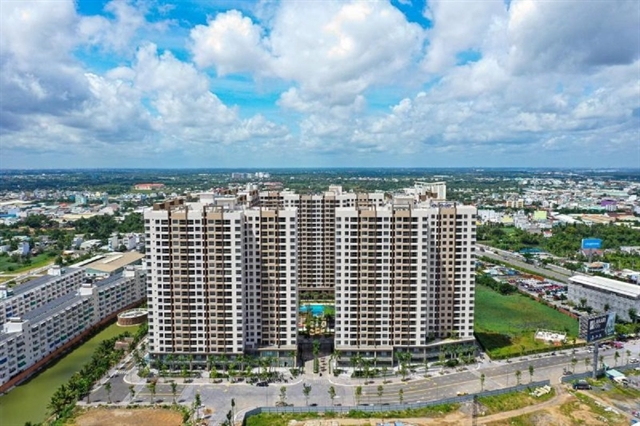
HCM CITY — The real estate market in HCM City may encounter an imbalance with an overabundance of large apartments and a shortage of smaller units, contrary to the actual demands of the majority of local people, following the implementation of regulations regarding population scale in apartment buildings.
This concern was raised by the HCM City Real Estate Association (HoREA) two months after the issuance of Decision 32/2025/QĐ-UBND, which took effect on January 9, 2026.
The Decision 32/2025/QĐ-UBND specifies the method for determining population in apartment and mixed-use buildings in the region with specific requirements for the average floor area per person to manage urban population density.
Specifically, for commercial apartments, a one-bedroom unit measuring 25-32sq.m is designated for a single person; while a one-bedroom unit ranging from 32-56sq.m accommodates two individuals.
A two-bedroom unit with a floor size exceeding 56-64sq.m is intended for two people; apartments from 64-96sq.m are suitable for three occupants. Similarly, a three-bedroom unit measuring above 96-128sq.m is suitable for four residents; for apartments exceeding 128-160sq.m, five individuals are considered. For units with four bedrooms or more, or those larger than 160sq.m, up to six occupants are accounted for.
In a statement, the association highlighted that although the decision serves as a crucial legal foundation for determining population scale and apartment structure, several discrepancies have come to light after two months of its implementation.
According to Lê Hoàng Châu, chairman of HoREA, this regulation has led to an increase in the number of larger apartments featuring three to four bedrooms and 85 square metres (sq.m) in size, while significantly reducing the availability of medium-sized apartments with two bedrooms ranging from 45-70sq.m and small apartments under 45sq.m in commercial housing projects.
This population calculation method has also impacted social housing, resulting in more large apartments nearing the maximum limit and diminishing options for smaller units, he stressed.
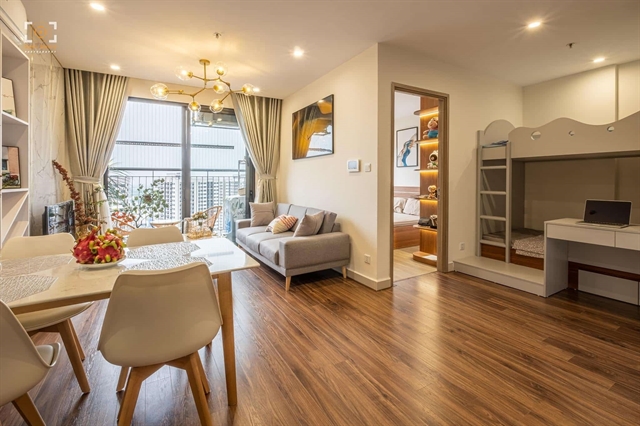
Châu explained that in HCM City, there is substantial demand for smaller homes, particularly two-bedroom apartments, with 60 per cent to 70 per cent of customers falling within the middle-income group seeking such properties.
On the other hand, 20 per cent to 25 per cent of individuals with lower incomes are in search of one-bedroom apartments. Comparatively, luxury customers represent only a small percentage of the market.
Châu expressed concern that the current population calculation approach is forcing developers to design more large apartments to optimise the approved floor area. This not only creates sales challenges for businesses but also makes homeownership aspirations for millions of small families seem unattainable.
The rigidity of the current method limits developers from aligning their projects with market demand and forces them to adhere to population guidelines to obtain project approval. HoREA representatives contend that averaging 3.5 persons per apartment or basing calculations on the current area structure is no longer realistic due to the trend of smaller urban household sizes.
To address this challenge, HoREA proposed amendments to Article 4 of Decision 32 to introduce greater flexibility.
They recommend determining the maximum population scale based on urban planning and the national housing development strategy (averaging 32sq.m per person) during the initial phase.
Subsequently, developers should have the freedom to shape apartment structures based on market demand, ensuring that the proportion of apartments under 45sq.m does not exceed 25 per cent and that the total population remains within the approved threshold.
HoREA emphasised that determining the population should be in line with the forecasted and practical development of HCM City.
In the context of the city's efforts to renovate old apartment buildings and relocate houses along canals, a flexible population policy will be a significant lever to attract social resources, meet the actual housing needs of a large portion of the population, alleviate business challenges, and most importantly, safeguard the rights and opportunities for future access to housing for the residents of HCM City. — VNS