MoIT issues new rules on electricity pricing for EV charging stations
A new circular provides detailed guidance on the application of electricity tariffs, ensuring transparency, correct classification of users and proper usage purposes.
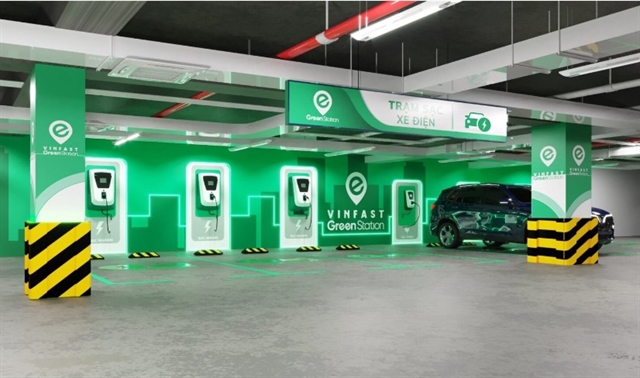
HÀ NỘI — The Ministry of Industry and Trade (MoIT) has issued a new circular regulating electricity pricing, which includes detailed provisions on retail electricity prices for electric vehicle (EV) charging stations and battery-swap cabinets.
Circular 60/2025/TT-BCT provides detailed guidance on the application of electricity tariffs, ensuring transparency, correct classification of users and proper usage purposes.
It focuses on implementing retail electricity prices for different user groups and electricity prices for retail units in accordance with the Prime Minister's Decision 14/2025/QĐ-TTg on the structure of retail electricity tariffs.
A new point included in this circular is the addition of separate regulations on retail electricity prices for EV charging.
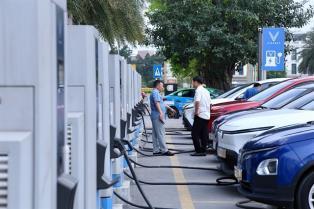
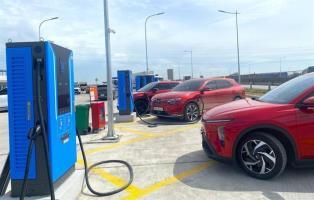
EV charging stations, charging poles and battery-swap cabinets used for commercial purposes must install separate electricity meters and apply prices based on the charging purpose.
If EVs are charged under a household electricity contract, household electricity prices will continue to apply.
For customers using electricity for household purposes and who have one electricity meter, but are also using some power for non-household purposes, household retail electricity prices will apply to all electricity consumption recorded at that meter, including EV charging.
Customers who have signed contracts for non-household electricity use will see retail electricity prices applied according to each usage purpose if there is a separate meter for EV charging.
If separate metering cannot be installed due to grid configuration, the price of electricity will be applied according to Point b, Clause 3, Article 6 of the circular.
Specifically, for customers using electricity for non-household purposes through a single meter, the electricity buyer and seller must agree on the percentage of electricity used for each purpose based on actual usage patterns.
The circular requires electricity prices to be applied correctly to each customer group and usage purpose. Electricity buyers must declare their usage truthfully and notify the seller 15 days in advance of any change.
If electricity is used for the wrong purpose, the price difference may be recovered or refunded for up to the previous 12 months, and compensation may be requested.
Under current regulations, the average retail electricity price is VNĐ2,204 (US$0.08)/kWh (excluding VAT).
The retail electricity price for EV charging ranges from VNĐ1,564.89 to VNĐ4,297.94/kWh, depending on the voltage level and time-of-use category. — VNS