Mekong Delta needs stronger enterprises to unlock growth potential
The Mekong Delta needs a stronger business sector to transform its natural advantages into higher productivity, added value and sustainable growth, speakers said at the 2026 Mekong Delta CEO Networking Programme held in Cần Thơ City on Tuesday.
CẦN THƠ — The Mekong Delta needs a stronger business sector to transform its natural advantages into higher productivity, added value and sustainable growth, speakers said at the 2026 Mekong Delta CEO Networking Programme held in Cần Thơ City on Tuesday.
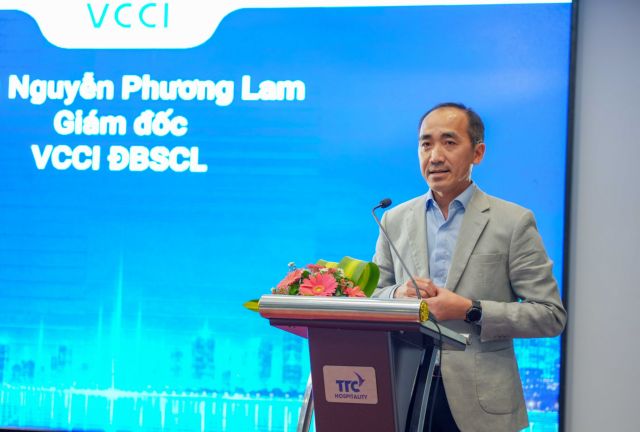
Nguyễn Phương Lam, director of the Việt Nam Chamber of Commerce and Industry's (VCCI) Mekong Delta Branch, said the region's greatest challenge was not a lack of development potential but the shortage of enterprises capable of leading value chains and driving long-term growth.
He said businesses in the region, many of which originated from household production models, had grown based on practical experience but had yet to build strong core competencies.
"As market requirements continue to rise, enterprises must improve governance, optimise resources and enhance competitiveness through innovation and technology," Lam said.
According to VCCI, the Mekong Delta recorded 9,686 newly established businesses in the first six months of 2026, up 19 per cent year-on-year. Cần Thơ accounted for 2,493 new businesses, representing a 27 per cent increase.
However, average registered capital stood at only VNĐ6.8 billion (US$260,000) per enterprise.
During the same period, 1,590 businesses were dissolved or suspended operations, up 55 per cent from the previous year. Meanwhile, 8,493 enterprises exited the market, reflecting continued competitive pressure on businesses across the region.
Lam said the figures showed that improving the quality and competitiveness of enterprises was more important than simply increasing their number.
The VCCI's 2025 Mekong Delta Annual Economic Report, released in May this year, highlighted a "missing middle" in the region's business structure, with too few medium-sized enterprises capable of growing into large companies.
According to the report, micro-enterprises account for 87.8 per cent of businesses in the region, while small enterprises make up 9.5 per cent. Medium-sized businesses represent only 1.8 per cent and large enterprises 0.9 per cent.
The report also showed that although the Mekong Delta contributes more than 30 per cent of its Gross Regional Domestic Product (GRDP) from agriculture, fewer than 5 per cent of enterprises operate in the agricultural sector.
Lam described the situation as a paradox, saying the region had strong agricultural advantages but lacked enterprises capable of investing in processing, technology and value-added production.
He said businesses needed to improve management capacity, embrace digital transformation and strengthen human resources to meet increasingly stringent market requirements, particularly in sustainability and corporate governance.
Nguyễn Thanh Tùng, president of the Knowledge Management Institute (KMi) and Rector of VABIS International College, said a leadership mindset was the starting point for business transformation.
"If leaders are willing to change, organisations will also change," he said. "New technologies and management systems can only deliver results when they are accompanied by changes in management thinking."

Tùng also called on businesses to adopt an ecosystem approach by strengthening cooperation within value chains rather than operating independently.
Sharing practical experience, Lâm Thúy Ái, chairwoman and general director of Mebipha Manufacturing and Trading Co Ltd, said continuous innovation had enabled the company to overcome growth barriers despite its modest beginnings.
She said Mebipha had invested in enterprise resource planning (ERP), automation, artificial intelligence and greener manufacturing practices while expanding its nationwide distribution network to nearly 1,000 agents.
The company is also piloting AI and Internet of Things (IoT) technologies in livestock and aquaculture projects in An Giang Province.
Ái acknowledged that the transition had required significant investment and organisational changes, including the replacement of employees who were unable to adapt to new management systems.
However, she said transparent governance, legal compliance and long-term investment had strengthened the company's competitiveness while reducing legal risks.
Participants agreed that supporting enterprises to expand beyond the micro and small scale would be critical to improving the region's competitiveness.
They said stronger governance, technological innovation, digital transformation, closer business linkages and the adoption of environmental, social and governance (ESG) standards would help enterprises generate greater value from the Mekong Delta's natural advantages.
The Mekong Delta is Việt Nam's largest agricultural production region, supplying the majority of the country's rice exports and a significant share of seafood and fruit production.
Economists have repeatedly identified stronger private-sector development as a key driver for improving the region's productivity and long-term economic resilience. — VNS