PM proposes ASEAN strategic infrastructure priority list through 2040
ASEAN needed not only to mobilise more capital and build new facilities but also to identify the right priorities, allocate resources efficiently and ensure effective implementation of regional infrastructure projects.
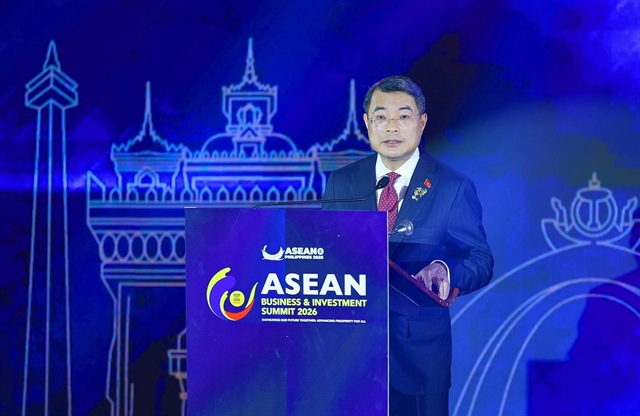
MANILA — Vietnamese Prime Minister Lê Minh Hưng has proposed that ASEAN develop a list of priority strategic infrastructure projects through 2040, focusing on cross-border transport, logistics, energy networks and digital connectivity to strengthen regional integration and economic growth.
Speaking at the ASEAN Business and Investment Summit 2026 (ABIS 2026) in Manila on Saturday, the PM said the region needed to move beyond infrastructure commitments towards concrete projects with clearly defined objectives, funding requirements, implementation timelines and financing arrangements.
Addressing a session on “Building Infrastructure for the Future ASEAN Economy”, PM Hưng said ASEAN needed not only to mobilise more capital and build new facilities but also to identify the right priorities, allocate resources efficiently and ensure effective implementation of regional infrastructure projects.
The PM outlined four priorities for the ASEAN Connectivity Strategic Plan 2026-35.
These include developing cross-border transport and logistics networks through interconnected economic corridors linking transport, manufacturing, logistics, trade and smart urban systems, while improving infrastructure resilience to climate change and emerging risks.
The second priority is energy connectivity, including diversifying supply sources, strengthening regional energy infrastructure and accelerating the transition to sustainable energy. He identified the ASEAN Power Grid as a strategic initiative for enhancing regional energy security, economic stability and sustainable development.
Digital connectivity is the third priority, with the PM highlighting the need for a secure, seamless and inclusive regional digital ecosystem. He said the ASEAN's Digital Economy Framework Agreement, signed at the summit, would help harmonise policies, reduce transaction costs and enable businesses to improve productivity and integrate more deeply into regional and global value chains.
The fourth priority is institutional and people-to-people connectivity, including harmonising standards and simplifying customs procedures. He also called for stronger cooperation in education, science and technology, alongside greater exchanges of skilled workers.
Four steps to deliver priorities
To translate these priorities into action, PM Hưng proposed four measures, beginning with the development of an ASEAN infrastructure priority list through 2040.
The list should identify strategic regional projects in cross-border transport corridors, logistics, power grids, digital infrastructure and sustainable smart cities, with projects classified according to their readiness for implementation, he said.
He also called for stronger coordination among member states throughout the planning, design and implementation of cross-border projects, including the harmonisation of technical and legal standards and mechanisms for sharing costs and benefits.
ASEAN should build a regional ecosystem for project preparation and capital mobilisation, strengthening technical assistance, feasibility studies, financial advisory services and risk assessments while connecting governments with development banks, investment funds, financial institutions and private investors, he said.
The PM stressed that the private sector should be treated as a substantive partner in infrastructure development, contributing not only capital but also technology, innovation, management expertise and operational efficiency.
Việt Nam is committed to developing infrastructure in tandem with stronger regional connectivity, he said.
The Vietnamese Government is pursuing efforts to achieve double-digit economic growth in 2026 and subsequent years, with comprehensive and modern infrastructure identified as a strategic breakthrough and a key driver of rapid and sustainable growth.
At the same time, Việt Nam is accelerating the completion of its expressway network and developing seaports, major railway projects, international airports and power generation and transmission infrastructure, he said.
He added that the country is also stepping up investment in energy, logistics and digital infrastructure. 5G coverage has reached more than 90 per cent of the population, while research and development into 6G technology is underway.
PM Hưng said Việt Nam, located at the intersection of several economic corridors and regional supply chains, is committed to developing infrastructure alongside efforts to strengthen ASEAN connectivity.
He said Việt Nam stands ready to work with businesses and international partners to remove barriers and create a stable, favourable environment for investment and business activities.

The ABIS 2026 is an annual flagship event organised by the ASEAN Business Advisory Council and the region's largest recurring business and trade gathering. It brings together regional leaders, policymakers, business representatives, investors and international organisations.
The summit's agenda covers economic integration, trade and investment, energy and food security, industrial and infrastructure development, the creative economy, digital transformation, artificial intelligence, inclusive growth and human resource development.
According to the Vietnam Chamber of Commerce and Industry, ABIS 2026 attracted more than 2,000 delegates, with around 10 world leaders and more than 40 international experts among its speakers. Participants included heads of state, ministers, business executives and regional economic experts.
Discussions highlighted ASEAN's economic scale and growing infrastructure needs. The region has a population of nearly 700 million and combined gross domestic product of more than US$4.2 trillion in 2025. Its economy expanded by 4.9 per cent last year and is projected to grow by about 4.5 per cent in 2026.
The region's expanding economy is driving greater demand for connectivity. According to the Asian Development Bank, ASEAN needs about $210 billion in annual infrastructure investment to meet its development requirements. — VNS