Land clearance delays slow industrial park expansion in Cần Thơ
Efforts to accelerate industrial development in Cần Thơ City continue to face persistent challenges, as slow compensation, support and resettlement processes hinder the rollout of key projects across the city’s industrial park system.
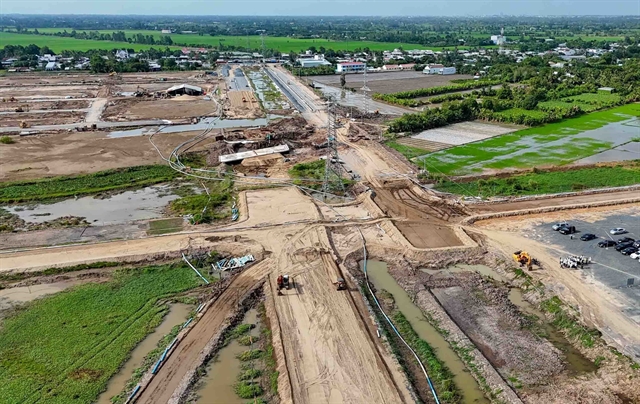
CẦN THƠ — Efforts to accelerate industrial development in Cần Thơ City continue to face persistent challenges, as slow compensation, support and resettlement processes hinder the rollout of key projects across the city’s industrial park system.
Local authorities have identified land clearance bottlenecks as a major constraint affecting infrastructure development and investor confidence.
Although the city is positioning itself as a leading industrial hub in the Mekong Delta, delays in handing over cleared land have disrupted construction timelines and slowed the attraction of secondary investors.
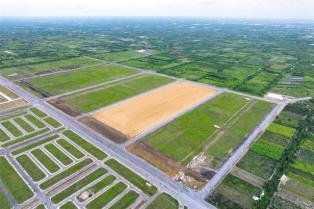
Several major projects remain in the compensation and resettlement stage, including Vĩnh Thạnh Industrial Park (Phase 1 and Phase 2), Đông Phú No.2 Industrial Park and Sông Hậu No.2 Industrial Park.
These delays have created a ripple effect, holding back the completion of technical infrastructure and limiting operational readiness.
According to the Management Board of Export Processing and Industrial Zones, the city currently manages 13 industrial parks, including nine in operation, one under infrastructure construction and three still undergoing compensation and resettlement.
In addition, there are two concentrated industrial clusters, along with the Sông Hậu Power Centre and the Sông Hậu Industrial Park Operations Centre.
Despite these constraints, investment attraction has shown positive signs.
Since the administrative merger, authorities have engaged with 24 investors and secured eight new projects.
These include seven domestic projects with total registered capital of more than VNĐ17.7 trillion (US$700 million), and one foreign invested project valued at $100 million.
In total, industrial parks and clusters in the city have attracted 348 projects, with domestic registered capital exceeding VNĐ134.8 trillion ($ 5.3 billion), alongside foreign direct investment of more than $4.49 billion.
Looking ahead, Cần Thơ has outlined an ambitious development roadmap.
By 2030, with a vision to 2050, the city plans to develop 40 industrial parks covering more than 21,600 hectares, along with two industrial clusters and the Trần Đề Economic Zone, which is expected to span 40,000 hectares.
During the 2026-30 period, 15 industrial parks are scheduled for development, followed by 12 additional projects after 2030.
In 2026, the municipal government approved the preparation of planning for nine industrial parks, including An Nghiệp Expansion Industrial Park, Phú Mỹ Industrial Urban Service Zone, Trần Đề Industrial Urban Service Zone, Trần Đề No.2 Industrial Park, Đông Phú Industrial Park, Long Thạnh Industrial Park, Tân Bình Industrial Park, Vĩnh Thạnh No.2 Industrial Park and Vĩnh Thạnh No.3 Industrial Park.
Relevant agencies are expediting procedures to complete planning documentation for these projects.
Alongside expansion, the city is also under pressure to ensure synchronised infrastructure and avoid localised congestion.
Authorities have called for a comprehensive review of existing industrial parks to improve connectivity, while strengthening coordination in land management, construction order and environmental protection.
Accelerating compensation, support and resettlement is therefore seen as a decisive solution to unlock stalled projects.
City leaders have urged closer coordination among departments, local administrations and relevant agencies to speed up site clearance and ensure adequate support for affected residents.
These priorities were highlighted during a working session held earlier this week between the municipal People’s Committee and the Management Board of Export Processing and Industrial Zones.
At the meeting, Chairman Trương Cảnh Tuyên commended the board for its comprehensive review of industrial parks and its effective support for the city’s industrial governance following the administrative merger.
He also praised the unit’s cohesion and professional capacity, which have contributed to stable operations across industrial zones.
The chairman called for greater flexibility in planning implementation, more proactive proposals from the management board and stronger coordination with relevant departments.
He stressed the need to work closely with the Department of Construction to review infrastructure connectivity and avoid localised congestion, while coordinating with the Department of Agriculture and Environment and local authorities to accelerate compensation and resettlement progress.
According to Lê Công Lý, head of the management board, the agency will focus on implementing key policy directions through to the end of 2026.
Priorities include completing procedures for the establishment of three new industrial parks, finalising planning tasks and preparing a proposal for the Trần Đề Economic Zone.
At the same time, the board will step up investment promotion, support enterprises in improving production efficiency and intensify efforts to remove bottlenecks in infrastructure development, particularly in land clearance and infrastructure construction progress.
As Cần Thơ moves towards becoming a major industrial centre in the Mekong Delta, resolving land related challenges will be crucial to translating planning ambitions into tangible economic outcomes. — VNS