Integrated industrial-energy centre model critical for Việt Nam to drive growth
The key is to move away from fragmented development towards shared infrastructure, coordinated investment and complementary value chains.
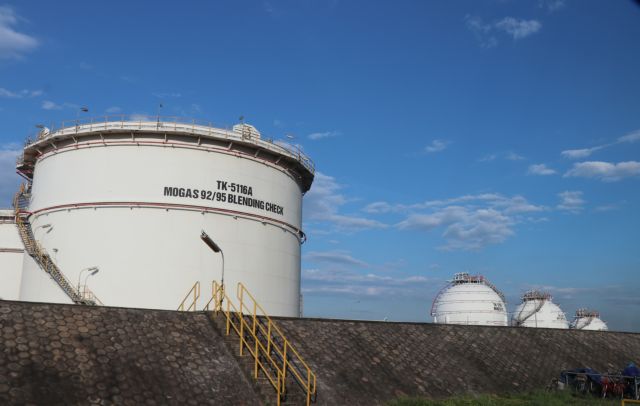
HÀ NỘI — Developing industrial-energy centres built around integrated ecosystems, stronger domestic technological capabilities, and shared infrastructure has emerged as critical for Việt Nam to bolster energy security and unlock new economic growth drivers, experts said at a conference in Hà Nội on Wednesday.
Addressing the conference on the National Industrial Energy Centre, Dư Văn Toán from the Institute of Meteorology, Hydrology, Environment and Marine Sciences noted that integrated models—particularly those centred on renewable energy—could help Việt Nam cultivate new industrial ecosystems and reinforce its role in regional and global supply chains.
He said the energy industry was shifting from a model of standalone projects towards integrated developments where onshore and offshore wind power, solar energy, manufacturing facilities, seaports, logistics services and shared infrastructure were brought together.
Such integration would improve energy supply efficiency while enabling industries to share facilities, recover waste heat, reuse water and develop interconnected production chains, he said.
Citing examples from Britain, Germany, Denmark and China, Toán said successful renewable energy industrial hubs were often developed in coastal areas, where ports, energy resources and industrial customers could be closely connected.
Nguyễn Quốc Thập, chairman of the Vietnam Petroleum Association, said developing integrated industrial-energy centres is essential to support Việt Nam’s ambition of sustaining double-digit economic growth in the years ahead.
Such centres should leverage local industrial and geographical strengths, including port and logistics infrastructure, he said.
For instance, Dung Quất can grow around its refining and petrochemical base, while Vũng Tàu holds advantages in mechanical engineering, petroleum technical services, and port logistics. Meanwhile, Cà Mau can build on its gas-power-fertiliser complex, and industrial hubs in HCM City, Hà Tĩnh, and Thanh Hóa can foster their own specialised ecosystems.
“The key is to move away from fragmented development towards shared infrastructure, coordinated investment and complementary value chains,” Thập said.
Lê Việt Cường, deputy director of the Institute of Energy under the Ministry of Industry and Trade, said national energy planning must increasingly account for strategic autonomy and the development of domestic supply chains.
Industrial development and energy planning should therefore go hand in hand, with energy ensuring stable supplies for industry and industrial expansion generating the markets and demand needed to support the energy sector, Cường said.
Associate Professor Nguyễn Thường Lạng of the National Economics University noted that national industrial-energy centres offer an innovative institutional and organisational model to help Việt Nam achieve its growth ambitions.
Rather than pursuing standalone projects, the country should build integrated ecosystems capable of pooling resources, technology, and production capacity, he added.
He pointed to international examples in Texas (US), Tianjin (China), and Saudi Aramco’s integrated industrial model, while stressing that foreign practices must be adapted to Việt Nam’s specific conditions.
The national industrial-energy centres could strengthen energy security and provide stable, increasingly green energy supplies for emerging industries such as semiconductors and artificial intelligence, while boosting productivity, innovation and Việt Nam’s participation in global value chains.
Besides, the centres could generate widespread regional economic benefits by attracting investment, creating jobs, developing urban and research infrastructure and fostering new industries and services, he said.
Proposed policies
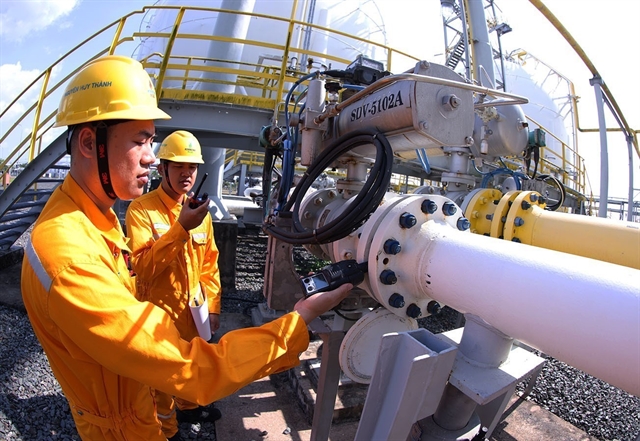
Mai Tuấn Đạt, deputy general director of Bình Sơn Refining and Petrochemical JSC (BSR), said BSR aimed to evolve from a fuel producer and supplier into a core enterprise connecting industrial and energy value chains in Dung Quất.
Đạt estimated that establishing a national industrial-energy centre will require around US$16.1 to $20.5 billion in investment, including $14 to $17.5 billion by 2030.
He urged special mechanisms to be raised covering investment procedures, land, taxation, credit, human resources, decentralisation and master planning to attract investors and facilitate development.
Dương Quốc Huân, from PetroVietnam Technical Services Corporation (PTSC), said manufacturing and technical services should form the backbone of national industrial-energy centres.
Such centres should go beyond power plants, gas facilities, refineries and renewable energy projects to develop domestic capabilities in engineering, manufacturing, installation, operation and maintenance.
Nguyễn Văn Thịnh of Hanoi University of Mining and Geology said centres should integrate petroleum, gas-fired power, hydrogen, carbon capture and storage (CCS), advanced processing technologies and artificial intelligence.
Nguyễn Trí Long said the success of industrial-energy centres should be measured not by the number of projects or registered investment capital, but by the additional value they create, productivity gains, competitiveness and their contribution to regional and national economic development.
Large State-owned enterprises such as PetroVietnam could play a leading role by investing in strategic infrastructure, attracting private and foreign investors, connecting suppliers and supporting technology transfer and workforce development.
According to Cường, clearer decentralisation, competitive investment incentives to attract strategic investors and major fundings, as well as integrated data-sharing systems to improve transparency, are critical to ensure effective development of industrial-energy centres.
He stressed that local governments should be given greater autonomy to tailor policies to local conditions, while businesses and investors should have access to reliable information to support their participation in integrated supply chains.
Concluding the conference, Thập said a pilot industrial-energy centre should be selected, with a designated core enterprise and clearly accountable leadership.
He outlined three priorities for developing national industrial-energy centres.
First, development must follow an ecosystem-based approach, linking infrastructure projects and businesses to establish integrated value chains and improve overall efficiency.
Second, implementation mechanisms must be practical and flexible, allowing projects to proceed while policies are gradually refined rather than waiting for every condition to be fully established.
Third, performance must be assessed through tangible results, including energy efficiency, productivity, added value, competitiveness and contributions to economic growth. — VNS