Impact investment to help Vietnamese businesses join global supply chains
Impact investors assess not only businesses' viability, financial performance, and growth prospects but also how effectively they integrate social and environmental objectives into their operations
HCM CITY — Impact investment and integrated finance could help Vietnamese businesses secure international capital, meet sustainability standards, and capture a greater share of the value generated by global supply chains, a forum heard in HCM City on Wednesday.
Impact investments are made to generate positive, measurable social and environmental impacts in addition to financial returns.
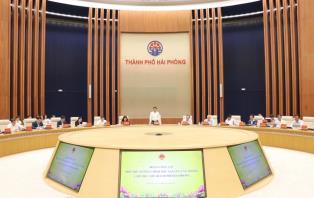
The Impact Investment Forum: Unlocking Trade and Supply Chains was organised by the Investment and Trade Promotion Centre of HCM City (ITPC), Impact Investment Exchange (IIX), the Canadian Chamber of Commerce in Vietnam (CanCham), and other partners, in cooperation with the Government of Canada and the 2022–27 Impact Investment Readiness Vietnam (IIRV) project.
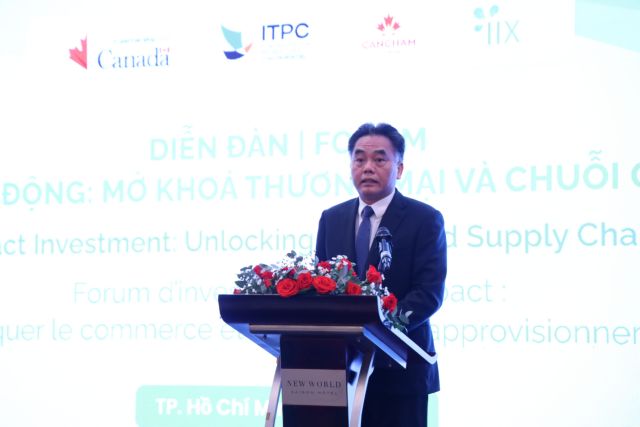
Speaking at the forum, Nguyễn Lộc Hà, permanent vice chairman of the HCM City People's Committee, said the city is prioritising green, digital, and circular economic development, with impact investment providing an additional source of finance that combined capital mobilisation with positive social and environmental outcomes.
Hà said that, as of November 2026, the IIRV project had supported around 250 Vietnamese businesses, including 77 in HCM City, in agriculture, technology, manufacturing, education, healthcare, tourism, and environmental protection.
He called for practical solutions in three areas: improving businesses' access to suitable financing; strengthening the capabilities of small and medium-sized enterprises (SMEs), women-led businesses, and climate-resilient firms; and establishing concrete mechanisms for cooperation after the forum.
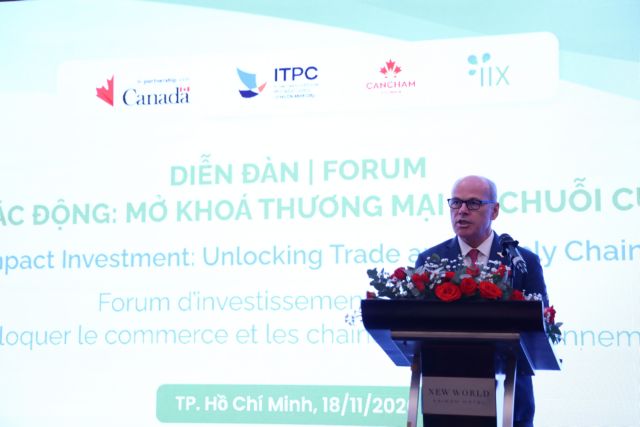
The Canadian ambassador to Việt Nam, Jim Nickel, said the recent elevation of bilateral relations to a strategic partnership had given fresh impetus to cooperation in trade, investment, and innovation.
He said Việt Nam faced an estimated annual financing gap of US$24 billion for micro, small, and medium-sized enterprises, highlighting the role that official development assistance and impact investment could play in attracting private capital.
"We believe that impact investment can play an important role in advancing these shared objectives. Through a range of innovative finance projects in Việt Nam, Canada is helping Vietnamese businesses improve investment readiness, strengthen their sustainability practices, and connect with investors, commercial partners, and new market opportunities," he said.
International investors and buyers increasingly expected suppliers to meet sustainability, traceability, responsible business conduct, and environmental, social, and governance (ESG) standards, he said. Meeting these requirements was becoming essential not only to attract investment but also to participate in global supply chains.
The forum provided an opportunity to consider the next stage of this process, he said. Mobilising more investment was critical, but ensuring that businesses could meet the ESG expectations of investors and international buyers was equally important.
Phạm Quang Nhật, director of ITPC, said bilateral trade between Việt Nam and Canada was worth approximately $8.6 billion in 2025, up 18.8 per cent year-on-year, and $6.91 billion in the first eight months of 2026.
Canada had 321 active investment projects in Việt Nam worth nearly $4.93 billion as of August 2026, ranking 14th among foreign investors. HCM City accounted for around 130 Canadian projects with more than $133 million in registered capital as of June 30.
To make better use of tariff preferences under the CPTPP trade agreement, Nhật called for greater investment in production capacity and product quality in agrifood and wood processing, stronger links between financing and confirmed orders, and support for businesses in meeting certification, rules-of-origin, traceability, and ESG requirements.
Financing tailored to business needs
Robert Kraybill, chief investment officer of IIX, said Việt Nam has established itself as a major manufacturing and export hub, but domestic businesses still struggle to capture a larger share of the value generated by global supply chains.
Many SMEs lack collateral, credit histories, and suitable financing to cover equipment upgrades, compliance costs, and international certifications, he said.
He advocated combining commercial and concessional capital through blended finance, credit guarantees, risk-sharing instruments, purchase-order financing, and technical assistance.
The IIRV project had helped mobilise approximately $12.75 million in private impact capital for participating businesses.
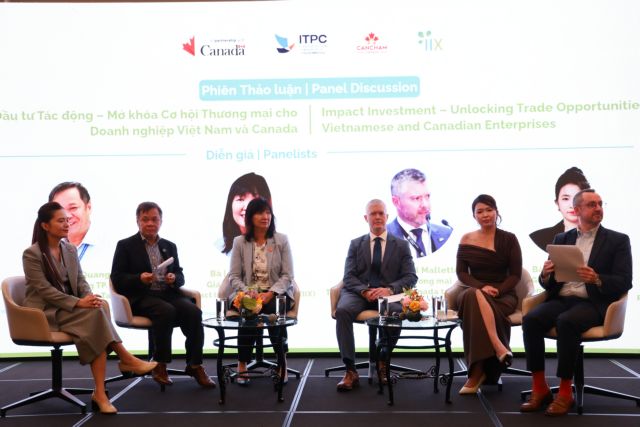
Through IIRV, IIX provides technical assistance to help businesses become ready for investment, including preparing financial documentation and demonstrating their social and environmental contributions.
He stressed that financing needed to match businesses' needs at different stages, from preparing to meet international buyers' requirements to expanding production after receiving orders and securing longer-term capital for growth.
"We have seen tremendous opportunities for impact investors to invest in businesses across the country that generate both strong economic value and positive social and environmental impacts."
He identified sustainable agriculture, clean energy, energy and resource efficiency, and technology as promising areas for impact investment.
Impact investors assess not only businesses' viability, financial performance, and growth prospects but also how effectively they integrate social and environmental objectives into their operations, he said.
"We want to see businesses that can achieve their social and environmental objectives through the successful implementation of their business missions."
He added that the ability to measure these impacts is equally important.
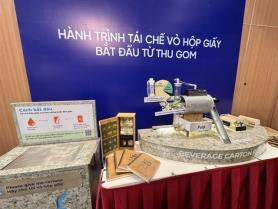
Trinh Công Qui, founder and CEO of BioWraps, said growing global demand for environmentally friendly packaging is creating opportunities for Vietnamese green-technology businesses.
However, they continue to face three major challenges: insufficient long-term capital to expand production, weaknesses in financial management and due-diligence documentation, and high market-entry costs.
Working capital is a particular concern, as suppliers have to cover raw materials, labour, and international testing costs while waiting 60 to 90 days for export payments.
Drawing on his experience with the IIRV project, Qui recommended linking support to help businesses become investment-ready with long-term green procurement commitments and financing backed by confirmed orders, turning business matchmaking into actual commercial contracts. — VNS