Industries respond to rising tariffs and Middle East conflict
The US tariff policy and Middle East conflict are forcing companies in logistics, textiles, fertilisers and rubber to accelerate restructuring efforts in order to preserve profit margins and identify opportunities amid growing risks.
Compiled by Hoàng Hà
The US tariff policy and Middle East conflict are forcing companies in logistics, textiles, fertilisers and rubber to accelerate restructuring efforts in order to preserve profit margins and identify opportunities amid growing risks.
Escalating tensions in the Middle East are pushing up oil prices and freight costs while the United States tightens tariff policies.
As the conflict in the Middle East has intensified in recent days, the Việt Nam Logistics Business Association (VLA) has launched a rapid survey to assess the extent to which developments in the region are affecting logistics companies in Việt Nam.
The survey, open to logistics firms until March 9, aims to gather feedback on operational conditions, emerging challenges and policy recommendations as international transport markets experience significant volatility.
Specifically, the survey focuses on how closely companies are monitoring the conflict in the Middle East and how they assess its impact on their operations. It also examines practical consequences such as rising freight costs, longer shipping times, difficulties in booking cargo space, container shortages and risks relating to cash flow, contractual obligations and the ability to identify alternative transport routes.
In addition, the survey records the response measures companies have already implemented, including adjustments to transport routes, shifts in modes of transport, contingency planning and stronger risk management in logistics operations.
VLA Secretary General Nguyễn Đức Bình said collecting information from businesses at this stage would provide the association with real-world data to assess the impact of geopolitical disruptions on Việt Nam’s logistics sector.
“Through this survey, the association will consolidate the views and proposals of businesses in order to report to and recommend necessary support measures to the Government and relevant state authorities,” said Bình.
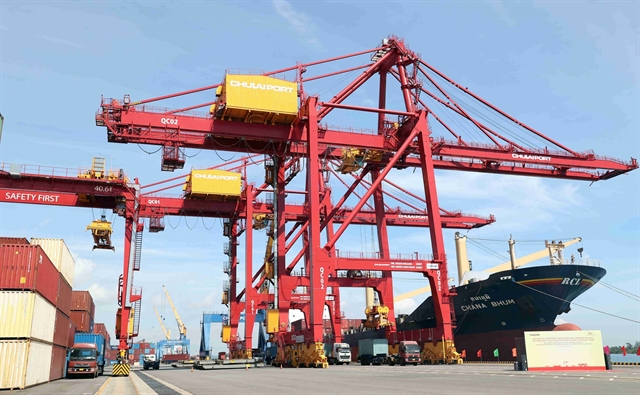
According to analysts at VnDirect Securities, most Vietnamese shipping companies operate primarily on intra-Asia routes and rarely run direct services to conflict zones. As a result, rising global freight rates could benefit these companies despite broader geopolitical tensions.
For port operators, the impact is expected to be limited as overall cargo throughput is unlikely to be significantly affected by the conflict.
Meanwhile, analysts at Vietcombank Securities Company (VCBS) believe container shipping companies may benefit from supply chain disruptions linked to the Middle East conflict.
International shipping lines are facing vessel shortages as ships are forced to take longer detours or become stranded at major transhipment hubs.
This reduces shipping capacity, disrupts routes, causes port congestion and extends vessel waiting times, ultimately driving up time-charter rates for container ships.
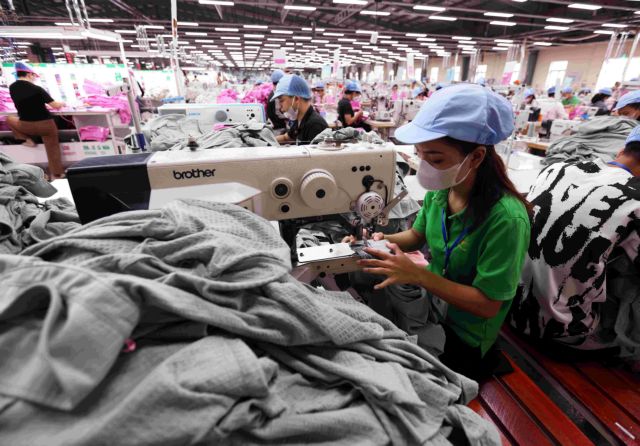
Garment sector
Meanwhile, for Việt Nam’s textile and garment industry, the immediate concern lies in both the Middle East conflict and evolving US tariff policies.
Garment exports to the US are currently subject to a temporary tariff of 10 per cent and existing Most Favoured Nation (MFN) duties, while the possibility of raising the temporary tariff to 15 per cent remains under consideration.
Industry experts advise textile companies to prioritise financial flexibility, strengthen management of exchange rate and raw material risks, restructure supply chains and move towards higher value-added production.
In an environment of elevated tariffs, competitive advantages will likely favour companies capable of controlling costs, ensuring compliance with rules of origin and delivering orders quickly.
At an internal seminar of the Việt Nam National Textile and Garment Group (Vinatex) discussing market prospects for March 2026, chairman Lê Tiến Trường emphasised that the market in 2026 would remain highly uncertain and be shaped by tariff changes, geopolitical tensions and rising logistics costs.
Such conditions, he said, would require the sector to act proactively and flexibly in production and business while developing specific action programmes based on different forecast scenarios.
Regarding the US market, Trường advised member companies to anticipate continued requests from buyers for price adjustments.
Firms should also accelerate shipments to the US during the 150-day period in which the additional 10 per cent tariff is in force, thereby optimising delivery schedules and reducing the risk of unfavourable policy changes.
For the European Union market, companies had been urged to prepare appropriate delivery plans in case transport routes change, logistics costs rise and shipping times lengthen.
“Businesses must reassess raw material demand, pricing structures and production schedules. While they also must accelerate manufacturing to offset longer shipping times and minimise the risks of late deliveries and additional costs,” Trường said.
Opportunities
Beyond logistics and textiles, analysts at VCBS suggest that the conflict involving the US-Israel and Iran could bring positive effects to certain industries in Việt Nam, particularly rubber and fertilisers.
In the rubber sector, escalating geopolitical tensions in the Middle East have pushed oil prices higher, raising concerns that production costs for synthetic rubber, a substitute for natural rubber, will also increase.
Reflecting these expectations, global rubber prices have risen significantly in recent weeks, approaching US$2,000 per tonne. As a result, profit margins for rubber companies are expected to improve in the near term.
For fertilisers, the Middle East accounts for approximately 20–25 per cent of global urea exports, 30–35 per cent of ammonia exports and about 10–15 per cent of global DAP and MAP exports.
Disruption to shipping routes through the Strait of Hormuz could therefore interrupt 15–20 per cent of the world’s traded fertiliser supply.
VCBS analysts note that if domestic gas input prices in Việt Nam do not rise in line with global markets, local urea producers using domestic gas, such as PetroVietnam Ca Mau Fertiliser (DCM) and PetroVietnam Fertiliser and Chemicals Corporation (DPM), may see improved profit margins thanks to the widening gap between export selling prices and input costs.
Moreover, as these companies rely on domestically supplied gas, they face limited risk of physical supply disruptions, with most impacts arising instead from price fluctuations.
In an increasingly uncertain global environment, shaped by shifting US tariff policies and escalating conflict in the Middle East, Vietnamese businesses across these sectors are being encouraged to turn risks into opportunities.
Early risk forecasting, flexible planning and accelerated transformation will play decisive roles in determining competitive positioning. Companies that proactively restructure, manage risks effectively and move up the value chain in global supply networks are likely to emerge with the greatest advantages. — VNS