HCM City to tackle public spending bottlenecks
HCM City is stepping up efforts to resolve the long-standing paradox of abundant capital but low public spending, which will continue to play a decisive role in sustaining growth in 2026 and subsequent years.
HCM CITY — HCM City is stepping up efforts to resolve the long-standing paradox of abundant capital but low public spending, which will continue to play a decisive role in sustaining growth in 2026 and subsequent years.
Despite improvements compared to previous years, public spending disbursement in 2025 fell short of expectations.
By year-end the city had disbursed 74 per cent of the amount targeted by the Government – VNĐ89.077 trillion (US$3.7 billion) out of VNĐ120.323 – well below the near-100 per cent rate typically required to maximise economic impact.
This persistent shortfall has remained unresolved for many years, limiting the effectiveness of public spending as a growth driver.
City leaders noted that had public spending been more efficient, economic growth would not have been constrained to just over 8.03 per cent in 2025, but could have reached a much higher rate.
Slow land clearance was identified as one of the major bottlenecks, underscoring the need for more decisive solutions to accelerate work.
Based on commitments from agencies, departments and project developers, the Department of Finance projects that by the close of the 2025 fiscal year on January 31, 2026, disbursement could rise to around VNĐ114.393 trillion (roughly $4.77 billion), or 95 per cent of the plan.
January has been identified as a critical period to realise this target.
The department will continue reviewing and urging progress on projects with large disbursement volumes, while advising the city administration to promptly clear obstacles and ensure funds are released on schedule.
Priority will be given to major projects, with expected disbursement of VNĐ11.393 trillion (about $475 million), accounting for nearly 55 per cent of the remaining capital to be released.
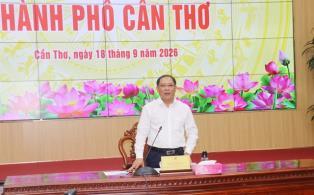
At a conference on implementing socio-economic tasks for 2026 held recently, chairman of the city People’s Committee, Nguyễn Văn Được, acknowledged these shortcomings, saying stronger and more effective measures are required to decisively address the disbursement deadlock and create a solid foundation for growth in 2026 and beyond.
Drawing lessons from previous limitations, he said preparations for the 2026 disbursement plan have been accelerated from the outset.
Relevant departments are expected to complete all necessary procedures within the week to enable timely funds allocation and ensure projects are implemented according to plan from the beginning of the year.
The city has already approved its 2026 public spending programme, enabling agencies and investors to proactively develop detailed disbursement schedules and ensure full utilisation of allocated funds.
To meet the target, the department has urged departments, districts, special administrative units, and project developers to implement a coordinated set of solutions.
Top priority will be given to completing procedures to allocate the remaining capital of VNĐ18.4 trillion ($767 million) in the first quarter of 2026, creating sufficient fiscal space for implementation throughout the year.
Monthly monitoring of every project will be intensified, with disbursement performance linked to emulation and performance assessments of officials.
Compensation, resettlement and technical infrastructure relocation will also be accelerated to ensure timely site handover, while local authorities mobilise grassroots political systems to build public consensus.
Notably, the city aims to shorten administrative processing time for investment procedures by at least 30 per cent, promote digital tools for monitoring and management and closely track construction material markets to address supply and price fluctuations.
It will also adjust capital allocation, decisively cutting funds for delayed projects and reallocating them to those with strong implementation capacity, while concentrating resources on large, high-impact projects to enhance the overall effectiveness of public investment. — VNS