Economy seen entering new growth cycle in 2026
Recent international assessments indicate that Viet Nam not only maintained solid growth momentum in 2025 but has also built favourable conditions to enter a new growth cycle, with positive prospects for 2026.
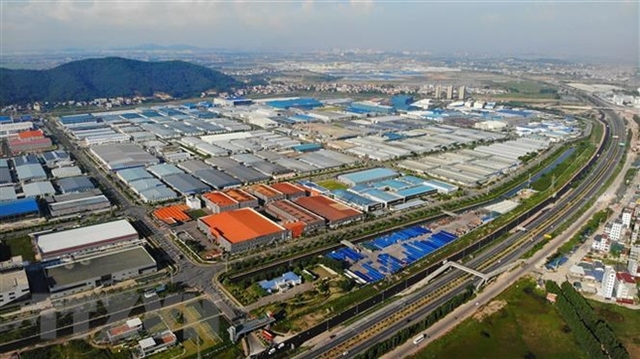
HÀ NỘI — Việt Nam continues to attract strong interest from international organisations and global investors, even as the world economy faces ongoing uncertainty related to geopolitics, trade tensions and monetary policy shifts, according to various reports from international organisations and media.
Reports state that the country was among Asia’s fastest-growing economies in 2025, with gross domestic product (GDP) expanding by 8.02 per cent, the second-highest rate recorded during the 2011–25 period.
Looking ahead, growth forecasts for 2026 remain upbeat. In a report released on January 21, the ASEAN+3 Macroeconomic Research Office (AMRO) projected Việt Nam’s GDP growth at 7.6 per cent in 2026, the highest among ASEAN+3 economies, which include the 10 ASEAN member states along with China, Japan and the Republic of Korea. Other institutions have issued similar projections, with UOB forecasting 7.5 per cent growth, HSBC 6.7 per cent and the World Bank 6.3 per cent.
AMRO said these projections reflect Việt Nam’s rising role in regional supply chains, particularly in manufacturing and high-technology exports, alongside steady domestic demand and a relatively stable macroeconomic environment.
Foreign business confidence remains a notable bright spot. The European Chamber of Commerce (EuroCham) reported that its Business Confidence Index reached 80 points in the fourth quarter of 2025, the highest level in seven years.
About 88 per cent of European firms surveyed said they were confident about Viet Nam’s economic outlook for the 2026–30 period.
From investors’ perspectives, Việt Nam’s appeal now goes beyond cost advantages. International businesses increasingly point to the expansion of manufacturing and supporting service ecosystems, stronger participation in higher value-added segments, and continued improvements in the investment climate.
International observers often highlight three main drivers supporting the outlook. The first is foreign direct investment (FDI), which continues to play a key role, particularly in electronics, technology, green manufacturing and digital transformation-related sectors. Việt Nam’s position in multinational companies’ efforts to diversify production locations has become more prominent.
The second driver is domestic consumption, which grew by around 8 per cent in 2025. Many reports note that consumption and domestic investment remain important pillars, helping the economy absorb external shocks more effectively.
The third is tourism, which has recovered strongly, with international arrivals exceeding 21 million in 2025, supporting services, employment and household spending.
AMRO also noted that global demand for technology, including advanced electronics, semiconductors, digital services and AI-related applications, is providing important support for highly open Asian economies such as Việt Nam.
Deeper integration into regional technology value chains is seen as a long-term advantage.
Despite the broadly positive outlook, international organisations caution that careful policy management will be needed to sustain growth. In an update released in late January 2026, Fitch Ratings said stability and continuity in senior leadership could support policy implementation and reform efforts.
However, it warned that high growth targets could increase pressure to maintain rapid credit expansion, raising leverage risks in an economy with high trade openness.
Fitch noted that its credit-to-GDP ratio has risen quickly in recent years, reflecting the important role of credit in driving growth. The State Bank of Vietnam’s target of around 15 per cent credit growth in 2026 was seen as an attempt to balance growth support with risk control.
Fitch also pointed to risks linked to the global trade environment, noting that the country's position in increasingly complex supply chains between the United States and China could lead to closer scrutiny of origin and transshipment issues. AMRO similarly highlighted uncertainties surrounding global trade policies and international financial conditions.
Overall, international assessments suggest that Việt Nam’s opportunity lies in maintaining macroeconomic stability, improving the investment environment, enhancing the quality of capital inflows and boosting productivity, thereby laying a stronger foundation for a new and more sustainable growth cycle from 2026 onward. — VNS