HCM City targets global standing with International Financial Centre
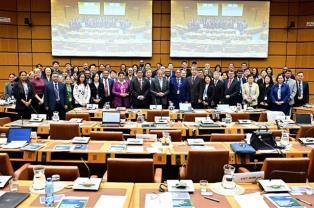
The establishment of an International Financial Centre (IFC) in HCM City is a strategic move to elevate the position of Việt Nam, and the city itself, on the global financial map, speakers said at a conference held in HCM City on December 20.
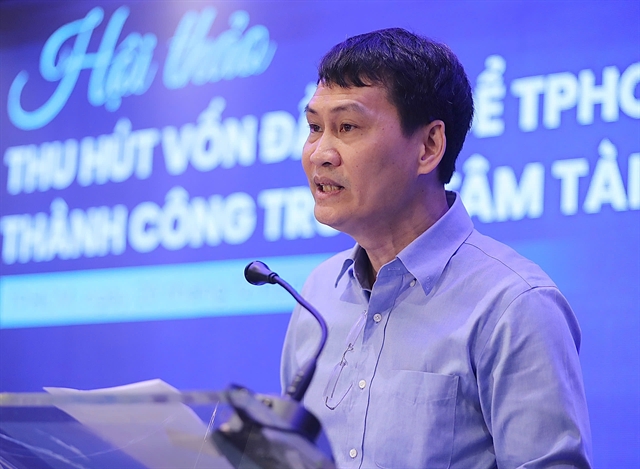
HCM CITY — The establishment of an International Financial Centre (IFC) in HCM City is a strategic move to elevate the position of Việt Nam, and the city itself, on the global financial map, speakers said at a conference held in HCM City on December 20.
Speaking at the conference “Attracting Foreign Investment for HCM City to Successfully Build an International Financial Centre”, organised by Tiền Phong newspaper, its editor-in-chief Phùng Công Sưởng said Việt Nam’s International Financial Centres in HCM City and Đà Nẵng would be officially inaugurated on December 21, marking the country’s first IFC model.
Covering nearly 900 hectares and linking the historic Bến Thành area with the Thủ Thiêm new urban zone, the project reflected decades of effort by the city’s leadership and people.
Despite global economic volatility, HCM City’s economic indicators in 2025 remained stable, enabling it to maintain its role as the nation’s economic engine.
“The city continues to lead the country in registered FDI, mainly in high technology and financial services, while strong retail and consumer service growth reflects the purchasing power of its more than 14 million residents. These factors signal HCM City’s readiness to transition from a regional economic hub to an international financial centre,” he said.
"However, modern infrastructure and strong growth alone are not sufficient. Experience from global financial centres such as Singapore and Hong Kong (China) shows that success ultimately depends on the ability to attract, circulate and retain high-quality international capital.”
“A financial centre cannot exist without multinational financial institutions, venture capital funds and an investor community with absolute confidence in transparency,” he added.
He outlined three core pillars for a successful IFC: an open and stable legal framework aligned with international practices; strong momentum from the capital market, underpinned by progress in Việt Nam’s stock market upgrade; and trust and transparency, which ultimately define the IFC’s value and position HCM City as a destination for sustainable returns and low policy risk.
Strong commitment from the city
Quách Ngọc Tuấn, Deputy Director of the HCM City Department of Finance, said in the context of globalisation and shifting international capital flows, building an IFC was not only an objective requirement but also an aspiration and a strategic step to enhance Việt Nam’s standing on the global financial map.
He stressed that success would require close cooperation between the State and the private sector, as well as long-term commitment from international investors and financial institutions.
“The city is committed to accelerating institutional reforms, improving the legal framework in line with international standards, developing integrated financial, urban and digital infrastructure, enhancing human resource quality, and ensuring a safe, transparent and sustainable investment environment,” Tuấn said.

From an economic perspective, Dr Nguyễn Trí Hiếu, Director of the Institute for Global Financial and Real Estate Market Research and Development, described the IFC plan as a milestone of historical significance for Việt Nam’s economy and financial system.
He pointed to Việt Nam’s key advantages, including its strategic location on global maritime and aviation routes, a GDP of around US$500 billion ranking 33rd worldwide, comprehensive strategic partnerships with 14 countries, and a banking sector that has developed strongly over the past three decades.
Nevertheless, challenges remain. The country’s GDP per capita is still relatively low, and domestic banks have limited international presence, with no footprint in major financial centres such as New York, London or Tokyo.
“Việt Nam should develop the IFC in phases, aligned with its capacity and real conditions,” Hiếu said. “In the short term, it should focus on serving Southeast Asia before gradually expanding globally.”
He added that priority should be given to capital markets, green finance, ESG, fintech, asset management and investment funds, supported by a clear, phased roadmap.
To operate effectively, Hiếu stressed the need for smart Grade A+ office towers integrated with modern digital infrastructure, with occupancy rates of at least 70–75 per cent. The presence of major financial institutions, alongside international law and auditing firms, would also be essential.
“Việt Nam is gradually improving its sovereign credit rating, which is regarded as a prerequisite for attracting stronger international capital flows and laying a solid foundation for the long-term development of the country’s financial market.
“For the IFC in HCM City to succeed, transparency and credibility must be top priorities. Without the highest level of transparency, the centre will struggle to operate effectively and attract sustainable international capital,” he noted.
Huỳnh Anh Tuấn, general director of Vikki Digital Bank Securities, said the establishment of an IFC, combined with a stock market upgrade, would help attract foreign capital back to Việt Nam.
Currently, new listings remain limited due to high compliance requirements. He suggested incentive policies to encourage large firms on UPCoM or Hanoi Stock Exchange to move to Ho Chi Minh Stock Exchange (HoSE), thereby increasing market capitalisation and attractiveness.
HCM City holds a major advantage, as HoSE accounts for around 64 per cent of total market capitalisation. When the IFC is formed, financial institutions and investment funds will require a robust ecosystem to allocate capital, with the stock market serving as a key pillar, according to Tuấn. — VNS