Public investment disbursement hit five-year high
The ministry’s report showed that by the end of January 2026, public investment disbursement reached VNĐ858.6 trillion (US$33 billion), the highest level in the 2021–25 period, equivalent to 94.8 per cent of the plan assigned by the Prime Minister.
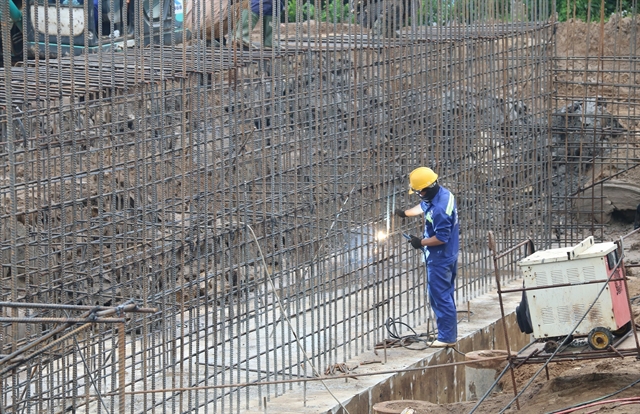
HÀ NỘI — The disbursement of public investment in 2025 hit a five-year high although the Government fell short of its target of fully disbursing the plan, according to the Ministry of Finance.
The ministry’s report showed that by the end of January 2026, public investment disbursement reached VNĐ858.6 trillion (US$33 billion), the highest level in the 2021–25 period, equivalent to 94.8 per cent of the plan assigned by the Prime Minister.
The amount was VNĐ234.1 trillion higher than in the same period of 2024 and up 3.4 percentage points in terms of disbursement rate.
The ministry said 2025 saw significant efforts by ministries and localities to speed up spending.
The total public investment plan for 2025 amounted to more than VNĐ1.18 quadrillion. Of this, nearly VNĐ1.106 quadrillion had been allocated in detail to specific projects.
According to the finance ministry, 2025 was the final year of the 2021-25 period and involved the largest public investment volume with high disbursement pressure. In addition, severe natural disasters also disrupted construction and project implementation in several localities last year.
The report pointed out that 19 ministries and central-level agencies and 16 provinces fell below the national average disbursement rate, including Tuyên Quang, Đắk Lắk, Quảng Trị, Cần Thơ, Lâm Đồng, Khánh Hòa, Sơn La, Cà Mau, Đà Nẵng, An Giang, Vĩnh Long, Hồ Chí Minh City, Quảng Ngãi, Điện Biên, Lai Châu and Huế.
The ministry said that strong political commitment from leaders, the establishment of dedicated disbursement task forces, and proactive efforts to resolve land clearance and site issues are critical to accelerate disbursement.
With a growth target of at least 10 per cent this year, the Government urged ministries and provinces to treat public investment disbursement as a key task from the start of the year, with focus on completing detailed capital allocation, setting monthly and quarterly disbursement plans, and enhancing leaders’ accountability.
In addition, it is necessary to accelerate decentralisation alongside stronger supervision, promptly remove regulatory bottlenecks, and address land clearance and construction material supply issues for key projects to avoid delays. — VNS