Green transition opens rare window of opportunity for smaller enterprises
Experts say the shift towards sustainability could become a rare opportunity for SMEs to access global supply chains, attract investment, and outpace slower-moving larger competitors.
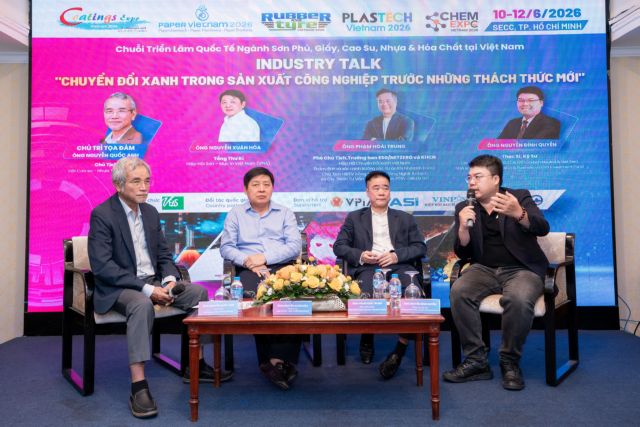
HCM CITY — Green transition and ESG (Environmental, Social and Governance) compliance were once seen as the domain of large corporations with deep pockets and specialised teams, but experts told a seminar in HCM City on May 12 that the shift towards sustainability could become a rare, "once-in-a-millennium" opportunity for small and medium-sized enterprises to leapfrog larger, slower competitors and integrate into global supply chains.
Speakers at “Industry Talk: Green Transformation in Industrial Manufacturing amid New Challenges” said global markets were increasingly focused on whether a company meets green standards rather than just its size.
To export to Europe or North America, companies must now demonstrate traceability, emission reductions, and compliance with strict environmental regulations.
Phạm Hoài Trung, vice chairman and head of the ESG/Net Zero and Science & Technology Committee of the Vietnam Green Transformation Association, said companies faced pressure from multiple sources including international buyers, financial institutions, and new carbon tax regulations.
Nguyễn Xuân Hòa, general secretary of the Việt Nam Paint and Printing Ink Association, pointed out that multinational corporations had introduced packaging standards that require inks to be free of prohibited substances and derived from renewable sources.
Nguyễn Đình Quyền, founder of ESG Education & Business, said the EU’s Carbon Border Adjustment Mechanism was creating mounting pressure on sectors such as steel and aluminum, and companies failing to prepare early would risk being excluded from supply chains very quickly.
SMEs may hold the advantage
According to speakers, SMEs may actually have greater advantages than large corporations in adapting to green transition.
Smaller businesses tend to be more flexible, making it easier to adjust governance structures, production processes, and operational models to meet changing market demands. By contrast, larger corporations often require much longer to shift direction.
“If SMEs can quickly obtain green certifications, ensure data transparency, and comply with ESG standards, they could secure major clients ahead of larger corporations that have yet to adapt,” Quyền said.
Once recognised as qualified suppliers, companies could secure long-term contracts, expand into new markets, and gain easier access to finance.
In practice, buyers were already willing to pay premium prices for greener products.
Quyền cited the example of a rubber company that was able to increase product value significantly after proving sustainable production methods and reduced emissions.
But SMEs also faced major obstacles, primarily regarding leadership mindset.
Many still viewed ESG as a symbolic branding exercise rather than a core business strategy, Quyền said.
According to Hòa, businesses cannot be persuaded through environmental idealism alone, and need to see clear financial returns.
Multinational corporations are currently leading the trend, while many Vietnamese businesses still have only a vague understanding of ESG.
“We need to communicate more effectively about the real benefits of ESG, particularly its potential for cost savings and operational efficiency. Once businesses see clear economic results, they will become more proactive in transformation.”
Quyền listed other challenges including a shortage of qualified ESG personnel and limited green finance.
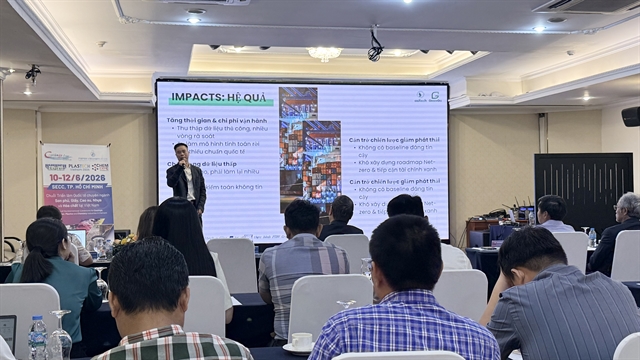
ESG requires interdisciplinary expertise spanning finance, technology, manufacturing, and governance, and green capital in Việt Nam is currently concentrated in renewable energy, according to Quyền.
Many SMEs still rely on traditional commercial loans with standard collateral requirements.
Thus, to secure funding, they must approach ESG as an investment strategy, demonstrating profitability, payback periods, and measurable financial efficiency to persuade banks and investors, he pointed out.
When asked where companies should begin, he said businesses first needed to understand that sustainable development was not simply about rapid growth, but about stable growth and minimising long-term disruption risks.
Companies should start with practical measures such as reducing electricity and water consumption, optimising raw materials, minimising waste, and improving data governance systems, he said.
More importantly, they should identify the areas responsible for the highest emissions or costs and prioritise investment there instead of spreading resources too thin, he said.
The next five years would be decisive, and companies that prepare early would have the opportunity to capture new markets, deepen participation in global supply chains, and build long-term competitive advantages, he said.
Conversely, businesses that are slow to adapt would risk losing competitiveness, even in the domestic market, he warned.
Hòa said: “Green transition is no longer an optional trend.
“It is increasingly becoming a prerequisite for businesses to maintain competitiveness, integrate more deeply into global supply chains, and achieve sustainable long-term growth.”
The seminar served as a precursor to a series of international industrial exhibitions at the Saigon Exhibition and Convention Centre from June 10 to 12.
The events, including Coatings Expo, Paper Vietnam, and Rubber & Tyre Vietnam, are expected to attract over 400 brands from 16 countries.
The exhibitions that hope to get 8,000 visitors will showcase a broad range of products, technologies, and solutions for industrial sectors, including raw materials and chemicals, coatings and printing inks, rubber and plastics technologies, paper and packaging solutions, manufacturing machinery, recycling and energy-saving technologies, and sustainable development solutions.
According to Nguyễn Bá Vinh, director of Minh Vi Exhibition and Advertisement Services Co., Ltd, one of the event’s organisers, the exhibitions will provide a practical networking platform for businesses to connect with suppliers and update their technical roadmaps for the net zero era. — VNS