Green building materials need a boost to shape the market
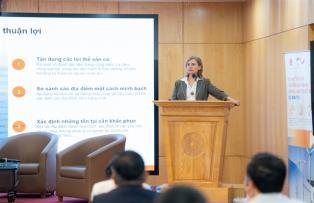
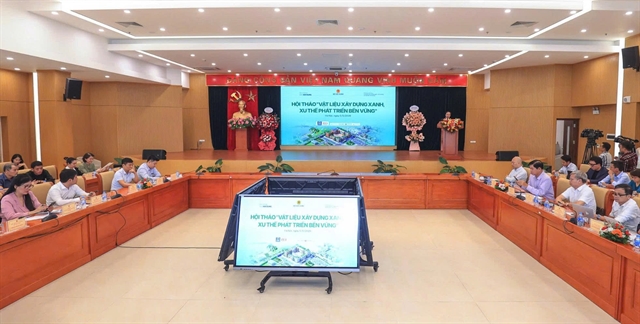
This was highlighted at the workshop titled "Green Building Materials – A Trend for Sustainable Development", held in Hà Nội on Tuesday.
HÀ NỘI — The green transition in the building materials industry is gradually becoming an inevitable requirement as pressures to reduce emissions and conserve resources intensify.
Despite emerging positive signals, Việt Nam’s green materials market has yet to develop in line with its potential, requiring strong pushes from institutions, technology and consumer demand to truly break through.
This was highlighted at the workshop titled "Green Building Materials – A Trend for Sustainable Development" held in Hà Nội on Tuesday.
The green transition in the building materials sector is no longer an optional, encouraged move but is increasingly becoming a mandatory requirement in the new development context.
Speaking at the workshop, Deputy Minister of Construction Nguyễn Văn Sinh emphasised that the construction sector, which supplies inputs for infrastructure, urban areas, housing and production, is also a major consumer of resources and energy and a significant source of emissions.
Therefore, the transition towards a green, low-carbon growth model requires comprehensive changes, in which building materials play a pivotal role, he said.
In recent years, the policy framework has been gradually improved with clear directions such as the green growth strategy, the building materials development strategy and regulations related to the production and use of environmentally friendly materials. These policies not only create a legal corridor but also help shape the green materials market.
In practice, some segments have recorded notable growth. Non-fired building materials, one of the key pillars of green materials, currently have about 2,900 production facilities nationwide, with a total designed capacity of approximately 12.4 billion standard bricks per year, accounting for around 40 per cent of total building material capacity.
Output exceeded 7.2 billion bricks last year, with consumption reaching about 6.7 billion bricks.
The development of this material group helps reduce clay exploitation, conserve agricultural resources and utilise industrial waste such as ash and gypsum as input materials. This also represents an important step towards establishing a circular economy model in the sector.
In addition, finishing materials with energy-saving capabilities such as Low-E glass and solar control glass are being increasingly applied, helping reduce heat transfer, limit solar radiation and lower building operating costs. Some domestic enterprises have begun to approach green certifications and international environmental standards, gradually enhancing their competitiveness.
However, according to regulators, these results are only initial steps. The share of green materials in the overall market remains modest compared to its potential while the room for development is still substantial.
The green transition of the building materials industry continues to face multiple barriers. First is the high initial investment cost for technology, which makes it difficult for many enterprises, especially small and medium-sized ones, to transition.
At the same time, the consumption market is not yet fully ready. Consumers’ reliance on traditional materials makes it difficult for green materials to expand market share.
Another issue is that the system of standards and technical regulations for some new materials remains incomplete. This not only affects quality management but also undermines market confidence in new products.
Moreover, incentive mechanisms such as green credit, tax incentives and investment support are still not strong enough to create clear momentum.
What the market currently needs is a sufficiently robust institutional framework, not only to support businesses but also to guide consumption and promote technological innovation, Sinh said.
Major policy directions from Resolution No. 57-NQ/TW of the Politburo on breakthroughs in science, technology, innovation and national digital transformation, as well as the Building Materials Strategy towards 2050, are expected to provide a strong boost for the industry to shift towards a growth model based on technology, quality and resource efficiency.
From a management perspective, Lê Văn Kế, deputy director general of the Department of Science, Technology, Environment and Construction Materials, said the industry needs to innovate both its development mindset and management approach.
Instead of relying on resource extraction and capacity expansion, the new model must be based on modern technology, advanced governance, energy efficiency and low emissions, he said.
The Ministry of Construction is currently drafting new legal documents to replace existing regulations, emphasising the development of building materials associated with green transition, digital transformation and the circular economy.
It is expected that regulations on energy labelling for building materials will be issued in the fourth quarter of this year, providing a transparent tool to help consumers identify energy-efficient products.
In parallel, the development of an industry data system, including production, consumption, emissions and energy use, is considered a foundation for better market forecasting and more effective governance. — VNS