By-product goldmine opens doors for fisheries sector
Việt Nam’s fisheries sector is under pressure to unlock new value, with by-products emerging as a critical pathway to sustain growth and meet global standards.
HÀ NỘI — Unlocking by-products could open a new growth frontier for Việt Nam’s fisheries sector, as policymakers push to shift from volume-based production to higher-value, circular economy models.
Trần Đình Luân, head of the Directorate of Fisheries and Fisheries Surveillance, says the sector is entering a new phase in which growth must shift towards circular models and stronger application of science and technology.
He says this shift is essential to enhance competitiveness and meet increasingly stringent international standards.
Experts say the sector’s greatest untapped potential no longer lies solely in expanding farming areas or increasing catches, but in its ability to generate multiple layers of value from a single unit of post-harvest raw material.
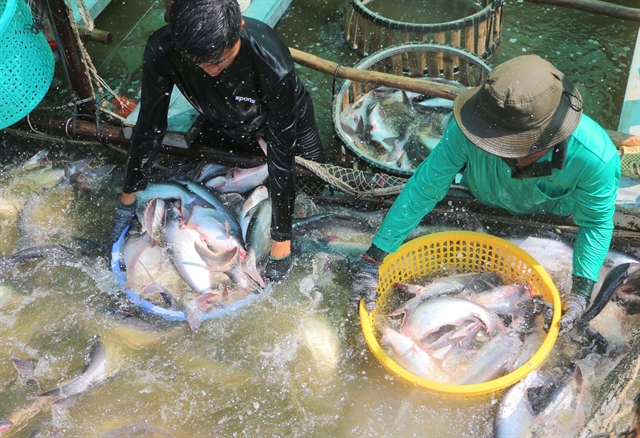
In the pangasius segment, Bùi Thị Thu Hiền of the Northern Fisheries Research Centre under the Việt Nam Academy of Fisheries Sciences says that by-products from pangasius can be processed into food for human consumption, pharmaceuticals or higher-value products.
Only the final, unusable residues will be treated for conversion into biofertilisers or growth stimulants. This effectively means that almost the entire fish can be utilised within a closed-loop circular model.
“The same approach is applicable not only to pangasius, but also to shrimp, tuna, molluscs and other aquatic products,” she says.
The key distinction between low-value by-products and high-value inputs lies in processing technology, Hiền adds. If production stops at oil extraction, drying or grinding into meal, added value remains limited and price competition is intense.
However, when biotechnology, enzymes, microbiology, automation, advanced materials and digital management are applied, the same raw materials can yield products with vastly different economic value.
According to Hiền, selling fishmeal or crude fish oil generates only modest returns. By contrast, processing into collagen, gelatin or specialised derivatives can multiply value many times over, illustrating the significant gap between primary and deep processing.
Fish skin can be used to extract collagen and gelatin for the cosmetics, nutraceutical and pharmaceutical industries. Fish bones and heads can meanwhile be processed into peptides, organic calcium and Omega-3-rich oils.
Shrimp by-products can yield chitin and chitosan for applications in biomedicine, food preservation, water treatment and high-tech agriculture. In addition, viscera, organic sludge and residual materials can be converted into biogas, organic fertilisers or inputs for green agriculture.
System gaps
Phùng Đức Tiến, deputy minister of the Ministry of Agriculture and Environment, says that science and technology have played an important role in agriculture’s recent achievements, from irrigation development and improved seed and livestock quality to higher export value.
However, in fisheries, science and technology have yet to become a central driving force. Research efforts remain fragmented and insufficiently linked to value chains, despite the growing need to develop along circular economy, digital transformation and value-added lines.
In practice, some large enterprises have invested in by-product processing lines to produce refined oils, collagen, gelatin and high-quality aquafeed.
Yet such investments remain uneven and largely confined to companies with strong financial capacity. Most small and medium-sized enterprises continue to face constraints in capital, technology, human resources and market access.
“The challenge, therefore, is not merely the availability of by-products, but whether the innovation ecosystem is strong enough to convert them into high-value commodities,” he says.
For the fisheries sector, success requires stronger links between businesses, research institutes, universities, financial institutions and local authorities. With effective connections across these stakeholders, research outcomes can move more rapidly from laboratory to factory, and from pilot models to large-scale production.
Digital transformation is also becoming increasingly important. When data on raw materials, storage temperatures, extraction efficiency, inventories, energy consumption and traceability are managed in real time, businesses can reduce losses, optimise costs and improve quality control.
Policy push
This represents a critical competitive advantage as high-end markets tighten import standards.
Another notable trend is the development of zero-waste factories, where by-products from one process become inputs for another, treated wastewater is reused, excess heat is recovered, and organic sludge is converted into fertiliser or bioenergy. In such models, value is derived not only from products sold but also from cost savings across the entire production system.
At the sectoral level, by-product industries can also reduce dependence on fluctuating export prices of primary processed goods.
When markets for pangasius fillets, frozen shrimp or traditional processed products slow, biological products, functional foods and industrial inputs can provide important supplementary revenue streams. This also enhances the resilience of the fisheries value chain amid global trade volatility.
To realise these ambitions, experts argue for a comprehensive set of measures, including refining policies to encourage high-tech investment; expanding credit support for businesses upgrading equipment; strengthening links between research institutes, universities and enterprises; establishing applied biotechnology centres for fisheries; standardising by-product-derived products; and developing a highly skilled workforce.
At the same time, a sector-wide digital database should be built, covering farming areas, output, by-product generation and market demand, enabling businesses to make more informed investment decisions.
Above all, a shift in mindset is essential. By-products should not be seen as residual waste, but as resources whose value must be designed from the outset of the production chain.
When aquaculture, broodstock, feed, processing and logistics operate within a circular logic, the value created will far exceed that of fragmented approaches.
Growth outlook
In the next phase, Việt Nam’s fisheries sector must compete not on volume or low-cost labour, but on technology, green standards and innovation capacity.
In 2025, despite the impacts of natural disasters, market volatility and rising input costs, the fisheries sector achieved output of 9.5 million tonnes, its highest on record with export turnover reaching over US$11.3 billion. The figures underscore the sector’s resilience and its vital role in the national economy.
Deputy Minister Tiến says that agriculture continues to serve as a pillar of the economy and should therefore receive commensurate resource allocation in the next development phase.
Fisheries, in particular, is not only a major export sector but also underpins the livelihoods of millions of people in coastal, delta and rural areas.
For many years, fisheries has been among the few sectors to maintain a clear degree of international competitiveness. From shrimp and pangasius to tuna and molluscs, Vietnamese seafood products are now present in demanding markets such as the United States, the European Union, Japan, South Korea and beyond.
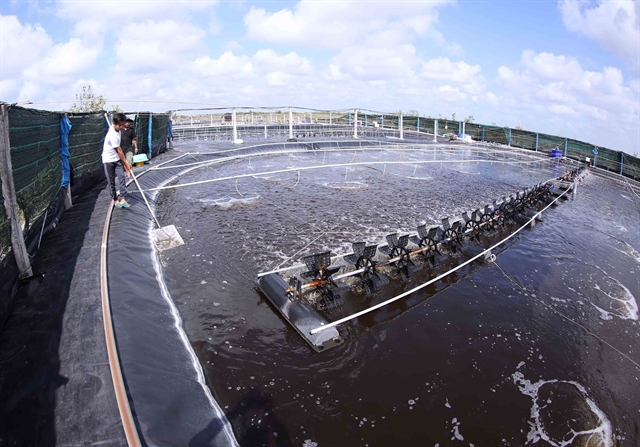
Aquaculture, especially high-tech farming, is emerging as a new growth engine. Brackish-water shrimp account for more than 40 per cent of total seafood export value, while pangasius production stands at around 1.98 million tonnes, with a target of 2-2.5 million tonnes by 2030.
Other high-value segments, including seaweed, pearls, lobsters, marine fish and molluscs, also hold considerable growth potential.
Beyond raw material production, the country now has over 800 industrial-scale seafood processing facilities, around 80 per cent of which are modern freezing plants. This provides a strong foundation for increasing value addition, as in global competition, countries that master deep processing, cold-chain logistics and branding capture the largest share of value.
Some leading firms have played a pivotal role in penetrating high-end markets and expanding value-added product portfolios. This reflects a broader shift in Việt Nam’s fisheries sector, from exporting primary processed goods to developing a modern food industry model.
Under its development orientation to 2030, the sector targets annual growth of 3-4 per cent, with total output reaching 9.8 million tonnes. But beyond volume, future competitiveness will hinge on how effectively Việt Nam can turn by-products into high-value outputs within a circular, technology-driven model. — VNS