Green, digital transformation key to next growth phase of agriculture, experts tell seminar
The agricultural sector is entering a pivotal phase, with mounting pressure from climate change, ESG (Environmental, Social and Governance) requirements and global supply chain shifts, but also new opportunities driven by digital transformation and emerging technologies.
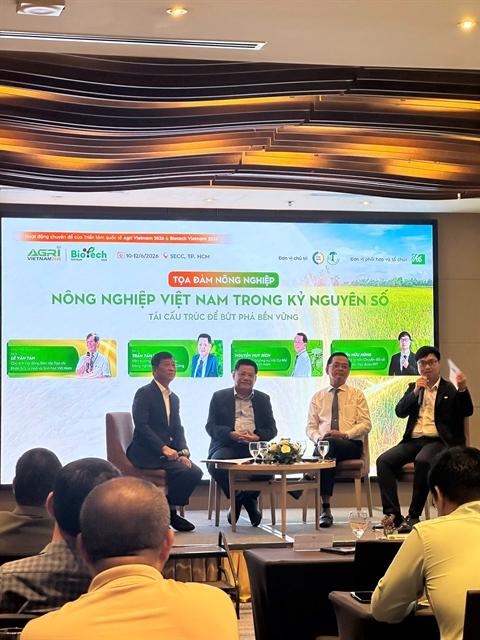
HCM CITY — The agricultural sector is entering a pivotal phase, with mounting pressure from climate change, ESG (Environmental, Social and Governance) requirements and global supply chain shifts, but also new opportunities driven by digital transformation and emerging technologies.
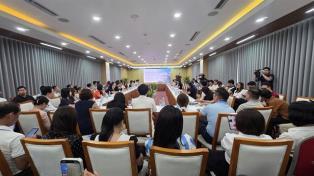
In this context, restructuring the sector towards a greener, smarter and more sustainable model is no longer optional but an inevitable requirement, speakers told a seminar on “Việt Nam’s Agriculture in the Digital Era: Restructuring for Sustainable Breakthroughs” held in HCM City on March 31.
Organised by the Vietnam Society of Agricultural Engineering and the HCM City Association for Conservation of Nature and Environment along with Minh Vi Exhibition and Advertisement Services Co., Ltd, the event aimed to share practical solutions in applying artificial intelligence, mechanisation and sustainable farming practices and strengthening linkages between policymakers, scientists, agri businesses, and farmers.
Prof. Dr. Nguyễn Huy Bích, permanent committee member of the Vietnam Society of Agricultural Engineering and former head of the mechanical engineering faculty at Nông Lâm University, highlighted the urgent need for mechanisation and digital transformation in agriculture.
He pointed out that the sector employs more than 61 per cent of the workforce but contributes less than 12 per cent to GDP, resulting in low incomes and ongoing migration to urban areas.
To address this, he called for the development of smart agriculture based on robotics and AI, shifting from manual labour to automated, high-productivity systems.
But he, as well as delegates, said there are barriers to digital transformation and mechanisation in the agricultural sector, including fragmented land ownership, farmers’ limited financial capacity and heavy reliance on imported machinery.
Therefore, stronger government policies and macro-level reforms are essential to accelerate adoption and ensure sustainable growth, they said.
Many farmers remain hesitant to adopt new technologies due to perceived time costs and unclear short-term financial benefits, they said.
To overcome this, experts recommended starting with small, high-impact solutions that demonstrate tangible value, thereby building trust and gradually changing mindsets.
They also stressed that high-tech solutions must be affordable and accessible to farmers with varying levels of education.
A key bottleneck is the lack of a comprehensive national database, particularly for climate and land-use data, which limits the development of precision agriculture and requires stronger government support.
Nguyễn Hữu Hùng, digital transformation consulting specialist at FPT Digital, emphasised that digital transformation is not simply about adopting software but a long-term process requiring a shift in mindset.
Businesses must first identify their core values and strategic goals to ensure that technology is applied effectively and economically, he said.
While countries such as Israel have achieved large-scale adoption of smart agriculture, Việt Nam remains in an experimental phase, focusing on pilot programmes in AI and digitalisation.
Examples of current applications include IoT-based automated irrigation systems for precision farming and the use of platforms such as TikTok to connect farmers directly with consumers.
According to Hùng, selecting the right tools is more important than the scale of investment.
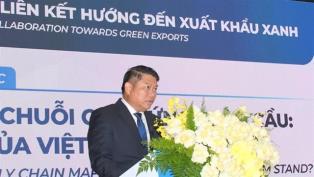
At the seminar, Trần Tấn Việt, director of the Thành Thành Công (TTC) Agricultural Research Institute, explained why ESG matters for agricultural value chains.
It should be seen as a tool to improve efficiency for all stakeholders, including farmers, while also creating an opportunity to restructure the sector by shifting the focus from quantity to quality, he said.
This could enhance the value of agricultural products and thus increase farmers’ incomes, he said.
ESG is not limited to large corporations, and small- and medium-sized enterprises could also adopt ESG practices relatively easily, provided they define clear and achievable goals from the outset, he said.
But he acknowledged that the initial phase could be challenging since guiding farmers to adopt new practices requires time and effort, with benefits not immediately visible.
Yet, once implemented successfully, ESG models deliver significant and sustainable efficiency gains, he said.
The process requires patience, long-term commitment and often substantial investment, but the returns are considerable, and, importantly, adopting ESG standards quickly enhances a company’s credibility and reputation, improving access to financing as financial institutions increasingly favour businesses with strong ESG commitments, he added.
Overall, speakers agreed that there is no alternative path for Việt Nam’s agriculture to achieve a breakthrough other than accelerating the adoption of digital technologies, mechanisation and automation to improve productivity and ensure sustainability.
Agri Vietnam 2026 and BioTech Vietnam 2026
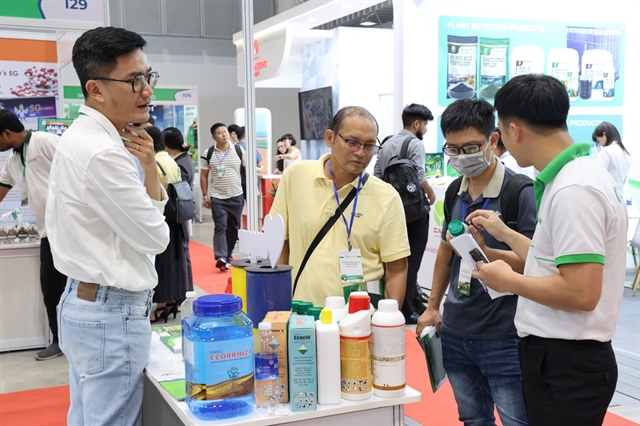
The seminar is part of a series of activities leading up to Agri Vietnam 2026 – short for the International Exhibition on Agricultural Machinery, Equipment, Materials, Chemicals and Products – and BioTech Vietnam 2026 – the Vietnam International Exhibition on Biotechnology for Agriculture and Livestock.
Both events will take place from June 10 to 12 at the Saigon Exhibition and Convention Centre in HCM City.
Nguyễn Bá Vinh, VEAS’s director, said Agri Vietnam 2026 is expected to attract more than 100 enterprises from 10 countries and territories, and over 10,000 trade visitors.
BioTech Vietnam 2026, making its debut this year, will showcase technologies in genetics, next-generation crop and livestock varieties, biological products and circular agriculture models.
The two exhibitions are expected to support Việt Nam’s transition toward greener and more sustainable agricultural development. — VNS