Global AI experts see opportunity for Việt Nam to accelerate talent development
AI is creating new opportunities for countries to develop world-class talent. Two international experts explain how Việt Nam can make the most of the opportunities ahead.
As AI advances at unprecedented pace, Việt Nam has an opportunity to develop world-class talent. Việt Nam News reporter Mai Hương speaks with William Tjhi, PhD, head of AI Products at AI Singapore, and Assoc Prof Nguyễn Cẩm Tú, PhD, at Nanjing University, China, about education, international collaboration and innovation.
AI's rapid evolution gives Việt Nam a chance to catch up
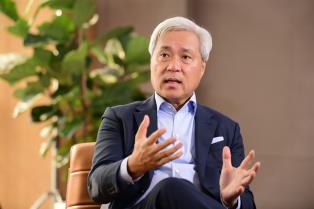
William Tjhi, PhD, head of AI Products at AI Singapore

Artificial intelligence is moving at an unprecedented pace. Every few weeks brings something new, and everybody is learning at the same time. This creates a far more even playing field, allowing countries like Việt Nam to catch up much faster than in previous technological revolutions.
One encouraging sign is that many young Vietnamese are no longer starting from zero. They are already familiar with AI tools and have had meaningful exposure to the technology. That was evident in initiatives such as the Vietnam AI Innovation Challenge, where thousands of participants voluntarily spent an entire weekend tackling difficult problems. More important than the competition itself was the hunger, enthusiasm and competitive spirit they demonstrated.
That hunger represents a real opportunity for Việt Nam, but it needs to be matched with broader exposure. Young talent should be challenged by more complex problems than they normally encounter and be given guidance from experienced researchers. This is why hackathons and similar programmes are valuable.
They expose participants to real-world challenges and encourage them to think beyond their immediate environment. Greater international collaboration, particularly around cutting-edge research, would provide even broader exposure and help Vietnamese talent continue learning alongside the global AI community.
Singapore is also navigating this latest wave of AI and trying to find its way. We need to be ready to pivot whenever something new comes along. As a small country, we have no choice but to move early and orchestrate the different players within the ecosystem. That has given Singapore a head start compared with Việt Nam.
One area where Singapore has accumulated valuable experience is in building a trusted environment and thinking about AI governance. Even so, AI is evolving so rapidly that nobody has a clear answer today. We may have a head start in ecosystem building and governance, but we still need to work together and learn together. In the same way, Singapore can also learn from Việt Nam. Its innovation ecosystem is much larger, more complex and more dynamic, making collaboration between the two countries highly complementary.
Another important strength for Việt Nam is its global community of AI researchers and technology leaders. Many Vietnamese experts in universities and companies around the world are passionate about contributing to their home country.
The importance of having good leaders cannot be underestimated. Good leaders inspire people. They attract talent because people know they can learn from them. Bringing together AI leaders, whether they are based in Việt Nam or overseas, should therefore be one of the first priorities. At the same time, the government has an important role in cultivating the ecosystem, making AI more accessible and providing guidance on governance. Ultimately, all parts of the ecosystem need to work together.
One practical step would be to move beyond ad hoc cooperation and establish more formal international collaborations. Universities where Vietnamese professors are teaching and companies led by Vietnamese technology leaders already provide natural starting points.
Building a number of strategic partnerships around these existing networks would strengthen knowledge exchange, accelerate collaboration and create lasting connections between Việt Nam's domestic AI ecosystem and its global talent community.
Việt Nam is closing the AI education gap
Associate Professor Nguyễn Cẩm Tú, PhD, at the School of Artificial Intelligence, Nanjing University, China

The gap between AI education in Việt Nam and many other countries is now much smaller than people often think. AI education has kept pace with global developments, while learning resources are more accessible than ever before through online platforms. From what I have seen working with Vietnamese students, they are fully capable of meeting global demand, which shows that Việt Nam is moving in the right direction.
There is much we can learn from international experience. Different countries have developed different AI models, and those experiences are worth learning from. However, when applying them in Việt Nam, we need to make the necessary adjustments to suit the needs of Vietnamese businesses and the country's practical problems. At the same time, we need the human resources to master AI technology ourselves.
The different approaches taken by the United States and China illustrate this well. The US has focused more on frontier innovation, while China has placed greater emphasis on AI application. Personally, I believe Việt Nam can learn a great deal from China's application-focused approach. AI should not remain only in research laboratories or classrooms, but be applied to solve practical problems for businesses and society.
That is also why I believe universities and enterprises should work much more closely together. Students need opportunities to work on practical projects and solve real business problems while they are still studying. At the same time, enterprises can provide the resources and practical environment that help students develop their skills.
At my university in China, AI is applied across many different disciplines and students regularly work on projects linked to practical applications. Many also have opportunities to intern at leading technology companies such as Alibaba and ByteDance. Those experiences give students access to a mature ecosystem and enable them to gain practical hands-on experience.
Vietnamese students have every opportunity to compete internationally. The capability is already there. What they need are more opportunities to practise, collaborate with enterprises and work in an environment where AI is applied to real problems. Building that ecosystem will help young talent develop much faster.
Overseas Vietnamese can also play an important role. I have seen a growing interest among overseas Vietnamese in either returning to Việt Nam or working more closely with institutions at home. Even those who remain overseas can help strengthen Việt Nam's AI talent by supervising students, contributing to training and participating in joint research projects. The important thing is to create more opportunities for these collaborations to happen.
For students interested in AI, I think the most important thing is to keep learning, continue building your skills and stay persistent. Those foundations will prepare you to take advantage of the opportunities as they emerge. — VNS