Enterprises should promote development of Vietnamese brands in overseas markets
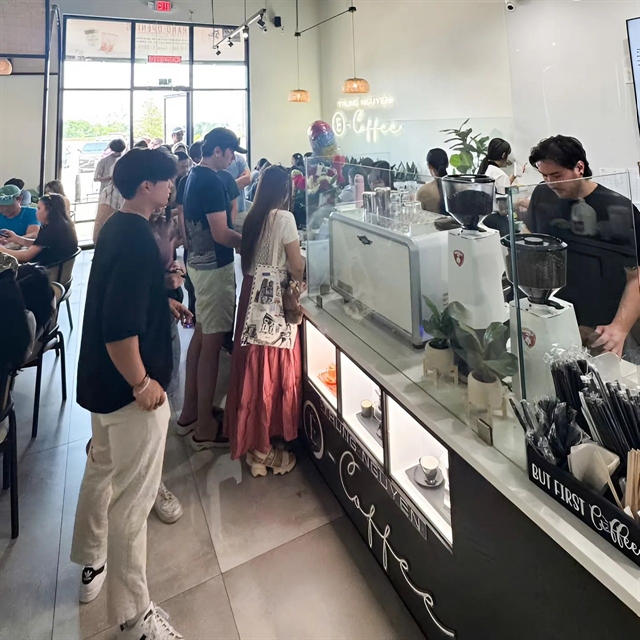
Traditional Vietnamese coffee products are currently mainly sold at stores and supermarket chains serving Asian communities.
HÀ NỘI — For Vietnamese businesses in the US market, the challenge is not only getting their products onto shelves, but also building their own brands and retaining a larger share of value along the supply chain.
During a market survey in New York, trade counsellor and head of the Vietnam Trade Office in the US Đỗ Ngọc Hưng noticed a development he described as significant: packages of coffee clearly identifying their Vietnamese origin and carrying Vietnamese brand names have begun appearing at some Starbucks stores.
Hưng said the development was a positive sign, as Vietnamese products are beginning to reach US shelves under the brands of Vietnamese companies, rather than mainly passing through intermediaries or being sold under partners' brands.
Traditional Vietnamese coffee products are currently mainly sold at stores and supermarket chains serving Asian communities, accordin to Hưng. In broader distribution channels, Việt Nam still mainly exports raw materials that US companies purchase, process and sell under their own brands or use to manufacture products for those brands.
Trần Lịch, director of the Vietnam Cooperative Alliance's Vietnam Incubation and Start-up Development Support Centre, also said that during a market survey, he came across a packaged fresh phở product that was made entirely in Việt Nam but carried a Thai brand. While the manufacturing was done in Việt Nam, consumers would still identify the product as belonging to a foreign brand.
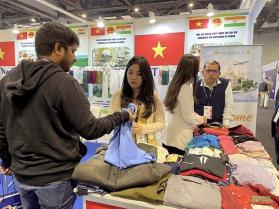
Many Vietnamese companies, particularly small and medium-sized enterprises, still export through trading companies or third-party partners from the Republic of Korea, India, mainland China and Hong Kong, Lịch noted. Information about Vietnamese businesses remains limited in the US market.
This means a company may be able to meet requirements to enter the US market without having direct access to the market or to end consumers, according to Lịch.
Vietnamese companies have strong manufacturing capabilities but remain less experienced in understanding markets. Business support programmes therefore need to address product development, finance, legal issues, compliance and market-entry strategies at the same time.
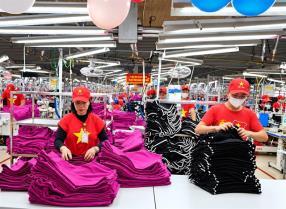
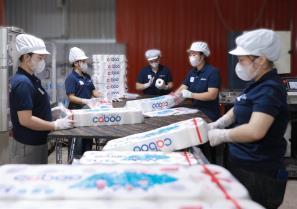
The contrast between a product made in Việt Nam but sold under a foreign brand and one carrying a Vietnamese brand highlights the gap between manufacturing capabilities and the ability to build brands in export markets.
From packaging to designing products
Companies seeking to move up the value chain do not necessarily have to start with a large branding campaign.
Thời báo Ngân hàng (Banking Times) newspaper cited Lịch as saying a practical step would be for companies to gradually move from manufacturing products to customers' designs and specifications, towards taking greater responsibility for product design and manufacturing processes.
"We do not need to talk about branding in depth yet. We should start with product and packaging design," Lịch said.
Packaging could be a starting point for companies to demonstrate their understanding of the market and consumers, he noted. This was particularly relevant to Vietnamese products with established production capabilities, including tea, coffee, spices and food.
Design is not only about appearance. According to Hưng, US consumers are interested in tea and coffee products associated with stories and social values.
These may include supporting low-income farmers and ethnic communities in remote areas, as well as creating jobs and raising incomes for women.
Under this approach, a product's value extends beyond its raw materials and processing. By taking greater control of processing, design, packaging, product narratives and market access, companies can participate in more value-creating stages of the supply chain.
Greater initiative is also needed in how companies present themselves to potential partners.
Hưng said companies seeking to connect with the Vietnam Trade Office in the US should prepare complete and professional company profiles and product materials in English.
US partners would typically look at a company's ability to fulfil orders, technical standards and import-export experience, he said.
"Company websites are also important because they are among the channels potential partners use to check information before moving ahead with business cooperation," Hưng noted.
Starting with niche markets
Vietnamese Americans number more than 2.2 million and are concentrated in California, Texas, New York and Washington, according to Hưng.
The community represents a potential customer base for Vietnamese products, particularly for small and medium-sized businesses targeting specific needs.
Rather than immediately seeking to place products across the US mass-distribution system, companies can start with a suitable niche market.
Such an approach allows companies to test their products, understand consumer requirements and gradually build a market before expanding.
The appearance of Vietnamese-branded coffee packages on shelves in New York is one example of how Vietnamese brands can travel alongside Vietnamese products.
To achieve this, companies need to move beyond a focus on manufacturing and take greater control of product design and development, while seeking more direct access to the market.
This process requires companies to understand the market, meet relevant standards and invest in product development and branding capabilities.
The goal is not only to increase the number of products made in Việt Nam and sold in the US, but also to ensure that consumers can identify their Vietnamese origin and brands when they buy them.
That would allow Vietnamese companies to retain a larger share of value in the supply chain as their products reach international consumers. VNS