Electric scooter makers in Việt Nam ramp up launches ahead of new school year
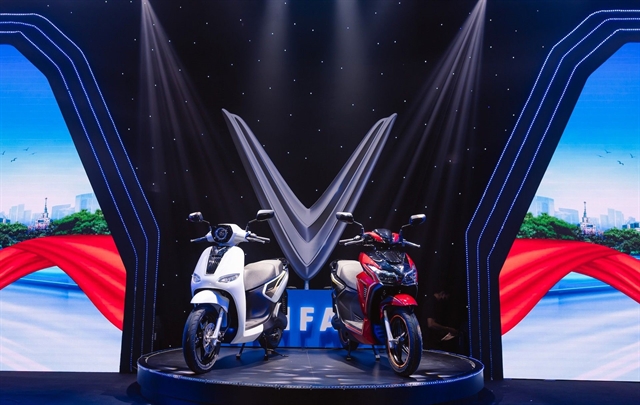
VinFast introduced its new Kinet and Kyo electric scooters on July 20, expanding its premium lineup as competition for market share gathers pace.
HÀ NỘI — Electric scooter manufacturers are rolling out new models and expanding sales campaigns ahead of the back-to-school season as competition intensifies in one of the country's fastest-growing vehicle segments.
The flurry of product launches underscores how student commuters have become a strategic battleground for manufacturers including VinFast, Honda, Yadea and Đạt Bike, as companies seek to capitalise on rising consumer acceptance of electric mobility, improving charging infrastructure and government efforts to promote lower-emission transport.
VinFast introduced its new Kinet and Kyo electric scooters on July 20, expanding its premium lineup as competition for market share gathers pace.
The company said both models were developed with distinct design concepts while offering modern urban mobility, with customers able to either purchase the battery outright or subscribe to VinFast's battery-swapping network.
The launch followed the debut of VinFast's Amio S2, an entry-level model aimed at students aged 16 and above. Priced at VNĐ12 million (US$455), including an LFP battery and charger, the scooter has a maximum speed of 25 km/h, allowing riders to operate it without a driver's license under current regulations.
Rival manufacturers have also stepped up their offerings ahead of the peak buying season.
Đạt Bike recently launched the Era electric scooter, targeting young urban consumers, particularly students and first-time riders. The company positions the model as an affordable commuter with low operating costs and sufficient range for daily travel.
Yadea has maintained its presence in the mass-market segment with several models aimed at students and young workers, including the recently launched OMEE.
Honda has continued expanding its electric two-wheeler portfolio with the CUV e:, UC3 and ICON e:. The premium CUV e: adopts a battery-swapping model for urban commuters, while the ICON e: is positioned for younger riders and students. The UC3 is designed as a versatile urban scooter, offering functionality comparable to Honda's popular LEAD gasoline model.
The concentration of product launches ahead of the school year underscores the strategic importance of students and young consumers for electric scooter manufacturers.
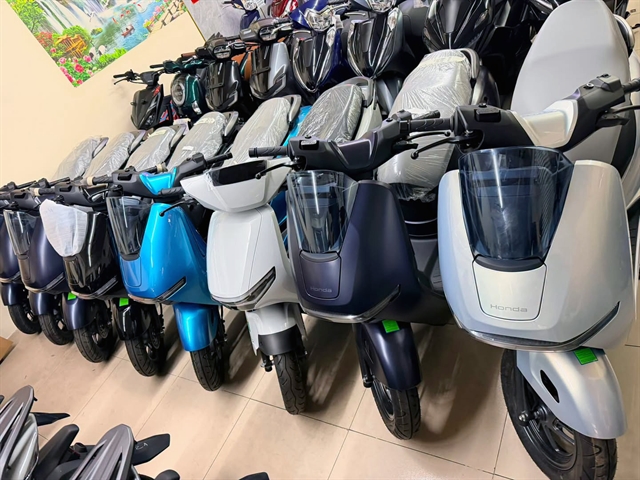
At an electric scooter showroom in Hà Nội, Nguyễn Ngọc Thủy told VOV: "We initially considered a gasoline motorcycle, but electric scooters have become much more reliable. Operating costs are lower, there's no need to refuel regularly, and the speed is more suitable for students, which gives us greater peace of mind."
Parents are increasingly weighing convenience alongside cost, with expanding charging infrastructure and the ability to recharge vehicles at home helping to ease concerns over ownership.
Students are also drawn to the vehicles' quiet operation, modern styling and practicality.
"I like electric scooters because they're lightweight, easy to ride and one charge lasts several days. Many of my classmates have switched to electric scooters too," Thủy's son said.
Dealers say demand has accelerated sharply as families prepare for the new academic year.
Hoàng Đức Trung, manager of an electric scooter dealership in Hanoi, said customer traffic had risen between 400 per cent and 500 per cent since early July compared with normal periods.
"Interest has increased significantly this year. Government support for green transportation and improvements in product quality have encouraged more parents to choose electric scooters for their children," Trung said.
Despite stronger demand, some dealers say regulatory changes have altered purchasing patterns.
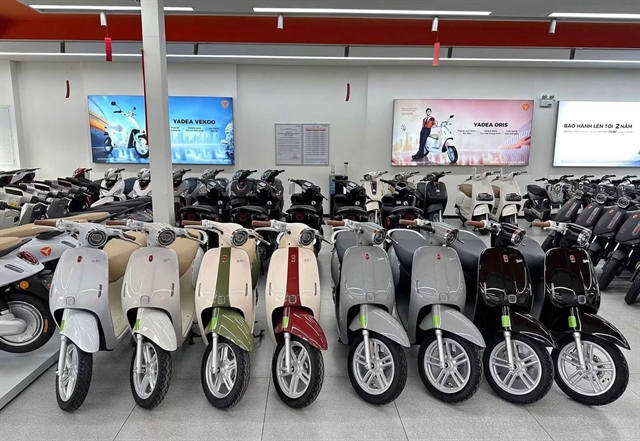
Nguyễn Văn Nguyên, a sales representative at an electric scooter dealership in Hà Nội, said tighter regulations governing riders aged between 16 and under 18 have prompted parents to become more cautious when selecting vehicles. At the same time, weakening demand for electric bicycles has reduced sales to students compared with the same period last year.
Industry analysts expect Việt Nam's electric scooter segment to maintain strong growth over the coming years, supported by the country's green transition, government policies promoting cleaner transport and a large replacement market for aging motorcycles and electric bicycles.
Students are expected to remain one of the industry's largest customer groups.
The market is also benefiting from continued investment in supporting infrastructure. Companies including Honda, Yadea and VinFast are expanding charging and battery-swapping networks, while other manufacturers are increasing dealership coverage, service centers and after-sales support, reducing barriers for consumers switching from gasoline-powered vehicles.
According to the Vietnam Association of Motorcycle Manufacturers (VAMM), Vietnam's electric two-wheeler market has maintained strong momentum after ending 2025 as the world's third-largest, with sales reaching about 700,000 units out of a global market of 3.4 million. Sales surged a further 99.2 per centyear-on-year to around 209,000 units in the first half of 2026, underscoring Vietnam's position as one of the world's fastest-growing markets for electric mobility.
While manufacturers continue to broaden their product portfolios, analysts say the next phase of competition will hinge less on launching new models than on building comprehensive ecosystems around them.
Investment in charging and battery-swapping networks, battery technology, after-sales service and affordability is expected to play a bigger role in determining market share as Việt Nam accelerates its transition toward cleaner urban transport, according to experts. — VNS