Early preparation underpins stable Tết supply
The Tết supply story this year highlights a positive shift in market organisation, where proactive planning has replaced the year-end rush traditionally associated with the holiday.
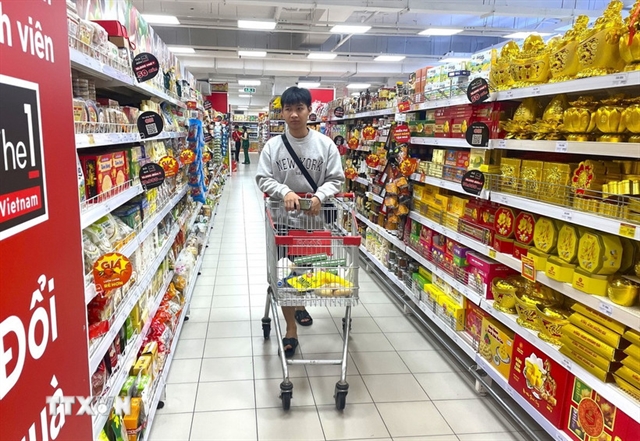
HÀ NỘI — Signs of Tết (Lunar New Year) 2026 are appearing earlier than usual across retail outlets nationwide, with supermarkets, shopping centres and traditional markets reporting ample supplies, a wide range of goods and stable prices that together point to a calmer festive season ahead.
This early abundance is not the result of last-minute efforts but rather reflects a shift towards advance preparation and source-based stabilisation, driven by coordinated action among ministries, local authorities and businesses. Experts say this year’s Tết supply picture signals a positive change in market organisation, replacing the traditional year-end rush with a more deliberate and proactive planning mindset.
The well-stocked shelves are notable not only for volume but also for a more balanced product mix, aligned with consumption trends that emphasise quality, value and prudent spending. Analysts say the stability seen across markets stems from early and synchronised preparation in production, distribution and market management, reducing the pressure typically felt as the holiday approaches.
At the policy level, the Ministry of Industry and Trade continues to play a central coordinating role. The early issuance of the authorities' official dispatch on ensuring goods supply and market stabilisation for early 2026 and Tết, alongside the implementation of a directive on balancing supply and demand towards year end, sends a clear signal that market stabilisation is now viewed as a continuous and proactive process rather than a reactive one.
According to Nguyễn Thế Hiệp, deputy director of the Hà Nội Department of Industry and Trade, the capital has prepared sufficient essential goods to meet demand for around three months before, during and after Tết.
Planned supplies include about 300,000 tonnes of rice, 60,000 tonnes of pork, 16,000 tonnes of beef, 20,000 tonnes of poultry, 400 million eggs, 340,000 tonnes of vegetables and around 167,000 tonnes of processed food and seafood. Major distributors in Hà Nội have increased reserves by 5–30 per cent compared to last year, with Vietnamese goods accounting for more than 80 per cent, reinforcing domestic supply resilience.
Local readiness
Other localities have taken similar steps. Gia Lai Province has proactively developed stockpiling plans for essential goods and prepared market regulation measures for the year-end peak period. While supply from within the province and neighbouring areas is generally sufficient, authorities have anticipated risks of temporary shortages linked to seasonal factors, rising input costs and stockpiling psychology, identifying early reserves and supply coordination as key solutions.
In Đà Nẵng, Lê Thị Kim Phương, director of the municipal Department of Industry and Trade, said the city had ensured ample supplies at supermarkets, markets and grocery stores, alongside trade promotion and price stabilisation programmes. Total goods reserves for the Tết season were estimated at nearly VNĐ3.5 trillion, reflecting a cautious yet confident outlook.
Retailers have also shown strong proactivity. Major chains such as WinMart, MM Mega Market, Saigon Co.op, Central Retail, GO! and Tops Market began stockpiling goods two to three months ahead of Tết, increasing volumes by 10–40 per cent depending on product categories, well ahead of traditional timelines.
Phạm Thị Thủy Hường, director of WinMart Royal City, said the retailer designed its Tết product portfolio around reliability, quality and competitive pricing, particularly for confectionery and gift items. Gift boxes were offered across a wide range of price points, from under VNĐ50,000 to over VNĐ100,000, while essential items such as rice and cooking oil had been prepared in sufficient quantities. Rice volumes alone had risen by 20 per cent compared to normal days, she said.
Retail strategies
Beyond volume, retailers have focused on price stability. WinMart’s Tết promotion programme runs for 49 days, offering discounts of up to 50 per cent on thousands of products, alongside loyalty points and vouchers, aiming to spread purchasing pressure over a longer period.
MM Mega Market Việt Nam has adopted a structured stockpiling strategy, increasing reserves by 10–30 per cent year on year. During the peak period, the system is storing around 30,000 tonnes of dry goods and non-food items, along with 2,800 tonnes of fresh food, ensuring uninterrupted supply during peak demand.
Trần Thị Phương Lan, chairwoman of the Việt Nam Retailers Association, said all retail channels had expanded convenient shopping solutions for Tết, from ready-to-serve foods and pre-designed gift baskets to customisable options.
“The key requirement now is not just having enough goods, but ensuring strong co-ordination between businesses, local authorities and regulators to keep the market stable,” she said, adding that retail systems must stay ahead of demand rather than react to sudden spikes.
According to Nguyễn Thị Kim Dung, director of Saigon Co.op Hà Nội, demand for Tết 2026 is expected to rise sharply for fresh food, processed products, specialty rice, One Commune One Product (OCOP) goods and fruit gift baskets. To meet this, Saigon Co.op has increased early stockpiling by 35–40 per cent and strengthened direct links with production regions and cooperatives to stabilise prices and reduce intermediaries.
Another notable feature of the Tết Bính Ngọ 2026 market is the parallel growth of traditional and online channels. Online shopping has expanded rapidly, particularly for dry goods and gifts, while traditional markets and supermarkets remain dominant for fresh food and the culturally rooted Tết shopping experience.
Overall, the Tết goods market this year is operating on firmer footing, with abundant supplies, controlled prices and early engagement across the supply chain. More importantly, the mindset of early preparation and source-based stabilisation is increasingly becoming standard practice, helping to deliver a calmer, more predictable and reassuring Tết season for consumers nationwide. — VNS