Hà Nội moves to curb fuel hoarding after rush at petrol stations
City officials say the recent rush to petrol stations was driven largely by public anxiety rather than any real supply shortage, as regulators move to stabilise the market.
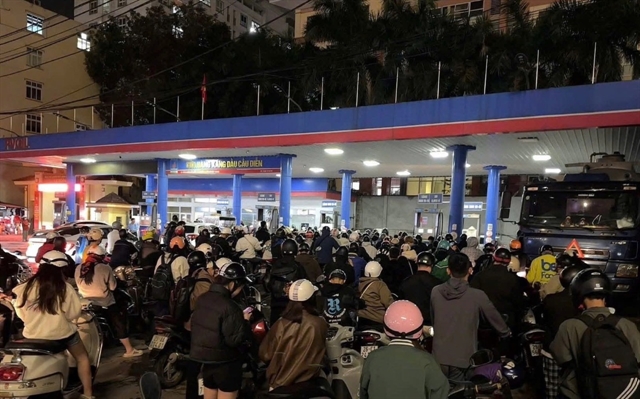
HÀ NỘI — Authorities in Hà Nội have ordered closer monitoring of petrol retailers and warned against hoarding after a brief spike in fuel buying caused temporary disruptions at several stations over the past few days.
At a meeting on Tuesday, Hà Nội People’s Committee Chairman Vũ Đại Thắng told regulators to step up inspections and take firm action against businesses or individuals found stockpiling fuel or speculating for profit.
The meeting was held after a sudden rush of motorists at petrol stations began on March 6. Several outlets in central wards temporarily ran out of fuel while waiting for fresh deliveries.
Officials said the situation had largely returned to normal by Monday, although at least some petrol stations in the capital were still crowded with motorists on March 9.
According to the city’s Department of Industry and Trade, the surge in demand was driven mainly by public anxiety and a tendency among some residents to stock up on fuel, rather than any real supply shortage.
“Hoarding petrol in containers at home also carries significant fire safety risks,” Department Director Võ Nguyên Phong said, urging people not to store fuel unnecessarily.
Energy markets worldwide have been volatile in recent weeks, mostly due to geopolitical tensions in the Middle East, which have contributed to fluctuations in domestic petrol prices.
"Hà Nội consumes about 150,000 cubic metres of fuel each month, including roughly 110,000 cubic metres of gasoline and 40,000 cubic metres of diesel," Phong added.
Fuel supplies are provided mainly by large distributors such as Petrolimex Hà Nội, the Military Petroleum Corporation and PVOIL Hà Nội, alongside other fuel traders. The city currently has 453 operating petrol stations.
Three major depots – Đức Giang, Đỗ Xá and Nam Phong – together provide storage capacity of about 120,000 cubic metres, helping stabilise supply across the capital.
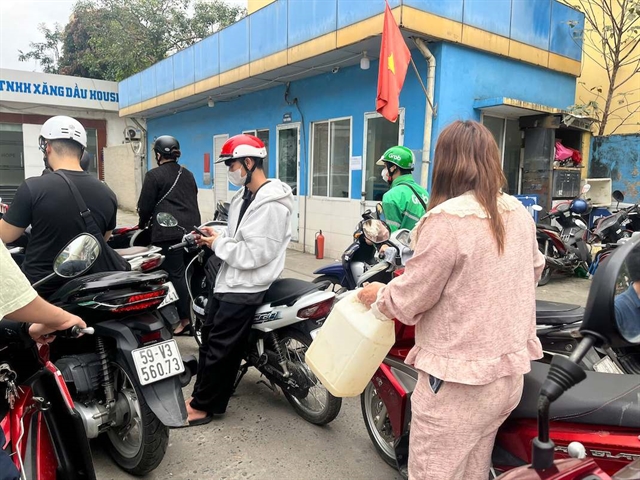
People’s Committee Vice Chairman Nguyễn Mạnh Quyền said authorities must keep a close watch on the market and be ready with contingency plans to ensure fuel remains available for households and businesses.
The city has faced supply chain disruptions before, particularly during the COVID-19 pandemic, he noted, adding that ensuring a stable fuel supply is essential to maintaining economic activity.
Thắng said fuel distribution should prioritise key sectors such as manufacturing, transport and major construction projects so that trucks, excavators and other machinery can keep operating without delays.
Maintaining supply for public transport – including buses, taxis and other passenger vehicles – should also be a priority, followed by ensuring adequate fuel for everyday travel and household use.
At the same time, the city leader also asked central Government agencies to study longer-term measures to strengthen energy security, including diversifying import sources and expanding fuel reserves.
Hà Nội is reviewing plans for its fuel storage system and aims to build reserves capable of covering six months to one year of demand in case of major disruptions.
“Ensuring stable energy supply for Hà Nội – Việt Nam’s political, administrative and economic centre – is especially important,” Thắng said, adding that the city will work with the Ministry of Industry and Trade and major distributors to prioritise fuel supply for the capital if market volatility persists. — VNS