Vietnamese seafood faces major test amid maritime logistics shock
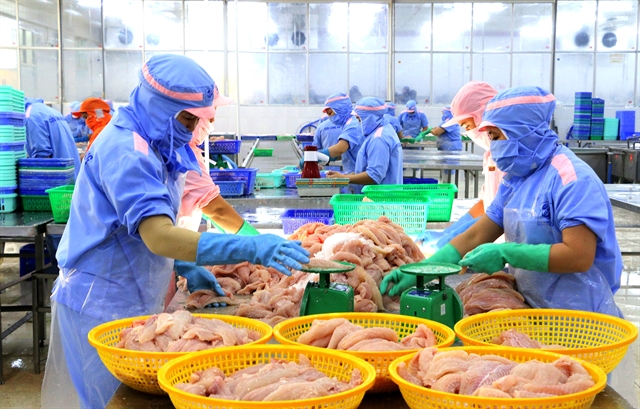
The seafood industry had been heavily impacted by surging freight costs, the risk of cold chain disruptions, localised supply shortages, and price volatility across various product segments.
HÀ NỘI — Việt Nam’s seafood industry is facing a severe external shock as escalating military tensions in the Middle East disrupt key shipping routes, drive up freight and insurance costs and threaten cold chain stability.
Numerous shipping lines are avoiding the Strait of Hormuz amid rising security risks, while some insurers have withdrawn war risk cover and emergency surcharges have surged. Exporters are also bracing for a potential shortage of containers, particularly refrigerated units critical to seafood transport.
Military conflict in the Middle East involving Iran, the US and Israel has intensified. The Islamic Revolutionary Guard Corps has declared the closure of the Strait of Hormuz and warned of strikes against vessels attempting to transit the waterway, a vital corridor for global energy and goods flows.
“In just a few days, military tensions have rapidly transformed into a shipping and maritime insurance shock in the Middle East, a region that plays a critical role in global energy and goods circulation,” said Lê Hằng, deputy secretary general of the Vietnam Association of Seafood Exporters and Producers (VASEP).
She said the seafood sector had been hit by surging freight rates, heightened risks to cold chain logistics, localised supply shortages and price volatility across product segments.
The epicentre of the disruption is the Strait of Hormuz, the strategic route linking the Persian Gulf with the Indian Ocean, according to Hằng.
As security warnings mounted, international shipping lines adjusted operations. Some vessels sought safe anchorage, certain routes were temporarily suspended and others were diverted around the Cape of Good Hope instead of passing through the Red Sea, Bab el Mandeb and Suez Canal corridor.
Major container groups including Maersk, Hapag-Lloyd, CMA CGM and MSC Mediterranean Shipping Company announced temporary suspensions of cargo acceptance at selected Gulf ports, imposed war risk surcharges and tightened restrictions on refrigerated container bookings.
Rerouting has added between seven and 14 days to transit times, depending on the route. This has reduced effective fleet capacity and strained container availability, particularly refrigerated units, which have slower turnover and stricter technical requirements.
Freight rates on the Asia to Dubai route have nearly doubled within days. Emergency surcharges for shipments to and from Gulf countries range from US$1,500 to $4,000 per container, with higher rates for refrigerated cargo.
For seafood exporters, these additional costs directly erode margins and push up production prices.
The marine insurance market has also reacted sharply. Major insurers including Gard, Skuld, NorthStandard, London P and I Club and American Club have cancelled war risk cover in Iranian waters and surrounding areas from March 5.
War risk premiums for vessels operating near affected zones have reportedly risen by about 50 per cent.
Even without a formal blockade of the Strait of Hormuz, the combined impact of security concerns, restricted insurance and sharply higher premiums has left some shipping routes close to paralysis.
“For the seafood industry, even shipments that do not directly pass through conflict zones may still face higher costs if vessels in the transport chain call at areas considered war risk regions,” Hằng said.
Risk of supply chain disruptions
The Middle East is a significant market for Vietnamese seafood, with export turnover reaching $401 million last year. Pangasius accounted for $175.9 million, up 18.6 per cent year on year, shrimp reached $54.5 million, up 19.9 per cent and other fish categories rose by 28.6 per cent.
However, Hằng stressed that seafood would require strict temperature control and reliable transit times.
If air freight for fresh seafood is disrupted, importers may shift to frozen products, according to Hằng. Yet frozen shipments also face constraints due to limits on refrigerated container bookings.
Dubai, home to Jebel Ali Port operated by DP World, serves as a major regional transhipment hub. As vessels reroute and transit times lengthen, congestion risks increase along with potential shortages of power supply points for refrigerated containers.
This raises storage and demurrage costs and heightens the risk of quality deterioration if goods exceed safe storage thresholds.
Hằng said that if tensions ease and security conditions improve, shipping lines could gradually resume Hormuz transits, reopen refrigerated bookings and scale back war risk surcharges, allowing frozen seafood supply chains to recover relatively quickly.
However, if instability persists, rerouting might become standard practice. Elevated insurance premiums and sustained surcharges could keep freight costs high and limit refrigerated capacity into Gulf markets for months, increasing the risk of price volatility.
In an increasingly uncertain global environment, she said, the ability to manage transport and insurance risks would be decisive in sustaining seafood trade flows, particularly when strategic chokepoints such as the Strait of Hormuz are under heightened threat.
She advised seafood enterprises to diversify shipping routes, expand cold storage reserves in the region, prioritise long-term freight contracts over reliance on the spot market and closely monitor insurance developments and shipping line policies.
Seafood export turnover was estimated at $750 million last month, bringing total export value in the first two months of the year to $1.76 billion, up 23.3 per cent year on year.
China, Japan and the US remained the three largest markets, accounting for 24.2 per cent, 14.8 per cent and 12.7 per cent of exports respectively. — VNS