Double-digit growth faces baseload power supply constraints
Projects at the Sơn Mỹ Power Centre and the Vĩnh Tân III BOT plant continue to face regulatory and implementation uncertainties, creating risks for both the national power system and local development planning.
HÀ NỘI — Delays to several major thermal power projects are raising concerns about Việt Nam's ability to sustain double-digit economic growth while ensuring energy security, as key developments continue to face regulatory and implementation hurdles.
Projects at the Sơn Mỹ Power Centre and Vĩnh Tân III BOT plant continue to face regulatory and implementation uncertainties, creating risks for both the national power system and local development planning.
Without sufficient baseload generation capacity, the power sector could struggle to meet rising electricity demand during periods of strong economic growth, particularly as renewable energy sources remain weather-dependent.
At the same time, uncertainty over future power supply is complicating long-term socio-economic planning in provinces expected to host major industrial and investment projects.
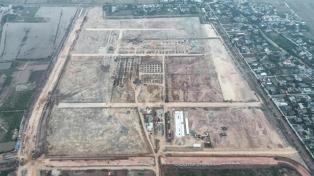
The Sơn Mỹ I and Sơn Mỹ II BOT LNG-fired power projects, with a combined capacity of approximately 4,500MW, are part of the Sơn Mỹ Power Centre.
They have been designated nationally significant projects and key developments in the energy sector, to start operations before 2030 under the National Power Development Plan VIII (PDP VIII).
Under directives from the Prime Minister, both projects are targeted to begin commercial operations in 2028.
The Ministry of Industry and Trade (MoIT) approved its investment policies under the public-private partnership (PPP) model in October 2021 and September 2022, respectively.
However, despite investors having revised and supplemented the feasibility study (FS) reports in accordance with the requirements of relevant authorities, the dossiers are still awaiting final approval.
Notably, these projects are not included in the list of power projects designated to ensure electricity supply through 2030 under the Prime Minister's Directive No. 01/CT-TTg dated January 18 this year.
This has created an inconsistency between the required project schedule and the mechanisms intended to guarantee implementation.
In this context, the investors themselves have acknowledged that the projects' actual commercial operation dates may need to be postponed until after 2032.
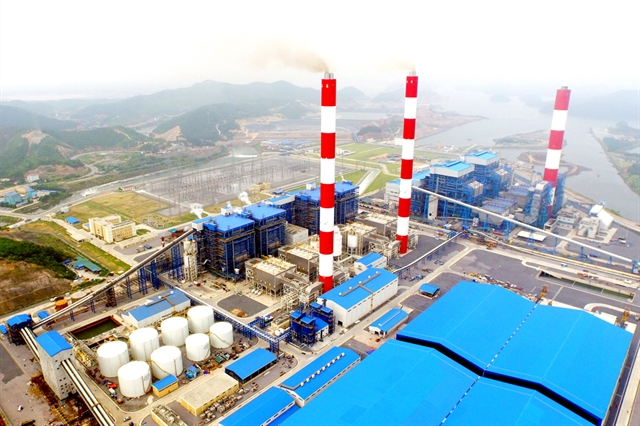
Another case is the Vĩnh Tân III BOT coal-fired power project, with a capacity of 1,980MW. It has been classified among thermal power plants facing implementation difficulties, with an expected operational period during 2025-30.
This project has been discussed repeatedly at high levels. To date, the future of Vĩnh Tân III still depends on the outcome of discussions between MoIT and the investor regarding changes in shareholder structure, financing arrangements and the Prime Minister's final decision.
According to an assessment by the Lâm Đồng Department of Industry and Trade, if the Sơn Mỹ I and Sơn Mỹ II projects cannot be commissioned before 2030, the province's entire plan for achieving double-digit economic growth would need to be revised, creating additional pressure to identify alternative power sources at a time when the window for project preparation and investment is becoming increasingly limited.
From the investors' perspective, the most significant obstacle facing LNG-to-power BOT projects today lies in the legal and financial framework.
Investors argued that the current regulatory environment has not provided a sufficiently bankable structure to attract international financing, causing the appraisal of FS reports and negotiations over key project agreements to stall.
The main bottlenecks include the absence of government guarantees for obligations assumed by competent state authorities and relevant state-owned enterprises, including EVN's obligations under the Power Purchase Agreement (PPA); inadequate foreign-currency convertibility guarantees that fail to meet the requirements of international lenders; and unresolved issues relating to capacity and power-offtake commitments, the pass-through of gas costs into electricity tariffs, payment security mechanisms, tax incentives and the governing law applicable to project agreements.
In response, local authorities have urged the Ministry of Industry and Trade to promptly approve the FS reports for the Sơn Mỹ I and Sơn Mỹ II projects, while also reporting to higher authorities to consider special policy mechanisms aimed at ensuring financial viability.
If the projects are unable to start operations before 2030, policymakers may need to consider alternative options, such as adjusting project timelines or restructuring the power generation portfolio to include other LNG-to-power projects, pumped-storage hydropower and renewable energy projects combined with energy storage systems.
For the Vĩnh Tân III project, the policy challenge extends beyond scheduling concerns. It also involves a strategic decision between maintaining coal-fired power generation at an appropriate scale under a stringent environmental management roadmap or transitioning to alternative generation technologies that are better aligned with the current energy transition landscape.
The difficulties facing the Sơn Mỹ and Vĩnh Tân projects demonstrate that energy security has evolved beyond the traditional issues of power generation planning and installed capacity. It has become a test of the country's ability to address institutional and financial bottlenecks.
As ambitious economic growth targets require a stable supply of baseload power, delays in making critical decisions could leave gaps in the power system that would be difficult to fill in the near future. — VNS