Đồng Tháp Province adds value to agriculture by developing processed products
Processed agricultural products from Đồng Tháp are exported to many foreign markets, delivering strong economic gains for the province.
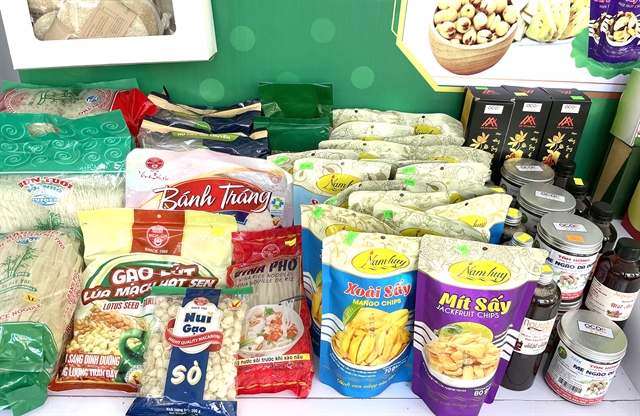
ĐỒNG THÁP — Processed agricultural products from Đồng Tháp are exported to many foreign markets, delivering strong economic gains for the province.
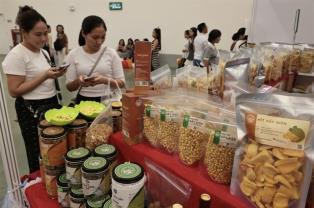
Products made from rice, shrimp and fish have reached a number of markets thanks also to support from local authorities.
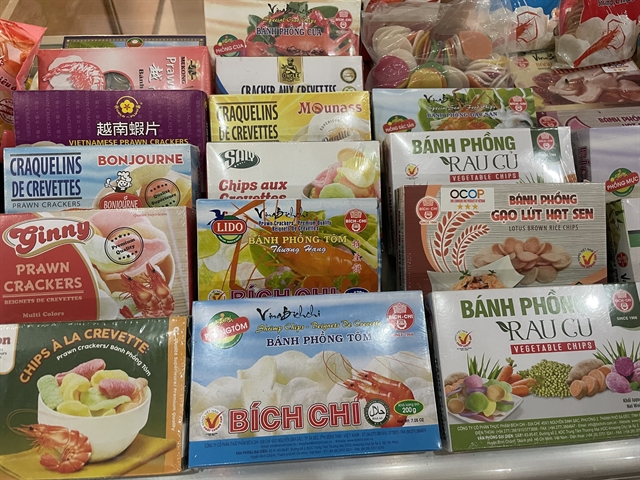
For instance, bún (rice vermicelli), miến (glass noodles) and phở (flat rice noodle) made by Bích Chi Food Company in Sa Đéc Ward are exported to more than 40 markets including the UK, the US, South Korea, and Japan.
Phạm Thanh Bình, general director of the company, said: “On average, revenues from these export markets are three times higher than from the domestic market.”
Revenues reached nearly VNĐ570 billion (US$21.6 million) last year, with the domestic market accounting for only a third, he said.
Vietnamese communities abroad still use traditional rice-based products, and most Vietnamese processed agricultural products meet their preferences, according to Bình.
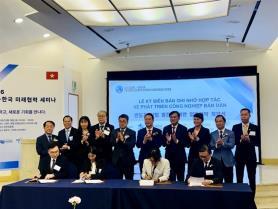
The development and global expansion of processed agricultural products have been included in the province’s economic development strategy.
Võ Phương Thủy, director of the province's Department of Industry and Trade, said processed agricultural products were included in selections for outstanding rural industrial products to honour quality and utility value and promote production expansion.
The province has organised 11 provincial-level selections and participated in regional and national competitions, resulting in 220 provincial products, 49 regional products and 34 national products.
These products have been promoted through trade fairs, exhibitions, displays and supply-demand connections.
“The Department of Industry and Trade will continue to develop and implement trade promotion programmes to advertise, introduce and connect the consumption of products recognised under the country’s One Commune - One Product (OCOP) programme and processed agricultural products, helping them take off and reach further markets,” Thủy said.
Co-operative development
Đồng Tháp has developed 414 agricultural and aquaculture co-operatives with nearly 82,500 members, creating jobs for around 4,500 workers with an average income of VNĐ7.1 million ($270) per person per month.
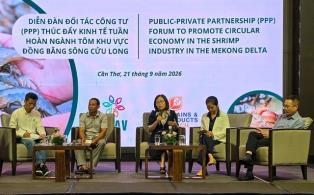
The co-operative economy in agriculture is thriving, with many new-style co-operatives emerging. They bring farmers together to innovate production methods, use technology and improve product quality and incomes.
Besides offering preferential policies on land, credit and infrastructure, the province also focuses on vocational training, establishing growing area codes, traceability and digital transformation in production and consumption management.
Value chain linkage models are becoming increasingly effective, helping co-operatives manage inputs and outputs, raise incomes, stabilise farmers’ livelihoods, and promote agricultural restructuring linked to new-style rural areas.
The network of agricultural co-operatives also addresses difficulties, innovates production and business methods and strengthens the role of the new-style co-operative economy.
Co-operatives collaborate to strengthen agricultural extension, apply science and technology, implement Vietnamese and global good agricultural practices standards, and move towards organic production.
They link up with enterprises through value chains to manage product outputs. Key products with competitive advantages such as high-quality rice, speciality fruits and safe livestock products are being developed.
Rice prices in these linked models are VNĐ500-900 higher per kilogramme than the market, with farmers earning VNĐ20-30 million ($760-1,520) per hectare per crop.
Lê Văn Hưng, director of the Mỹ Thành Nam Co-operative in Mỹ Thành Commune, said the co-operative tied up with ADC Co., Ltd in Cần Thơ City to grow 100ha of high-quality rice to GlobalGAP standards.
The enterprise provided inputs and technical guidance and would purchase output at VNĐ500 per kilogramme higher than the market, he added.
Phan Văn Bảnh, a member of Mỹ Thành Nam, cultivates 5,000 square metres of GlobalGAP rice and harvested three tonnes in the 2025 spring-summer crop.
After deducting costs, he earned around VNĐ20 million ($760), 20 per cent higher than from rice planted outside the linking model, he said.
In the Gò Công freshwater area in the province’s eastern region, 37 agricultural co-operatives have been established with over 2,400 members.
They grow clean vegetables, raise poultry and farm aquatic species and other agricultural products.
According to Nguyễn Quốc Kiệt, director of the Gò Công Livestock - Aquaculture Co-operative in Sơn Qui Ward, the co-operative has links with farmers for raising and supplying “Gà ta Gò Công” (Gò Công native chickens) meeting VietGAP standards, with an average output of 80 tonnes per year.
The “Gà ta Gò Công” brand has been certified as a three-star OCOP product.
“Thanks to value chain linkages, all members of the co-operative have a comfortable life or wealthy status,” Kiệt said.
The province will continue to raise awareness of the role of new-style co-operatives, train management staff, connect markets, promote trade, organise digital transformation and tax policy training, and build OCOP products, according to the province's Co-operative Alliance.
Value chains and high-quality agricultural brands are being promoted, helping farmers increase incomes and stabilise livelihoods while driving agricultural restructuring. — VNS