Central Việt Nam's cement industry missing out as global demand surges
The region stretching from Nghệ An to Quảng Trị is home to some of the country's largest cement producers and enjoys favourable access to seaports.
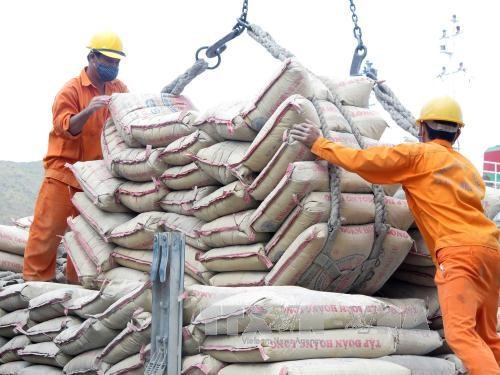
HÀ NỘI — Despite a sharp rise in demand for cement in the Middle East and South America, many cement plants in Việt Nam's central region have yet to translate their competitive advantages into export orders.
The region stretching from Nghệ An to Quảng Trị is home to some of the country's largest cement producers and enjoys favourable access to seaports.
It also offers some of Việt Nam's most competitive export prices. Yet many local manufacturers have not secured export orders commensurate with their pricing and logistical advantages, despite strong demand from overseas markets, industry observers have said.
Cement exported from central Việt Nam is currently priced at around US$40 per tonne on an FOB basis, significantly lower than the $54 per tonne commonly seen in many other parts of the country, Nguyễn Tuấn Việt, CEO of VIETGO, told TheLEADER online magazine.
"With this pricing advantage, producers in the region should be among the first beneficiaries of rising global demand," Việt said. "However, many factories have yet to convert these advantages into corresponding export contracts."
The main obstacle lies not in production capacity or product quality, but in international trade capabilities, according to Việt.
Cement exports differ markedly from domestic sales. Buyers are typically professional importers dealing in large volumes, and transactions are almost always conducted through letters of credit.
Finding overseas customers, negotiating commercial terms, managing international payments and mitigating trade risks require a distinct set of skills that many domestic sales teams may not possess.
Yet at many cement plants, export activities continue to be handled by in-house sales teams whose primary experience lies in the domestic market. At the same time, the number of professional trading companies capable of connecting manufacturers with international buyers remains limited.
In many mature export markets, manufacturers focus on production and quality control, while specialised trading firms take responsibility for customer acquisition, financial arrangements and transaction management.
The absence of these intermediary links has created a gap between production potential and actual export performance in central Việt Nam, according to Việt.
The timing is particularly noteworthy, as demand from the Middle East and South America continues to accelerate.
Construction activity has accelerated across both the Middle East and South America in recent months. Several South American countries are entering a new phase of large-scale infrastructure investment, while Middle Eastern markets continue to advance major construction and reconstruction projects.
Inquiries for Vietnamese cement have nearly doubled compared with normal levels.
While the market previously recorded around 20 major inquiries per month, the figure has recently risen to between 40 and 50. Sixteen transactions have been successfully concluded through documentary letters of credit since May.
Buyers are moving with unusual urgency. In some cases, importers have pushed ahead with negotiations before sellers were able to compile complete product information. Some have even travelled to Việt Nam in person to speed up discussions and lock in supply.
Việt Nam currently holds several advantages in serving key export destinations, particularly in the Middle East. Beyond competitive production costs, the country benefits from favourable shipping economics and a growing network of free trade agreements.
Logistics play a critical role in cement exports. Freight rates to the Middle East can reach up to $70 per tonne, accounting for a substantial share of the final delivered cost.
In such an environment, even small differences in geographic location, shipping efficiency or tariff treatment can significantly influence competitiveness.
The opportunity extends beyond cement itself. Industry participants note that when cement demand began to strengthen, demand for related construction materials such as bricks, mortar, steel, aluminium and glass products, sanitary ware and interior furnishings often follows. — VNS