Businesses cut costs to retain market share
HCM City food firms cut costs and hold prices amid weak demand and rising input costs, accelerating a shift to greener, more efficient production.
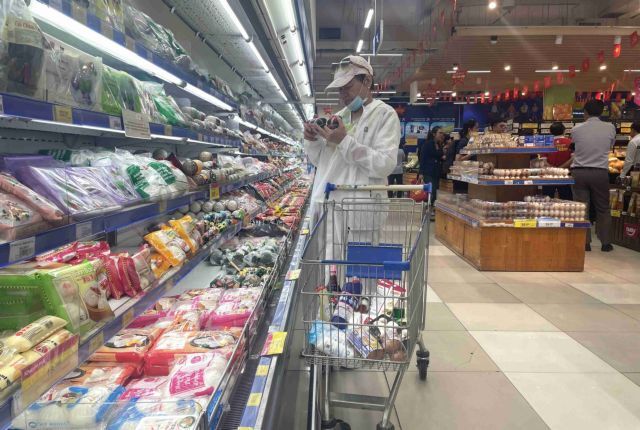
HCM CITY — Many food companies in HCM City are being forced to keep prices steady as a key competitive strategy to weather difficulties, as input costs continue to rise while domestic consumption slows.
While persisting with short-term measures such as optimising production costs, businesses are also working on longer-term strategies, including increasing the proportion of locally sourced materials, greening production, stabilising prices and maintaining market share.
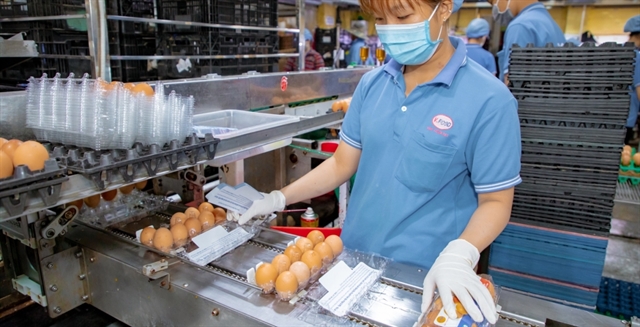
HCM City-based Vĩnh Thành Đạt Food JSC, which supplies poultry eggs, joined the 2026 market stabilisation programme in early April, committing to prices 5–10 per cent below market rates. To offset rising transport costs, it has adopted route-optimising software to cut distances and fuel use.
“The company is urging order consolidation and minimum thresholds to reduce delivery trips, while cutting energy use, streamlining operations and eliminating non-essential costs to stabilise prices and weather the crisis,” said Trương Chí Thiện, its general director.
At Anh Kim Food Production JSC, where fuel is a major cost, the firm has negotiated with suppliers to stabilise input prices. However, volatile fuel costs have made suppliers wary of long-term contracts, forcing the company to seek alternatives.
“With weak demand, the company is keeping prices low and accepting lower profits, while optimising operations to cut fuel costs,” said Nguyễn Thị Thu, chairwoman of the company.
According to Lý Kim Chi, chairwoman of the HCM City Food and Foodstuff Association, fuel price volatility is pushing up logistics and input costs, especially for imported materials, making cost control key to maintaining prices and operations.
“For essential goods, profits are already very low, especially for companies participating in market stabilisation programmes. However, businesses are actively seeking ways to adapt to fuel price shocks. Food prices have remained stable, with retailers not raising prices,” Chi said.
“Companies are optimising production, saving fuel and improving logistics efficiency, thereby reducing dependence on fuel and keeping prices stable.”
Long term businesses plan
According to Thái Hồng Kiên, director of MDF Thái Lê Company and head of the Business Association of Đông Thạnh Commune, HCM City, firms face weak domestic and global demand alongside rising input costs, with those relying on imports under greater pressure from supply shortages and higher prices.
Strengthening linkages within domestic value chains is seen as an effective solution, enabling firms to secure local supplies and reduce reliance on imports.
“Sourcing from domestic suppliers offers many advantages, including easier price negotiations and more control over distribution. Within the association, several supply chains have been established where one company’s output becomes another’s input, reducing dependence on imports and allowing better control over prices and markets,” he said.
Many Vietnamese businesses have proactively diversified their supply sources, shifting towards domestic materials to minimise risks from global supply chains.
For instance, Orion Food Vina Co Ltd has over the past decade through its ‘Homegrown Potatoes’ programme built a value chain from farming areas to the market by providing quality seeds, transferring cultivation techniques and purchasing outputs.
This model not only supports sustainable production and improves farmers’ livelihoods but also ensures stable raw material supplies for factories.
Alongside supply localisation, green transformation is also a practical tool for cost savings.
According to Thu from Anh Kim Food Production JSC, the company is considering replacing equipment that uses fossil fuels with electric systems powered by cleaner energy to mitigate the impact of fuel price fluctuations.
“The biggest obstacle is financing, as each unit requires an investment of at least VNĐ1 billion. However, we will develop a phased implementation plan to maintain product quality, stable prices and market share,” she said.
Lý Kim Chi emphasised green transformation and the use of clean materials would now be essential for sustainable growth and resilience, adding that investment in technology and fuel efficiency could help cut costs, improve product quality and strengthen price competitiveness.
“Many enterprises in HCM City have already embraced green production. This may increase costs in the short term but it is an inevitable long-term direction.
"Besides that, businesses need stronger support from the government, including measures to stabilise fuel prices, flexible tax and fee policies, continued VAT reductions and financial support,” she said. — VNS