Banks with solid foundations forecast to make big leap in 2026
Việt Nam’s banking sector is entering a recovery phase with brighter profit prospects, but analysts warn that growth will be uneven and concentrated among lenders with strong balance sheets and disciplined risk management.
HÀ NỘI — Việt Nam’s banking sector is entering a recovery phase with brighter profit prospects, but analysts warn that growth will be uneven and concentrated among lenders with strong balance sheets and disciplined risk management.
Analysts at Mirae Asset Vietnam forecast the banking system will continue to play a central role through 2025 and 2026, as the economy remains heavily dependent on bank credit while capital markets are still developing. High capital demand for public investment, improved consumer spending and accelerating digital finance are expected to further elevate the sector’s importance.
Bank profits are projected to rise by 17.9 per cent in 2026, driven by a 19.2 per cent increase in net interest income and stabilising net interest margins. Asset quality across the sector is expected to remain stable, with non-performing loans hovering around 1 per cent during the 2025-26 period, although exposure to real estate could add intermittent pressure.
However, analysts caution that the recovery will not be evenly shared. Risks from real estate, funding costs and liquidity will continue to shape each bank’s performance. Only lenders with solid financial foundations, strong risk controls and prudent growth strategies are expected to emerge as leading choices for medium- and long-term investors in 2026.
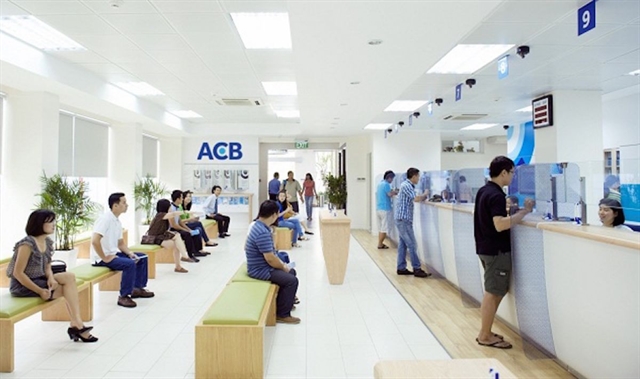
ACB is viewed as a standout for the coming year. Its credit growth reached 15.2 per cent in Q3 2025 and is expected to rise to 18.9 per cent for all of 2025 and 20 per cent in 2026. With Tier 1 capital at 12.13 per cent, ACB is well positioned to sustain expansion. Despite margin pressure in 2025, the bank is forecast to boost profitability in 2026 by strengthening its personal lending portfolio.
Vietcombank is expected to maintain its position as the lender with the strongest asset quality. A sizeable base of low-cost deposits, including those from State-owned enterprises, supports its stable margins. Consistent transparency, low risk exposure and sustainable growth continue to make Vietcombank a safe-haven choice for investors.
MB stands out for its rapid credit expansion, high operational efficiency and strong non-interest income, particularly from bancassurance. Analysts say its combined scale, speed and diversified revenue streams will help sustain its competitive advantage.
On the other hand, several banks face notable headwinds. VPBank may come under pressure from a narrowing net interest margin and credit concentration risks, even as its overall growth remains strong. Techcombank is projected to post robust credit growth, but rising bad debts and a thin provision buffer could weigh on its profit outlook.
Sacombank, still undergoing restructuring, could benefit from the planned sale of 32.5 per cent of its shares, though the legal process remains unclear and asset quality challenges persist.— BIZHUB/VNS