Banks allowed to expand credit for hospitality industry
The new regulation is expected to expand credit for projects involving restaurants, hotels, tourism, eco-tourism and resorts, channeling more capital toward real estate assets capable of active operation, service provision and generating actual revenue.
HÀ NỘI — The State Bank of Vietnam (SBV) has recently issued a new regulation on expanding credit for projects involving restaurants, hotels, tourism, eco-tourism and resorts, aiming to channel more capital toward real estate capable of creating revenue.
Under Official Dispatch 8509/NHNN-CSTT regarding credit growth for 2026, the SBV has allowed 25 banks to exclude the credit growth for restaurants, hotels and tourism, eco-tourism and resort areas from their total real estate outstanding loans when calculating real estate credit growth in 2026.
The SBV said the policy is aimed to facilitate credit extension by institutions for certain types of real estate projects that align with the directives of the Communist Party of Việt Nam and SBV, as well as policies set by relevant authorities.
This new mechanism is expected to expand credit for projects involving restaurants, hotels, tourism and resorts, funnelling more capital toward real estate assets capable of providing services and generating actual revenue.
As a result, developers can get additional loans to implement their projects. Meanwhile, for individual customers, this policy may indirectly improve access to capital for products within tourism and resort projects, as banks gain more room to extend credit.
The SBV's change in the method for calculating credit growth comes at a time when many enterprises are pouring trillions of Vietnamese đồng into hotel, resort and tourism projects. However, lending decisions remain contingent upon the project's legal status, the customer's repayment capacity and the specific credit policies of each bank.
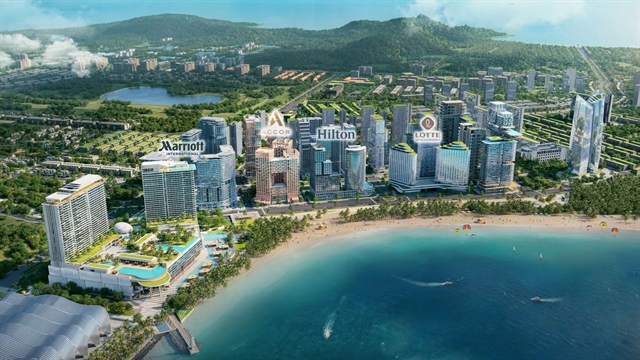
Sun Group is among the enterprises investing most heavily in the hospitality industry. In Phú Quốc alone, the group has announced plans to invest nearly VNĐ91.6 trillion in developing approximately 17,400 high-end accommodation products, with many projects being fast-tracked to meet the demands of APEC 2027.
Vinpearl also has substantial capital tied up in ongoing construction projects in the industry. According to its reviewed interim consolidated financial statements for 2026, the company's construction-in-progress costs reached over VNĐ6.3 trillion by the end of June, an increase of approximately VNĐ1.4 trillion since the beginning of the year.
Previously, the same policy was also applied for social housing, industrial zones and export processing zones. Specifically, the SBV issued Official Dispatch 4551/NHNN-CSTT on May 29, allowing the 25 commercial banks to exclude the credit growth in 2026 for social housing, industrial zones and export processing zones from the total real estate credit balance when monitoring the credit growth cap.
According to a recent SBV report, as of the end of June, the banking system's total outstanding credit for the real estate sector stood at VNĐ5.1 quadrillion (US$193.1 billion), rising by 8.1 per cent against the beginning of the year and accounting for 25.5 per cent of total outstanding credit to the economy.
Medium- and long-term loans accounted for the majority, representing 94 per cent of the total outstanding real estate credit.
The list of 25 banks granted expanded credit are: VietinBank, Agribank, BIDV, MSB, Sacombank, Eximbank, Nam A Bank, ACB, Saigonbank, Techcombank, Bac A Bank, VIB, SeABank, BVBank, OCB, ABBank, VietABank, SHB, VPBank, Kienlongbank, VietBank, LPBank, TPBank, BaoVietBank, and PVcomBank.— BIZHUB/VNS