AI-powered energy management helps reduce energy consumption
The event was held as part of the Vietnam Energy Efficiency Community under the National Programme on Energy Efficiency and Conservation for 2019–2030 (VNEEP3).
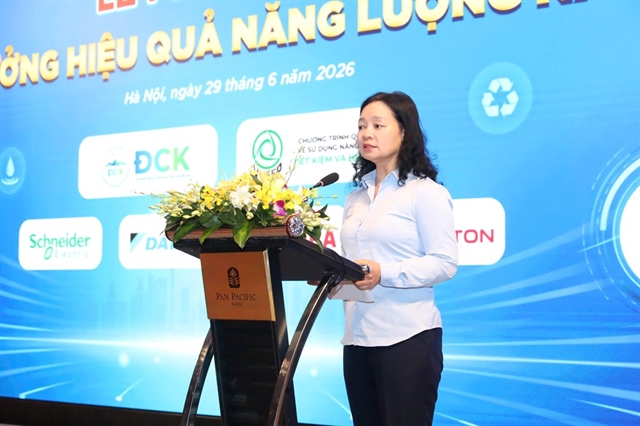
HÀ NỘI — Artificial intelligence and other advanced technologies can help optimise energy use not only in manufacturing but also in everyday life, experts said at an energy efficiency seminar on Monday.
Organised by the Agency for Innovation, Green Transition and Industry Promotion (IGIP) under the Ministry of Industry and Trade (MoIT) in Hà Nội, the event was held as part of the Vietnam Energy Efficiency Community under the National Programme on Energy Efficiency and Conservation for 2019-30 (VNEEP3).
It brought together policymakers, energy experts, local authorities and businesses to discuss new policies and technological solutions aimed at improving energy efficiency in industrial production and commercial operations.
Nguyễn Thị Lâm Giang, IGIP director general, said the seminar provided a platform for businesses, experts and regulators to exchange views on policies and legal frameworks promoting efficient energy use while sharing practical solutions and successful models.
She noted that improving energy efficiency had become increasingly important as Việt Nam faces rising energy demand, growing pressure to ensure energy security and the need to reduce greenhouse gas emissions. Efficient energy use, she said, is not only an immediate solution to these challenges but also a key driver of green growth, business competitiveness and sustainable development.
Hà Đăng Sơn from the Centre for Energy and Green Growth Research (CEGGR) highlighted Việt Nam's legal framework on energy efficiency, including the 2010 Law on Economical and Efficient Use of Energy and its amendments adopted by the National Assembly in 2025.
The revised law introduces five major reforms to strengthen state management, increase the responsibilities of major energy users, encourage technological innovation and expand support mechanisms. It also opens the door to green finance, enabling businesses to invest in modern equipment, energy management systems and advanced technologies to reduce energy consumption, lower production costs and cut emissions.
Experts also noted that export markets such as the US and Europe are imposing increasingly stringent green and sustainability standards, making energy efficiency an important requirement for Vietnamese exporters seeking to remain competitive.
At the seminar, companies showcased technologies designed to improve energy performance in factories, industrial parks and commercial buildings.
Representatives from Schneider Electric Vietnam introduced the company's EcoStruxure platform, an Internet of Things (IoT)-based architecture that enables real-time monitoring and data analysis to optimise energy consumption, improve operational efficiency and reduce carbon emissions. Company representatives said the solution could help businesses respond to growing demand from electronics and semiconductor manufacturers while supporting Việt Nam's net-zero emissions target by 2050.
Meanwhile, Daikin Vietnam presented AI-powered technology that optimises the operation of VRV air-conditioning systems in commercial buildings, helping reduce energy consumption and operating costs.
Participants said many of the technologies showcased at the seminar have applications beyond industrial production and could also be adopted in commercial buildings, public facilities and households, supporting green transformation and improving quality of life.
The organisers said the seminar was expected to raise awareness, promote the adoption of advanced energy-saving technologies and accelerate Việt Nam's transition towards sustainable development. The next event in the Vietnam Energy Efficiency Community series is scheduled to be held in HCM City in mid-July. — VNS