VN's products strengthen brand visibility in new markets
To further expand the presence of Vietnamese goods in new and promising markets, businesses will need to take a more proactive approach by joining reputable trade promotion activities to strengthen brand visibility.
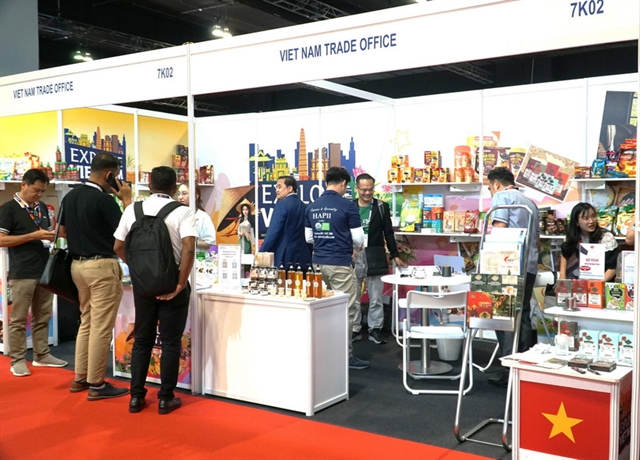
HÀ NỘI — Vietnamese food exporters are stepping onto the global stage in force as 117 enterprises take part in Gulfood 2026, the world’s largest food and beverage trade fair, running from January 26 to 30 in Dubai, the United Arab Emirates, a key global meeting point for producers, exporters, distributors and retail chains in the food and spice sectors.
The strong turnout highlights the ambition of Vietnamese companies to raise the profile of national brands in high-potential markets, particularly the Halal market, which serves more than 2.2 billion Muslim consumers worldwide.
The Việt Nam Pepper and Spice Association said 26 of its member companies will attend the fair, aiming to build a more professional image for the country’s pepper and spice industry and enhance the international standing of Vietnamese products, especially in the Middle East and North Africa.
According to the association, exporters will showcase key products such as pepper, cinnamon, star anise, chilli, ginger, turmeric and processed spice products that meet international export standards. Gulfood offers a valuable opportunity for Vietnamese firms to connect directly with major importers, distribution networks, retail chains and food groups from the Middle East, Europe, Africa and South Asia, helping them expand export markets and pursue long-term contracts.
Beyond Gulfood, the Việt Nam Trade Office in India has encouraged businesses to take part in AAHAR 2026, South Asia’s leading food and beverage exhibition, scheduled for mid-March 2026 in New Delhi. As a major business-to-business event, AAHAR allows Vietnamese companies to engage directly with Indian and international importers as well as large supermarket chains, while promoting Việt Nam’s strategic products, expanding market access and developing local distribution networks.
India, with a population of more than 1.46 billion, is among the world’s largest food consumption markets, with strong demand for high-quality agricultural and food products. Its processed food market has been growing at over 10 per cent annually and is expected to exceed US$600 billion in 2026, driving rising import demand for spices, coffee, cashew nuts, frozen seafood, canned fruit and organic foods.
Another key event is Grand Halal Bangkok 2026, scheduled for July in Thailand, with an expected 15,000 visitors from more than 50 countries. The exhibition will bring together Halal certification bodies, Shariah councils, international Halal standards organisations and experts in food safety and traceability.
The Việt Nam Trade Office in Thailand said participation would help Vietnamese firms engage with international authorities and strengthen buyer confidence in Việt Nam’s Halal products and services. With the global Halal economy valued at about $2.1 trillion, establishing a presence in this market is increasingly seen as essential for long-term growth.
Making an impression
Trần Phú Lữ, Director of the HCM City Trade and Investment Promotion Centre, said that amid global economic uncertainty and rising trade protectionism, diversifying export markets, particularly through the Halal sector, has become a necessity for Vietnamese enterprises.
He noted that the Middle East imports more than $1.2 trillion worth of goods annually and records GDP growth of 5–6 per cent. Major retail groups such as Lulu Hypermarket, Al Othaim Markets, Choithrams and Citi Hypermarkets have shown growing interest in sourcing from Việt Nam. However, experts warned that Halal standards remain complex and demanding. Ramlan Osman, a Halal certification specialist, said Vietnamese firms must meet strict requirements, including Muslim participation in production or supervision and full supply chain transparency.
Beyond Halal markets, Đinh Thị Hương Giang, Consulting Director at Grant Thornton Việt Nam, stressed that international buyers also assess legal and financial transparency, compliance with global regulations, ESG commitments and risk management capacity. Proper preparation, she said, is key to scoring points and securing sustainable partnerships. — VNS