Vietnamese goods promotion: Greater transparency needed
As transparency, traceability and social responsibility increasingly become essential entry requirements, proactive compliance will give Vietnamese enterprises a clear advantage in building trust among international partners.

HÀ NỘI — Amid a rapid restructuring of global supply chains and increasingly stringent market standards, Vietnamese goods must now meet requirements not only for quality but also for transparency, responsibility and innovation to strengthen competitiveness.
According to preliminary data from the Department of Vietnam Customs, the country’s total import–export turnover in the first half of this month reached US$41.23 billion, up 78.9 per cent ($18.18 billion). Export value alone totalled $20.35 billion, rising 98.1 per cent from the second half of February. As of March 15, Việt Nam’s total exports reached $96.81 billion, up 17.1 per cent year-on-year.
Assessing the results, Dr Nguyễn Quốc Việt, a public policy expert at the University of Economics and Business under Vietnam National University, Hà Nội, said trade continues to be a bright spot in Việt Nam’s economic picture.
Since 2017, import–export turnover has maintained steady growth, except for a slight decline in 2023. Even during the COVID-19 period (2021–22), exports continued expanding, reflecting strong domestic resilience.
Another notable indicator is the growing club of exports exceeding $1 billion, which now includes 36 items, demonstrating both scale expansion scale and deeper export activity.
However, behind these positive figures lie growing pressures. Rising input costs, stricter trade barriers and standards, along with supply chain disruptions, are challenging export growth.
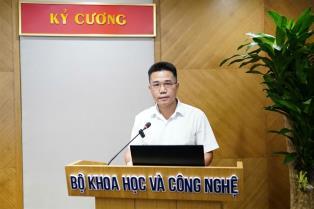
At an international workshop on risk, compliance and innovation in supply chains jointly organised by the National Innovation Centre (NIC) and the Supplier Compliance Audit Network (SCAN), NIC Deputy Director Đỗ Tiến Thịnh stressed that as Việt Nam becomes an increasingly important link in global supply chains, it also faces higher requirements from major markets.
Markets such as the US and Canada are tightening standards on security, transparency and sustainable development (ESG), demanding greener and cleaner products. Beyond technical requirements, non-technical standards covering labour conditions, social welfare and ethical production practices are also becoming stricter.
Carlos E. Ochoa, CEO of SCAN, noted that geopolitical tensions and climate change are increasing supply chain risks, while enhanced customs monitoring and enforcement are pushing transparency, traceability and supply chain security requirements to unprecedented levels.
The US - Việt Nam’s largest export market, accounting for nearly 30 per cent of total exports - is placing particular emphasis on supply chain transparency, with security and compliance increasingly influencing purchasing decisions, he added.
According to Thịnh, last year was considered “the year of tariffs”, while this year is likely to become “the year of tariff consequences”, as trade barriers fully take effect and global trade growth slows. Container supply chains continue to be restructured, shifting away from traditional routes towards emerging regions, accompanied by maritime and legal risks.
In this context, investment in technology, particularly artificial intelligence (AI) and green technologies, is expected to help offset declines in traditional trade. Strengthening enterprises’ internal capacity has therefore become more urgent than ever, with innovation identified as a key driver.
Thịnh outlined three stages of innovation development among enterprises. The first involves contract manufacturing with limited innovation and low added value. The second stage sees deeper participation in production through technical improvements and technology transfer - where many Vietnamese firms currently stand, especially in electronics manufacturing supported by foreign-invested enterprises. The final stage aims at technological mastery, breakthrough innovation and intellectual property ownership, enabling higher-value products tied to corporate brands.
At a broader level, Việt Nam has made encouraging progress in innovation, ranking 44th among 139 countries and territories in recent international rankings, providing a foundation for improving competitiveness.
Jennifer Kissner, Chairwoman of SCAN’s Board, said global trade has reached unprecedented levels, urging Vietnamese businesses to treat supply chain security compliance as part of a long-term development strategy rather than an administrative burden.
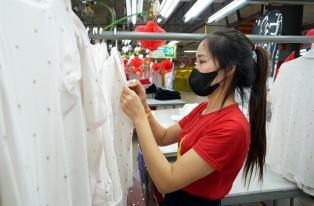
Inspection delegations from importing markets are now assessing not only products but also factory hygiene, working environments and employee welfare - factors that can ultimately determine export eligibility. Therefore, Thịnh emphasised that Vietnamese goods must now aim not only to be “good” but also to be “responsible and transparent” in order to integrate more deeply into global value chains.
Adopting this mindset shift will help businesses reduce export risks while unlocking broader access to major markets. As transparency, traceability and social responsibility increasingly become essential entry requirements, proactive compliance will give enterprises a clear advantage in building trust among international partners. — VNS