70,000 tonnes of rice granted “Low-emission Green Vietnamese Rice” label
The certified rice has not only been exported to Japan but also reached markets in Europe and Oceania.
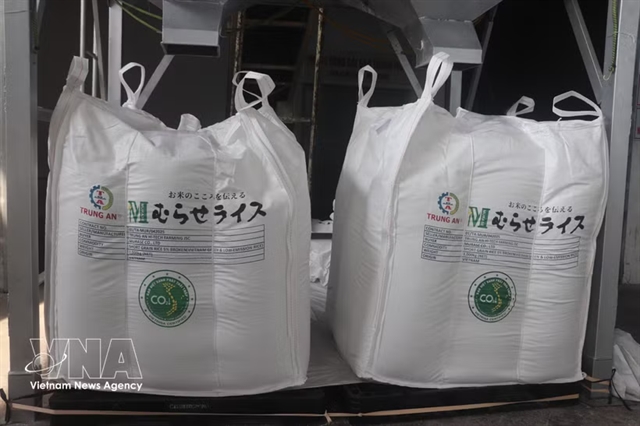
HÀ NỘI — As many as 70,000 tonnes of rice have so far been granted the “Low-emission Green Vietnamese Rice” label, following the first shipment of more than 400 tonnes exported by the Trung An Company to Japan in June 2025.
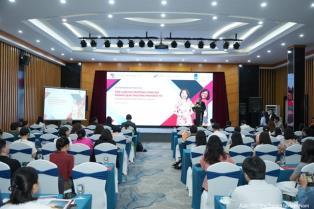
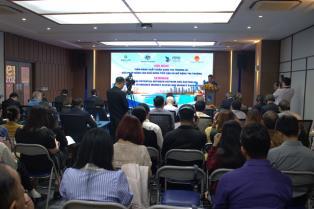
Speaking at a workshop held in Cần Thơ city on Wednesday to review compliance assessment results for the one-million-hectare low-emission rice cultivation project, Lê Thanh Tùng, vice chairman and General Secretary of the Vietnam Rice Industry Association, said the certified rice has not only been exported to Japan but also reached markets in Europe and Oceania.
Tung said the assessment and certification process is currently limited to members of the Vietnam Rice Industry Association. However, cooperatives outside the association can apply for membership and subsequently undergo evaluation for certification.
He expressed his hope that the programme will expand among more cooperatives, helping strengthen collective efforts to implement the one-million-hectare high-quality and low-emission rice project in the Mekong Delta.
Nguyễn Thị Giang, deputy director of the Cần Thơ Department of Agriculture and Environment, said the city is currently implementing the project across 64 communes and wards, covering 170,877 ha with the participation of 171 cooperatives and cooperative groups.
She noted that the pilot models have delivered encouraging results, demonstrating that the direction toward high-quality and low-emission rice production is both feasible and effective.
According to Giang, for low-emission rice to access premium markets, increase added value and enhance international competitiveness, it is essential not only to produce sustainably but also to verify the green production process. Therefore, assessing compliance with cultivation procedures, digitalising production data and developing a recognition system for “Low-emission Green Vietnamese Rice” are considered highly important. — VNA/VNS