Việt Nam well positioned to attract impact investment capital
The social impact business ecosystem in Việt Nam is dominated by micro and small enterprises. Many struggle to access capital due to limited collateral, short operating histories and the lack of financial instruments aligned with their cash-flow structures.
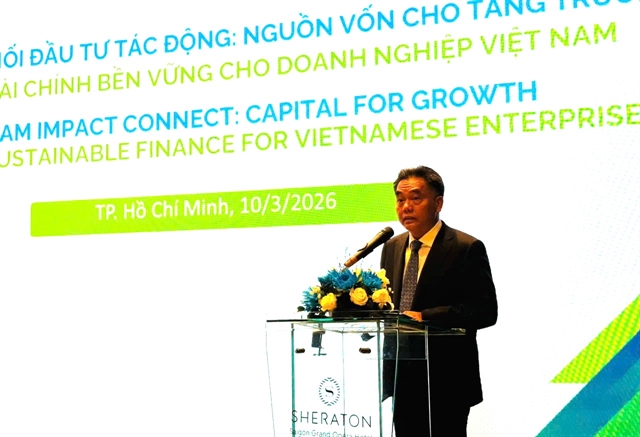
HCM CITY — Along with traditional sources of investment, financial models like impact investment are creating chances to channel international capital into sustainable businesses, speakers told a forum in HCM City on March 10.
Co-hosted by the Investment and Trade Promotion Centre of HCM City and Impact Investment Exchange (IIX) and supported by Global Affairs Canada, the 'Vietnam Impact Connect: Capital for Growth' forum explored blended finance solutions to help small and medium-sized enterprises (SMEs) and social impact businesses in Việt Nam access global capital markets.
Speaking at the forum, permanent Vice Chairman of the HCM City People's Committee Nguyễn Lộc Hà said the city had consistently prioritised improving the quality of investment capital, encouraging sustainable business models and promoting innovation to enhance competitiveness and ensure long-term growth.
“Alongside traditional investment sources, new financial models, including impact investing, are opening up more opportunities to connect international resources with businesses oriented toward sustainable development, social responsibility and long-term value creation,” he said.
According to Hà, impact investing not only targets financial returns, but also prioritises positive social and environmental outcomes, aligning with global trends as countries and cities increasingly promote green growth, the circular economy and inclusive development.
HCM City is actively promoting sectors like the green economy, clean energy, high technology, innovation and digital transformation, while strengthening its start-up ecosystem and developing policies to support emerging business models. These initiatives are expected to create new opportunities for investors and financial institutions to collaborate with Vietnamese enterprises in developing innovative solutions with broad social and environmental impact.
Speakers at the event highlighted that Việt Nam was emerging as a promising hub for impact investment in Southeast Asia, supported by strong economic growth, sustainability policies and a dynamic SME sector.
Canadian Ambassador to Việt Nam Jim Nickel said the country was becoming a regional leader in impact investing thanks to its strong focus on gender equality, climate action and the transition toward a digital economy and clean energy.
Việt Nam’s robust economic growth and vibrant entrepreneurial ecosystem also create favourable conditions for impact investment, according to the ambassador. The country has a large number of young entrepreneurs and a rapidly expanding SME sector, many of which are developing solutions in areas like climate technology, sustainable agriculture, sustainable livelihoods and women’s empowerment.
“Investing in social impact businesses, particularly women-focused enterprises, helps small entrepreneurs connect to larger value chains and new markets while delivering tangible benefits for local communities,” Nickel said.
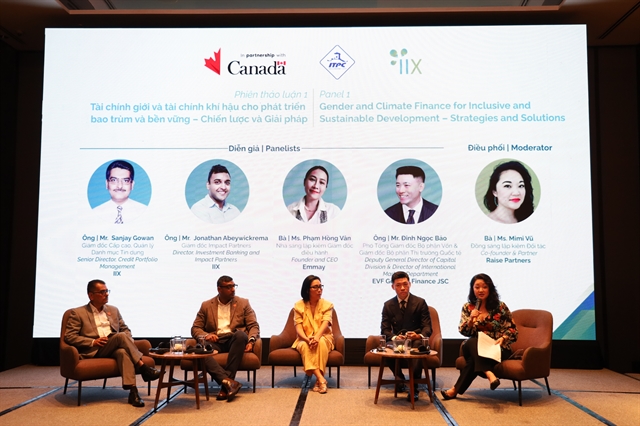
Robert Kraybill, chief investment officer at Impact Investment Exchange, noted that Việt Nam’s export-driven manufacturing model and deep integration into global supply chains positioned it as an attractive destination for climate, sustainable production and supply chain investments.
Between 2020 and 2022, Việt Nam attracted about US$2 billion in impact investment, accounting for roughly 30 per cent of the total deployed across Southeast Asia. This figure was significantly higher than in Indonesia and Thailand, which each attracted around $1.4 billion, he said.
However, speakers also noted that significant financing gaps remained.
Nickel said recent analysis showed that about 62 per cent of the financing needs of Vietnamese SMEs remained unmet, equivalent to a funding gap of roughly $24 billion. The constraints often stemmed from strict collateral requirements and capacity gaps, highlighting the need for innovative financing solutions.
According to Kraybill, the social impact business ecosystem in Việt Nam is dominated by micro and small enterprises. Many struggle to access capital due to limited collateral, short operating histories and the lack of financial instruments aligned with their cash-flow structures.
To unlock greater capital flows, he recommended developing risk-sharing mechanisms using public and development finance capital, expanding credit guarantees and concessional funding for impact enterprises and structuring blended finance vehicles.
Other proposed solutions include introducing flexible financing instruments, such as revenue-based financing, and strengthening investment readiness programmes and technical assistance to help enterprises become more attractive to investors.
“The global financing gap to achieve the Sustainable Development Goals stands at $4 trillion. Bridging it requires financial infrastructure that channels private capital to where it is needed most,” Kraybill said.
“Việt Nam is well positioned to attract this capital with its net-zero commitment by 2050 and its growing ecosystem of mission-driven social impact businesses. Through blended finance and innovative instruments, such as Orange Bonds and the Women’s Livelihood Bond series, we can reduce risks for investors while scaling impact for millions of people.”
Nickel added that Canada was proud to partner with IIX to support Vietnamese social impact enterprises.
Through the Canada-funded Impact Investment Readiness Vietnam project, around 250 Vietnamese social impact businesses had received support since 2022, helping mobilise more than CAD$17.5 million (US$12.9 million) in private capital.
“Participating firms have reported meaningful improvements in governance and impact measurement, although further efforts are needed to help enterprises move from investment readiness to securing full investment deals,” he said.
Nickel added that to further strengthen Việt Nam’s impact investment ecosystem, several steps were needed, including encouraging SMEs to consider equity investment alongside traditional debt financing, creating a more flexible regulatory environment to test new investment models, and expanding support systems such as incubators and accelerators to help businesses build capacity.
Canada looked forward to continuing its cooperation with IIX and Vietnamese partners to expand impact investment opportunities, particularly in sectors like clean technology, agribusiness, climate services and women’s economic empowerment, he said. — VNS