Việt Nam triggers fuel contingency plan over Middle East crisis
Current solutions are being implemented along three main pillars – closely monitoring market developments and flexibly managing supply in a timely manner; ensuring the smooth operation of the distribution system from wholesalers to retail outlets; and proactively preparing long-term contingency scenarios while strengthening inter-sectoral coordination.
HÀ NỘI — Việt Nam has activated a monitoring and early-response mechanism to safeguard domestic fuel supply amid concerns that escalating tensions between the US and Iran can prolong instability in the Middle East and put pressure on the global energy supply-demand balance.
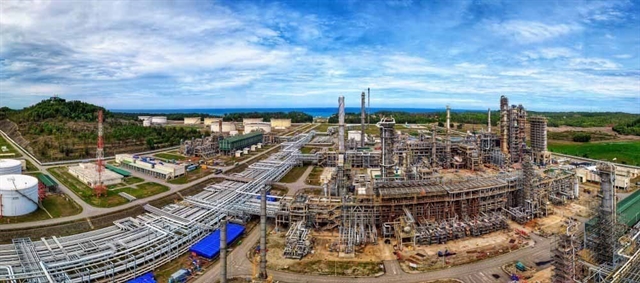
The Domestic Markets Department under the Ministry of Industry and Trade (MoIT) said the agency convened urgent meetings with the country’s two key refineries Bình Sơn Refining and Petrochemical JSC (BSR) and Nghi Sơn Refinery and Petrochemical LLC (NSRP) as well as major fuel distributors to review production capacity, inventory levels, import plans and their ability to meet domestic demand under different scenarios.
Based on updated market assessments and international market trend forecasts, the agency has reported the situation to the MoIT and developed a set of operating scenarios corresponding to varying degrees of global price volatility and supply disruption. The approach goes beyond short-term reaction and aims at comprehensive risk management to ensure proactive and flexible governance.
Current solutions are being implemented along three main pillars – closely monitoring market developments and flexibly managing supply in a timely manner; ensuring the smooth operation of the distribution system from wholesalers to retail outlets; and proactively preparing long-term contingency scenarios while strengthening inter-sectoral coordination.
The MoIT will closely monitor global oil prices, output, inventories and trade flows to adjust imports and domestic supply accordingly. It will also intensify oversight of key traders’ compliance with their 2026 minimum reserve obligations. Mandatory reserves serve not only as a legal requirement but as a critical buffer to stabilise the market during periods of heightened volatility.
Inspection and enforcement have been intensified to crack down on hoarding, speculation, unjustified price hikes and any actions that may disrupt supply. The provincial and municipal departments of Industry and Trade have been instructed to closely supervise retail operations to ensure uninterrupted supply and prevent localised shortages.
Key traders and distributors are required to share supply within their systems to maintain stability across the entire supply chain.
The Domestic Markets Department has advised the MoIT in submitting policy options to the Government corresponding to each level of risk, towards remaining proactive under all circumstances, including in the face of major and unforeseen global market shocks.
The agency has worked with the Vietnam National Industry-Energy Group to direct refineries to operate safely and stably, ensuring full delivery of contracted output; proactively adjust production plans when necessary and diversify crude oil import sources, expanding to alternative markets beyond the Middle East to minimise dependency risks.
On the regulatory front, the ministry has submitted a new decree to replace existing fuel trading rules, aiming to enhance transparency and competition. It is also coordinating with relevant ministries and the central bank to ensure flexible price management, faster quality clearance for imports, and a smooth rollout of E10 biofuel from June 1, 2026.
The ministry has further urged authorities to prioritise foreign exchange and credit for fuel import businesses during periods of volatility, while strengthening distribution support, security at retail outlets and market inspections nationwide.
Market-based pricing mechanisms
Market-based pricing mechanisms for petrol are needed to ensure stable domestic supply as rising tensions in the Middle East fuel concerns about global oil supply disruptions, Bùi Ngọc Bảo, chairman of the Việt Nam Petroleum Association, said.
Any supply disruption linked to Middle East tensions would mainly affect the Nghi Sơn Refinery in Thanh Hóa Province because the refinery relies largely on crude imports from Kuwait, while the Dung Quất Refinery, that uses mostly domestically produced crude, would face less impact, Bảo said.
These two refineries provides more than 70 per cent of the domestic supply with the remainder imported from countries including Singapore and the Republic of Korea.
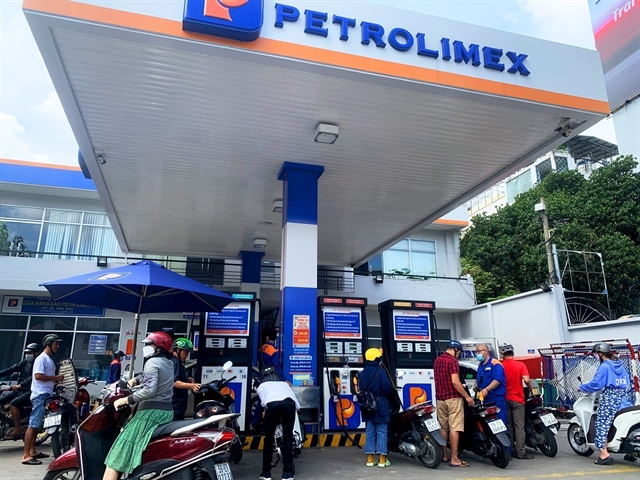
In case domestic production falls short, major fuel traders such as Petrolimex and PVOIL can import to meet the domestic demand, Bảo said, urging a pricing mechanism that allows companies to fully cover their costs.
“In order to guarantee supply, petrol prices must reflect actual costs so that importers do not incur losses,” Bảo said.
He recalled that in 2022, during the Russia-Ukraine conflict, fuel shortages occurred and import costs exceeded regulated retail prices, creating burden on State-owned traders such as Petrolimex and PVOIL to meet domestic demand while many private distributors struggled due to limited financial capacity.
Commercial banks are also reluctant to extend credit to petrol traders if their business operations generate losses, creating bottlenecks in supply and increasing the risk of partial shortages, Bảo said.
Bảo urged the Government to early approve the draft decree on petrol business management which allow wholesalers and retailers to determine retail prices while authorities would focus on supervision and post-inspection.
“With a market-based mechanism, wholesalers will be able to secure supply regardless of market fluctuations,” Bảo said.
Earlier, Petrolimex which accounts for about 43 per cent of the domestic fuel market, said that tensions in the Middle East region are causing disruptions to oil supply and pushing up costs.
Petrolimex said it had reported the situation to the Ministry of Industry and Trade and proposed measures to ensure stable supply. Petrolimex also instructed its subsidiaries nationwide to coordinate with local authorities to ensure stable supply for consumption and production activities.
For 2026, the group has signed supply contracts totaling about 7.8 million cu.m, equivalent to nearly 70 per cent of its domestic sales volume in 2025, Petrolimex general director Lưu Văn Tuyến said.
The Ministry of Industry and Trade has allocated a minimum national petrol supply of nearly 31.8 million cu.m to wholesalers in 2026 to support the double-digit growth goal.
The ministry said it would closely monitor the implementation of supply quotas and accelerate the issuance of a new decree on petrol trading. — VNS