Việt Nam sets new State ownership thresholds, accelerates SOE restructuring
The Prime Minister’s Decision 40/2026/QĐ-TTg, effective August 5, establishes three main State ownership thresholds: 100 per cent, at least 65 per cent and above 50 per cent to below 65 per cent. Applicable thresholds depend on the strategic importance of each industry and enterprise to the economy.

HÀ NỘI — Việt Nam is accelerating the restructuring of State capital in State-owned enterprises (SOEs), with a new framework setting different ownership thresholds by industry and requiring plans for the 2026-30 period to be completed this month.
The Prime Minister’s Decision 40/2026/QĐ-TTg, effective August 5, establishes three main State ownership thresholds: 100 per cent, at least 65 per cent and above 50 per cent to below 65 per cent, depending on the strategic importance of each industry and enterprise to the economy.
This framework is designed to concentrate State capital in essential sectors, while creating more room for restructuring or divestment and for private sector participation in areas where State ownership can be reduced or withdrawn.
Under the decision, the State will retain 100 per cent ownership in enterprises involved in essential public services, natural monopolies, high technology, science and technology, innovation and digital transformation, as well as major national infrastructure projects in transport, irrigation, energy and digital infrastructure.
The State can retain at least 65 per cent ownership in other key sectors, including airport management and operation, air transport, operation of special seaports, large-scale mineral extraction, finance and banking, mechanical engineering and clean water supply and drainage.
A lower threshold of more than 50 per cent but less than 65 per cent applies to enterprises in areas considered important to major economic balance such as national telecommunications infrastructure and mineral exploration and reserve assessment.
For enterprises outside the sectors listed above, the State may still retain stakes based on their importance, such as cement producers with a market share of at least 30 per cent that operate raw-material mines in areas considered crucial for national defence and security.
This also includes other providers of public utility products and services whose public service revenue accounts for at least 50 per cent of total revenue for three consecutive years, and enterprises with cultural, historical or architectural value, national brands or having an important role in national defence and security.
For multi-sector enterprises, the applicable ownership threshold will be determined by the sector accounting for the largest share of total output or revenue over the three consecutive years preceding approval of the five-year restructuring plan.
The new rules could affect a number of major SOEs.
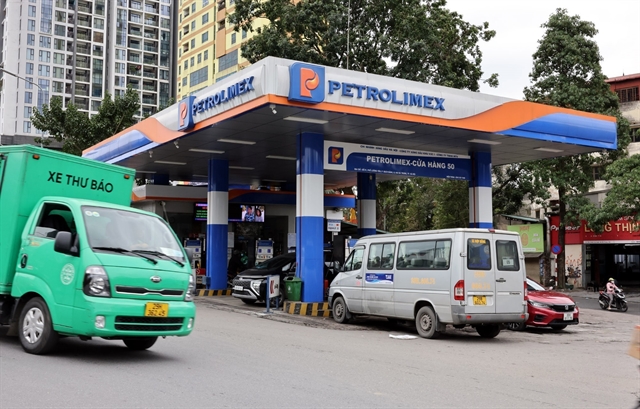
According to Mirae Asset Securities, Petrolimex could be among the companies most directly affected. Fuel importers with a market share of at least 30 per cent fall into the group where State ownership can range from above 50 per cent to below 65 per cent. The State currently holds about 75.8 per cent of Petrolimex, meaning it would have to relinquish a stake of around 11 per cent.
Mirae Asset also identified Petrovietnam Fertiliser and Chemicals Corporation and DAP-Vinachem as companies whose State ownership could be reviewed. Petrovietnam currently holds about 59.5 per cent of fertiliser company Đạm Phú Mỹ, while Vinachem owns about 64 per cent of DAP-Vinachem.
Airports Corporation of Vietnam (ACV), in which the Ministry of Finance holds 95.4 per cent, could also be under review for potential further divestment, as it only requires State ownership of at least 65 per cent.
BIDV Securities Research (BSC Research) said giving State ownership representatives more discretion will allow greater flexibility in restructuring, transferring or divesting in line with market conditions.
A new wave of State divestment is expected, similar to the 2016-18 period, which would potentially increase the supply of shares on the stock market, BSC said.
Under Decision 40, after excluding Viettel, Vietcombank, VietinBank and BIDV, State ownership representatives are required to propose State capital restructuring plans for 19 major groups and corporations.
These include Petrovietnam, Electricity of Vietnam, Petrolimex, Vietnam National Chemical Group, Vietnam Rubber Group, Vietnam National Coal and Mineral Industries Group, Vietnam Post and Telecommunications Group, Vietnam Airlines, Vietnam Maritime Corporation, Vietnam Railways, Airports Corporation of Vietnam, the State Capital Investment Corporation and Agribank.
The Government is moving quickly to implement the framework.
Under an official Government dispatch dated August 7, ministries, agencies and local authorities must approve five-year State capital restructuring plans by August 31.
SOEs, except Viettel, BIDV, VietinBank and Vietcombank, must submit proposals to the Ministry of Finance by August 12.
The Ministry of Finance is required to report on the restructuring of State capital in SOEs to the Prime Minister by August 25, with a nationwide progress report due in the fourth quarter.
The Government has also called for mergers, consolidation and transfers of enterprises where appropriate to improve economies of scale and strengthen the overall performance of economic sectors.
It has ordered the restructuring of the State Capital Investment Corporation to be accelerated, including the establishment of an independent monitoring mechanism for the transfer and management of its holdings. — VNS