Việt Nam seeks technological autonomy in strategic industrial sectors
The updated 2026 list of strategic technologies and products prioritises robotics and automation, energy technologies, advanced materials and high- and ultra-high-voltage electrical equipment.
HÀ NỘI — Việt Nam is stepping up efforts to build technological autonomy in strategic industrial and trade sectors as volatile global supply chains and intensifying technological competition increase pressure to strengthen domestic capabilities.
Resolution 57-NQ/TW identifies science, technology, innovation and digital transformation as key drivers of national development. In this context, technological autonomy goes beyond reducing imports or replacing foreign products, requiring domestic capacity to design, integrate, operate, improve and develop technologies critical to industrial production, energy and commerce.
Hoàng Ninh, deputy director of the Ministry of Industry and Trade's Department of Science Technology and Digital Transformation, said Việt Nam does not need to develop every technology domestically, but should master those affecting economic security, competitiveness and the long-term development of the industry and trade sector.
The approach is reflected in Prime Minister's Decision 808/QĐ-TTg on strategic technology development, under which the ministry is tasked with leading three areas: energy security; industrial autonomy and higher localisation rates; and the modernisation of trade through data, smart logistics and reliable supply chains.
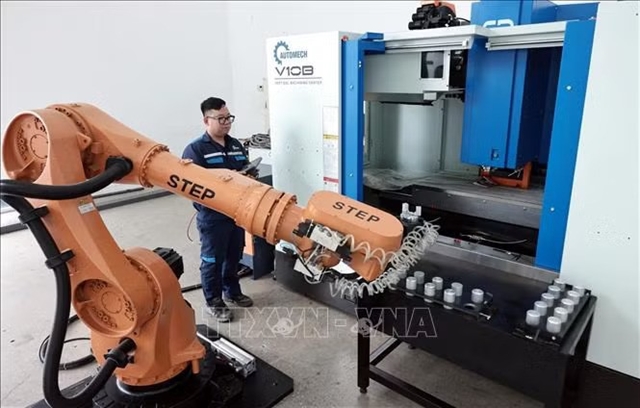
Priority technologies include electrical equipment and energy storage in the energy sector; robotics, automation and smart manufacturing in industry; and AI, big data, traceability systems and smart logistics in trade.
The updated 2026 list of strategic technologies and products also prioritises robotics and automation, energy technologies, advanced materials and high- and ultra-high-voltage electrical equipment.
According to Ninh, mastering technology is the prerequisite, creating products is the direct outcome and enhancing competitiveness is the ultimate goal. He added that technological autonomy should be measured by the ability to develop products, generate new value and strengthen competitiveness.
From technology adoption to mastery
Vũ Văn Khoa, deputy director of the National Research Institute of Mechanical Engineering, said Việt Nam's technological capabilities could be divided into three levels.
The first involves the design and mass production of equipment such as hydropower systems, with more than 29 projects of over 100MW completed, including the Sơn La and Lai Châu hydropower plants.
Another level involves acting as engineering, procurement and construction or management contractors for projects including solar power, coal-fired power and offshore oil and gas facilities.
The third focuses on technologies such as industrial robotics, high-voltage electrical equipment, smart manufacturing systems and high-speed rail.
Khoa proposed five criteria for selecting technologies for domestic mastery: addressing economic, social or security needs; balancing technological readiness, market size and existing capabilities; ensuring sufficient domestic demand; prioritising high value-added stages; and pursuing selected technologies through to completion.
Policy support needed

Nguyễn Hải Quân, deputy general director of Dong Anh Electrical Equipment Corporation JSC, said the main challenge is the transition from acquiring foreign technology to mastering it.
When adopting technology from foreign partners, companies gain access to established designs, production processes and product validation methods. Achieving technological autonomy, however, requires them to develop and validate those capabilities themselves.
He said enterprises need to master three areas simultaneously: product design; simulation, testing and design optimisation; and manufacturing technology, including product testing and validation. Technological autonomy cannot be achieved if any of these capabilities are missing.
For companies to make long-term investments in technology, however, they also need procurement mechanisms based on actual industry demand, with a clear roadmap from research and testing to application and commercialisation.
Risk-sharing mechanisms involving the State, end users and research and manufacturing organisations are also needed, supported by technical standards and transparent evaluation procedures.
He added that once market demand and commercialisation pathways are clear, enterprises will have greater confidence to invest in and develop technology. — VNS